



 Google reviews

The back gutter on a central stack
A damp patch in the middle of a cottage bedroom ceiling, with nothing wrong on the slopes either side, very often traces back to the chimney. The late 18th and early 19th century cottages that give the village much of its character, in Mill Lane, West Street and the village end of Kingston Road, share a roof shape. The council's appraisal describes fairly shallow hipped roofs in slate or clay peg tiles, with chunky central brick stacks often carrying tall orange clay pots.
A chimney in the middle of a roof is harder to keep dry than one on a gable wall. It has lead on all four sides. The uphill face has a back gutter, a small lead tray that catches the water running down the slope and turns it around the stack. On a shallow hip that water moves slowly, and leaves and moss settle in the tray. When the lead splits or the tray fills, water goes into the roof right above the middle of the cottage.
The first things we check on a cottage stack are the back gutter, the side soakers and step flashings, and the front apron. Lifted or split lead is renewed, and the joints the lead is dressed into are raked out and repointed so it stays put. A central stack cannot be seen properly from the street, so we often fly the drone first and show you the lead and the pots in photos before anyone goes up.
Tall pots and their flaunching
Tall pots look right on these cottages and should stay. They also catch the wind. The flaunching, the sloped mortar bed that holds them, cracks with age and frost, and once it does the pot can start to work loose. A pot that rocks or leans is a danger to anyone below. We renew the flaunching and reset the pot, or take it down safely if it is cracked through and source a match. Unused flues can be fitted with a cowl or vented cap to keep out rain and birds while letting the flue breathe.
Small repairs that can be reached safely are done with roof ladders and proper safety equipment. Re-leading a whole stack or rebuilding its top usually needs scaffolding. As a rough national guide, MyJobQuote's chimney flashing guide gives £150 to £250 for a patch repair and £350 to £460 for full leadwork, both without scaffolding.
Hollycroft, West Street and the listed stacks
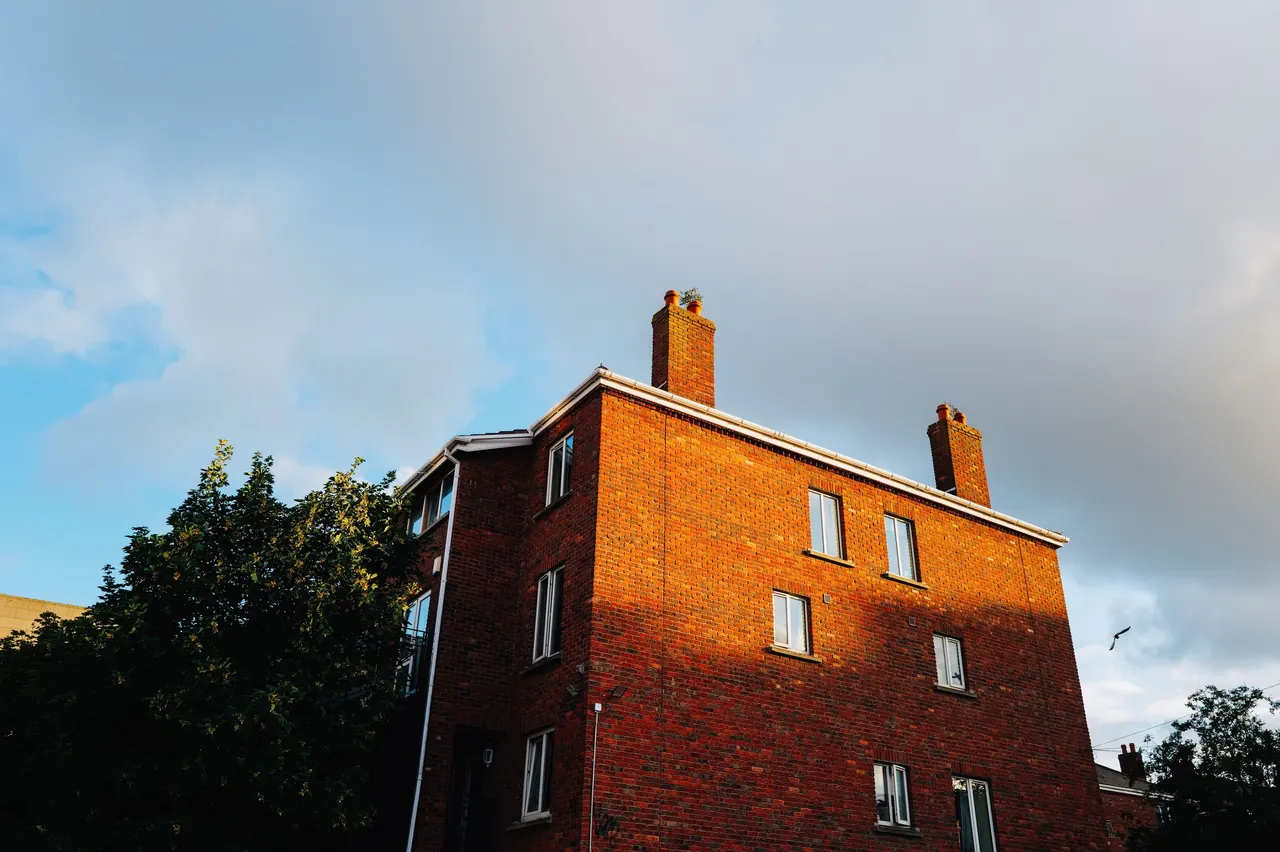
Not every notable stack is central. Hollycroft, a Grade II house of the mid-18th century on Epsom Road, has a mansard roof in handmade peg tiles with prominent end stacks. Nos. 9 and 11 West Street, a listed pair dated 1880, have tall brick stacks at the ends with tumbled batters, where the brick courses are laid at an angle to form the sloping shoulders. Details like these are part of why the buildings are listed, and repairs should keep them.
The appraisal notes that local bricks were orange in the 18th century and a mid-brown from the mid-19th century. When an old stack is repointed, the mortar needs to be softer than the brick, so the joints take the weathering rather than the bricks, and any new bricks for a rebuilt section should be matched to the old ones. On a listed building, agree the approach with Epsom and Ewell Borough Council before work starts.
If the tiles or slates around the stack have slipped as well, our roof repairs in Ewell Village can be done in the same visit. Our chimney maintenance guide covers what to check each year, and the main chimney repairs page sets out the full service.
Frequently asked questions
Why does my West Street cottage leak in the middle of the bedroom ceiling?
On a cottage with a central stack, that is often the back gutter on the uphill side of the chimney. When it splits or fills with debris, water runs into the roof right above the centre of the house.
Can the tall orange pots on my Mill Lane cottage be kept rather than swapped for short ones?
Yes. A tall pot is safe if its flaunching is sound and it is properly bedded. We reset the original where it is undamaged, or find a matching replacement if it is cracked.
The end stacks on my Epsom Road house are leaning slightly. Do they need rebuilding?
Not always. Some old stacks have leaned for a very long time and are stable. We check the pointing, the flashing and whether the lean has changed, and only suggest rebuilding the top if it is moving or unsafe.





