



 Google reviews

Weatherboarded cottages in Mill Lane and West Street
Most of Ewell Village's older cottages were built from timber and clad in painted weatherboarding, usually white, with later examples in brick. On a brick wall a dripping gutter joint leaves a green stain. On weatherboarding it does more harm. Water running down the boards gets into the laps and the bottom edges, the paint lifts, and the timber starts to soften where it stays wet.
The repair starts with where the water has been going. A joint whose seal has dried out is cleaned and resealed, or the union replaced. A bracket pulling out of soft timber is refixed into sound wood. A split length is cut out and replaced. Then we look at the boarding under the fault and tell you whether it needs a decorator or a carpenter, or just time to dry.
The hipped roofs of these cottages carry gutter on every side, with a joint at each corner. Those corner joints take the most movement and are the first to open.
Cast iron on Epsom Road
The 19th century slate-roofed houses on Epsom Road are the kind of houses where cast iron rainwater goods may still survive. Old cast iron rusts from the inside where water and silt sit, and its joints open as the old seals fail. A cracked length can usually be taken out and replaced on its own, with the joints either side resealed and the brackets refixed. Keeping the iron, rather than swapping a run to plastic, keeps the front looking as it should.
After a repair, cast iron needs painting inside and out to hold off the rust. Where a run is rusted through in several places, a new system makes more sense, and our page on new gutters in Ewell Village covers the choice.
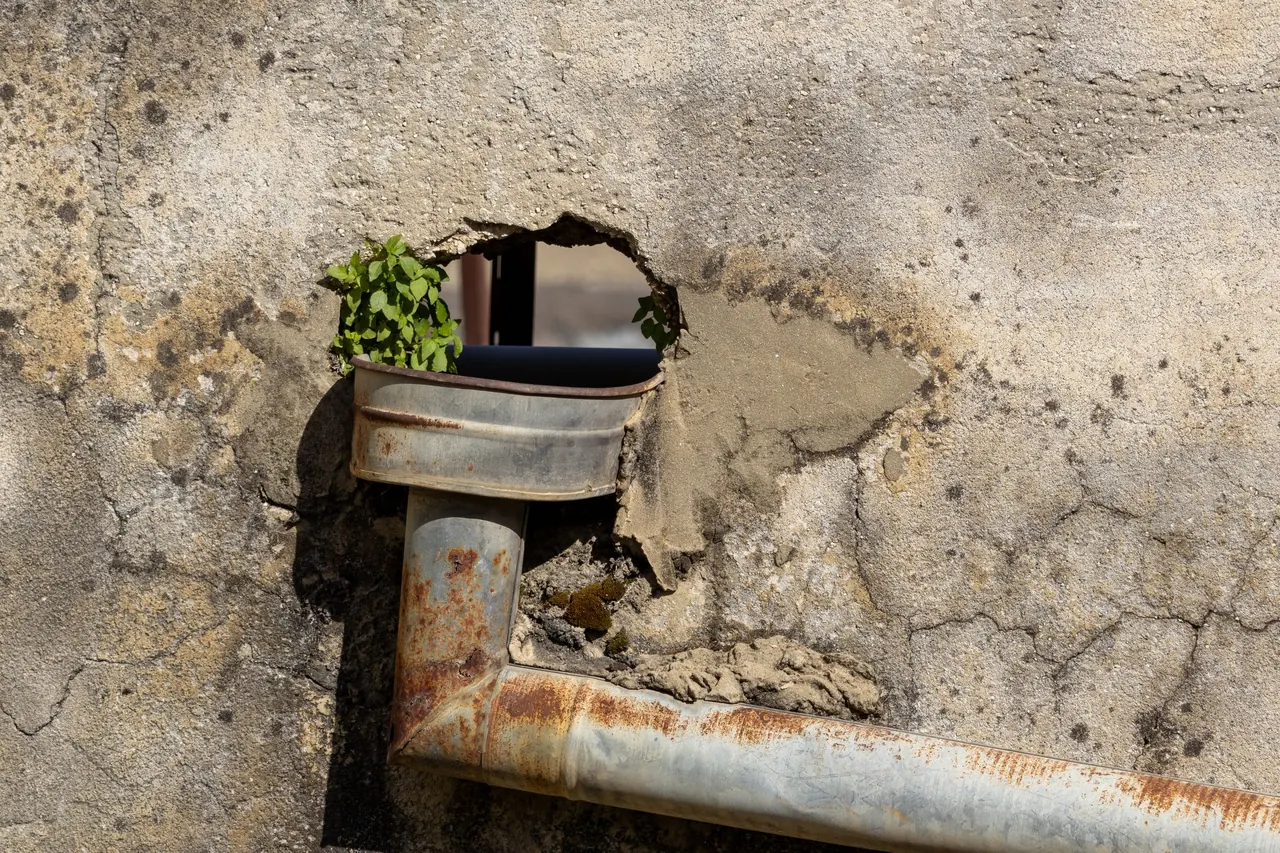
Downpipe shoes on Church Street
Church Street has the densest group of listed buildings in the conservation area, and many of their downpipes come down the front wall to the footway. When the shoe at the bottom cracks, or the pipe parts from the drain, rainwater sprays across the pavement and splashes back against the base of the wall. In winter that water can freeze where people walk.
Reconnecting the pipe to the drain, replacing a broken shoe or a split length and refixing loose pipe clips are quick repairs. On a listed front we use a matching material and profile so the repair does not show.
Plastic joints on London Road and The Headway
The inter-war houses on London Road and The Headway mostly have plastic gutters. There, the usual faults are perished rubber seals in the unions and brackets that have worked loose. Long plastic runs also move with temperature, which pulls at the joints. New seals, or new unions, and refixed brackets usually cure it.
If the gutter overflows rather than leaks, the fault is a blockage or a run that has lost its fall, and our page on blocked gutters in the village deals with that. If water runs down the wall behind the gutter rather than over the front, our article on water leaking behind a gutter explains the usual causes. As a national guide, MyJobQuote's gutter repair guide puts replacing a bracket or clip at £10 to £15 each. The main gutter repairs page has more.
Frequently asked questions
The downpipe shoe on my Church Street house sprays water across the pavement. Is that my job to fix?
The rainwater goods belong to the building, so yes. It is a quick repair, and worth doing before winter when the water can freeze on the footway.
My Church Street house is listed. Can a broken gutter length be replaced in plastic?
On a listed building the safe route is a like-for-like repair in the same material and profile. Changing the material can need listed building consent, so check with the council before doing anything different.
The weatherboarding under the gutter on my Mill Lane cottage stays wet and the paint is flaking. Is the gutter the cause?
Very often. A drip from a joint puts water onto the same boards every time it rains. We find the fault, fix it, and tell you whether the boarding needs attention too. If the board behind the gutter is soft, our fascias and soffits work deals with the timber.





