



 Google reviews

Garages and links on the 1960s and 70s estates
Rose Bushes, built in the 1960s, and High Beeches, from the 1970s, were among the last large housing developments in Nork. Houses of that period often have flat-roofed garages, link sections between house and garage, porches and canopies, and some have had a single-storey rear extension added since. A flat roof from the original build may now be fifty or sixty years old, and one replaced in the 1990s in felt is likely near the end of its life too.
The weak point on these is rarely the middle of the roof. It is the edge where the garage or link meets the brick wall of the house. The upstand and the flashing above it take movement between two structures built at different times, and once the seal opens, water runs down the inside of the wall and shows up as a damp patch in the garage or hallway, some distance from the real fault. That is why the junction is checked before anyone blames the covering. A new roof will not cure a failed flashing.
Extensions on the older Nork houses
The interwar houses around Nork Way have their own flat roofs. Detached and semi-detached houses on long plots have gained garages, side extensions, kitchen extensions and loft dormers over the decades, each added by a different builder at a different time. One property can have three flat roofs of three different ages and materials, and the oldest is often the one hidden behind the garage, where nobody climbs up to look.
What wears those out:
- Old felt dries out in summer sun, blisters and cracks along the laps. On a garage that nobody climbs onto, it can be failing for years before anyone notices.
- A soft deck. Once water has been getting in for a while the boards underneath rot, and surface patches stop holding.
- Rooflights. On kitchen extensions, the seal between the rooflight frame and the covering is a weak point.
- Dormer cheeks and tops, where a small flat roof sits high up and takes the full weather.
A roof that is sound apart from one damaged area can usually be repaired. One with blisters across it, leaks in several places or a deck that gives underfoot is better stripped and re-covered, because patching moves the leak rather than curing it. If the deck has rotted, you are shown before it is priced. Re-covers are done in GRP fibreglass, EPDM rubber or felt, and our main flat roofing page compares the three.
Outlets under Nork's garden trees
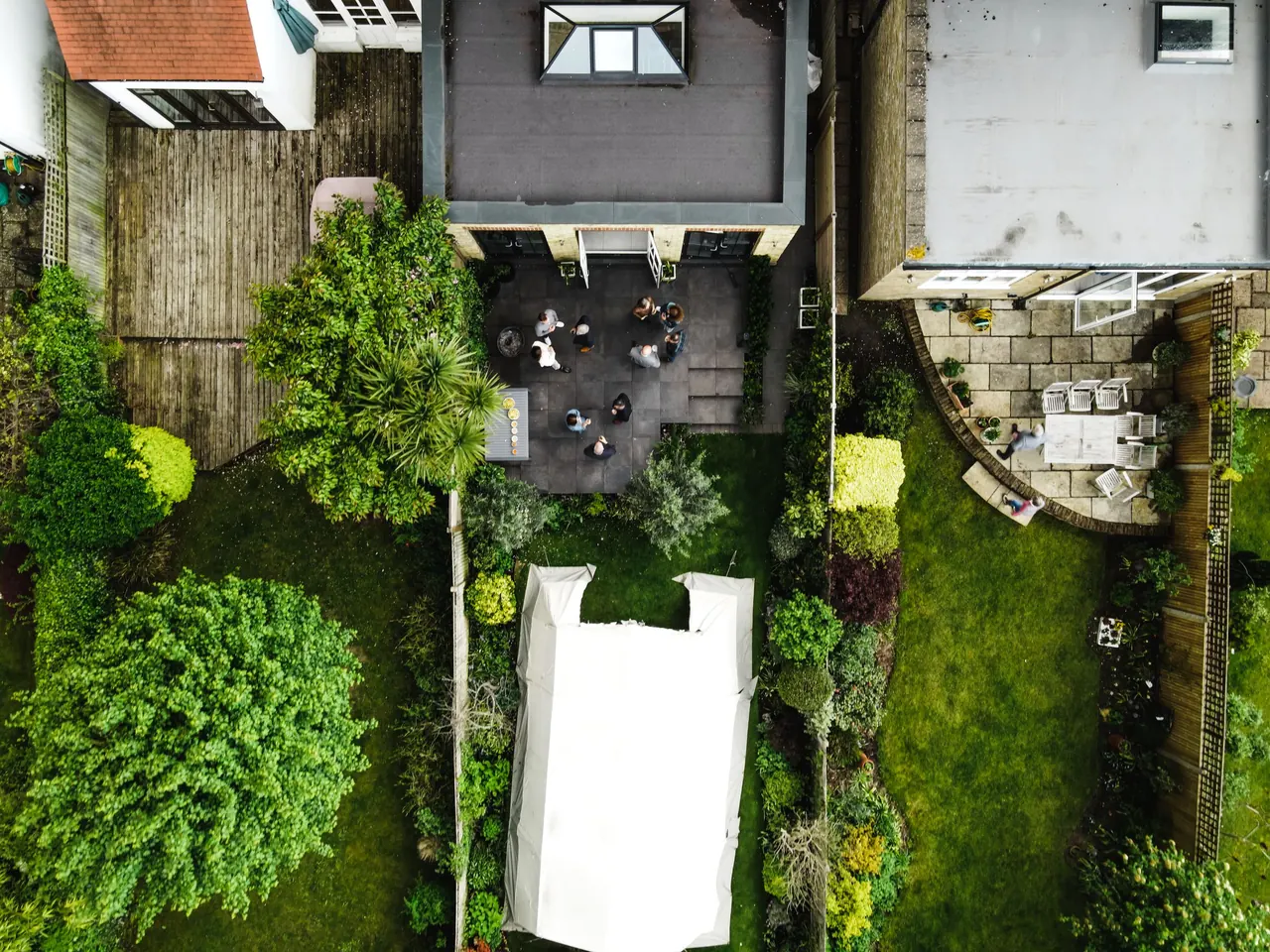
Banstead's gardens are full of big trees, and leaves and needles collect at a flat roof's outlet, hold water on the roof and keep the covering wet long after rain. Whichever covering goes on, the falls and the outlet decide how long it lasts. On a re-cover the falls are set so water runs to the outlet, and the edge trim and gutter are sized to carry the flow. Our guide to water pooling on a flat roof explains when a puddle means more than a blocked outlet, and our gutter cleaning in Banstead page covers the gutters the roof drains into.
If a flat roof is coming off altogether and you would rather have a pitched one over the garage, that is new roof work, covered on our Banstead roof installation page.
Frequently asked questions
The flat roof linking my High Beeches house to the garage leaks by the wall. Why?
Usually the upstand or flashing where the roof meets the house has cracked or pulled away, or water is getting behind it from the wall above. The junction is checked first, because re-covering the roof will not cure a failed flashing.
Is felt still worth fitting on a garage in Rose Bushes?
For a simple garage on a budget, a modern felt system is a reasonable choice. If the garage is used as a room or sits under trees, GRP or EPDM usually gives better value over the years. Both can be priced if you want to compare.
My Nork house has three flat roofs of different ages. Do they all need doing at once?
Not necessarily. Each is judged on its own condition. If one is failing and the others are sound, only that one needs work, though doing two at once can save on access and skip costs.





