



 Google reviews

Timber eaves on the 1930s houses around Stanley Road
The council houses in the middle of Stanley Road and Stanhope Road date from the 1930s, with private semis and terraces around them. Houses of that era were normally finished at the eaves in painted timber. Some on the hill will still have it, some will have been replaced in uPVC, and some will have had a thin plastic board fixed straight over the old wood. Which of those you have decides what the job looks like.
Timber fascias usually fail from the back, where water has been getting past the gutter for years. The first sign is often not rot you can see but a gutter that will not stay put: brackets pull out of a board that no longer holds a screw, the run dips, and water spills over the low point onto the wall. Pushing a screwdriver gently into the lower edge of the board is a fair test.
Three things that go wrong at these eaves
Rot behind the gutter. The section of fascia under a leaking joint or a dripping outlet goes first. On a pair of semis, look at the corner where the gutter turns and at the stretch above each downpipe.
Capping over old timber. Some fascias were covered with a uPVC board fixed over the original wood. That is only sound if the timber underneath was. If the gutter has been leaking behind it, the wood may have rotted out of sight, and the capping comes away with the brackets.
Gaps in the soffit. Where boards have shrunk or a section has dropped, birds, squirrels and wasps find the way in. Houses near the trees round Stanley Park and in Queen Mary's Park have plenty of wildlife close by. If birds are nesting, the work has to wait until the young have left.
The younger rooflines on the hospital land
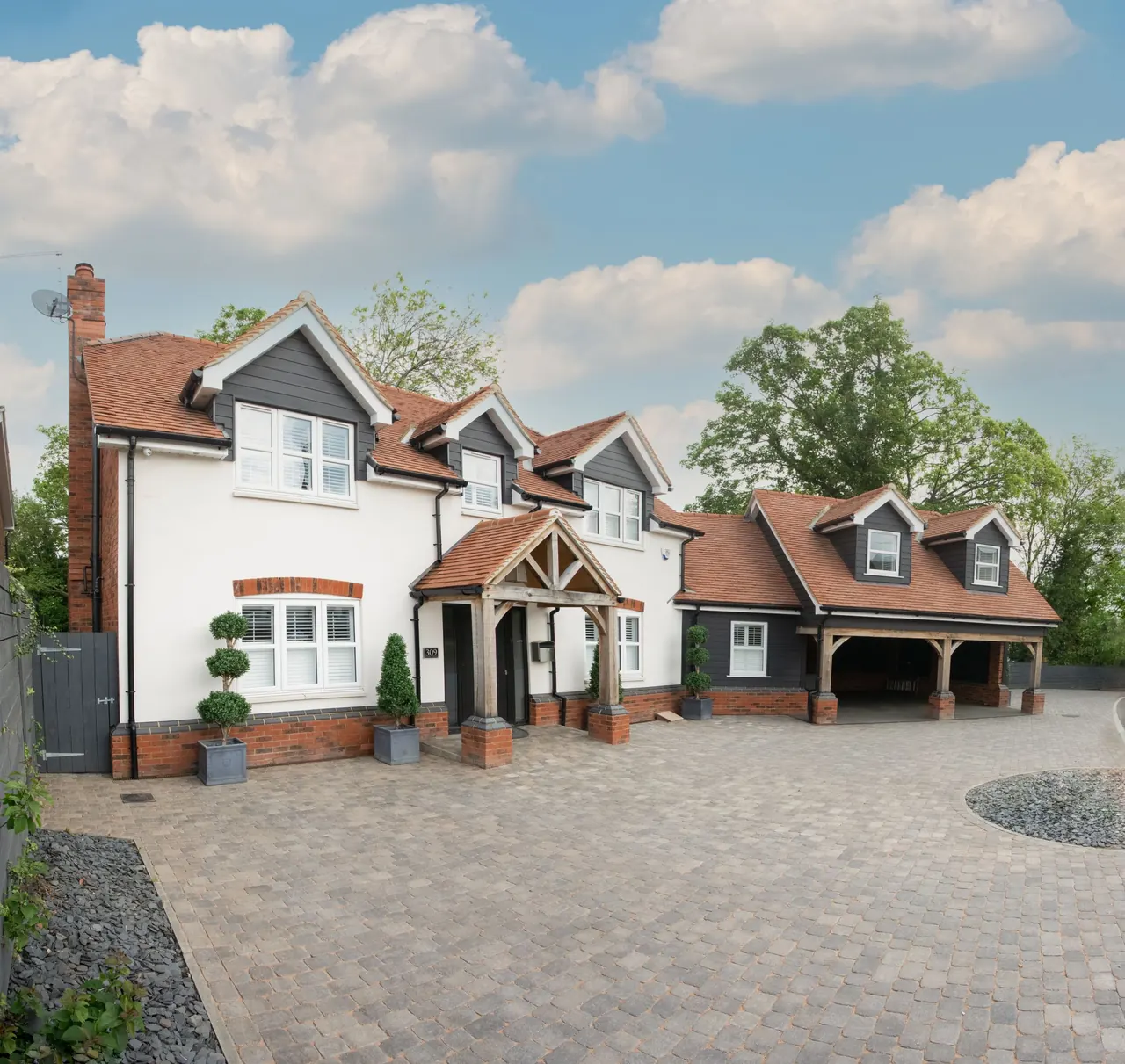
The Friends of Queen Mary's Park record that the eastern part of the old hospital site was built on in 1999 and 2000, and that the last hospital buildings were demolished in 2011 to make way for more housing. Where houses from the first phase have uPVC rooflines, these do not rot, but after twenty-odd years the boards can discolour, and joints and vents in the soffit can open up.
Replacing the boards and checking behind
We survey the boards, soffits, gutters and roof edge and tell you plainly what we find. A short damaged length can sometimes be replaced on its own. Where the boards have rotted along most of their length, or the gutter is due for renewal anyway, replacing the full run makes more sense.
On the day, the gutter comes down and the old boards come off. We then check the rafter ends behind, which you cannot see until the fascia is removed, and deal with any rot there before the new boards go up. New fascias and soffits go on in uPVC, in white, black, grey or a woodgrain finish, with ventilated soffits where the roof space needs air. Older roofs often have no eaves ventilation at all, and adding it helps keep the loft dry. The gutter then goes back on, or a new one is fitted through our gutter installation on the hill. If overflow is what rotted the old boards, a regular gutter clean protects the new ones, and our main fascias and soffits page has more detail.
Frequently asked questions
The gutter brackets on our Stanhope Road house keep pulling out. Is it the gutter or the board?
Usually the board. If a screw turns without biting, the timber behind it has softened. Refixing the gutter into the same board will not last, so the fascia is replaced first and the gutter rehung on sound timber.
Our house on the first phase of the Queen Mary's land has stained white soffits. Do they need replacing?
Not usually. Discoloured uPVC can often be cleaned. Replacement makes sense where boards have cracked, joints have opened or the vents have broken.
Will new soffits change how the loft on our council-built house is ventilated?
They can improve it. Ventilated soffits let air in at the eaves, which helps carry moisture out of a roof space that had little ventilation when it was built. We check the loft insulation does not block the airflow at the edges.





