



 Google reviews

Station Way: shops below, flats above
Station Way runs south from the crossroads down to the railway bridge. Sutton Council's appraisal records that Nos 7 to 19 and 25 to 31 were built as pairs of Victorian semi-detached houses and are now shops with flats above. Further down are No. 59, the station master's house of about 1847, the locally listed Railway Inn, and The Old Forge at No. 83 (1860, locally listed).
Buildings that changed use like this tend to have gutters nobody owns in practice. The shop sees the overflow but does not reach the roof. The flat above has the gutter outside its window but assumes the freeholder looks after it. The freeholder may not visit for years. Meanwhile the outlet fills, the downpipe chokes, and every heavy shower sends water over the front onto the shop sign, the doorway and the pavement.
A second problem is hidden downpipes. On converted buildings, downpipes are often boxed in, run behind signage or pass through a rear addition before reaching the drain. A blockage halfway down one of those cannot be seen or reached from a ladder at the gutter.
Why the old roofs feed blockages
Trees are part of the story in the village, but on Station Way and around the crossroads the roofs themselves supply most of the debris. Old clay tiles and slates hold moss, and moss, grit and tile dust wash down with every shower and settle wherever the water slows. That is usually the outlet, a hopper head or a low spot where the gutter has dropped.
Birds add to it. A gutter outlet or hopper on a quiet rear roof is a good spot for a nest, and one season's nesting material can stop the flow almost entirely.
On the mock Tudor parades nearby, the valleys between gables funnel water and debris into short lengths of gutter, so a single corner can block while the rest of the run looks clear.
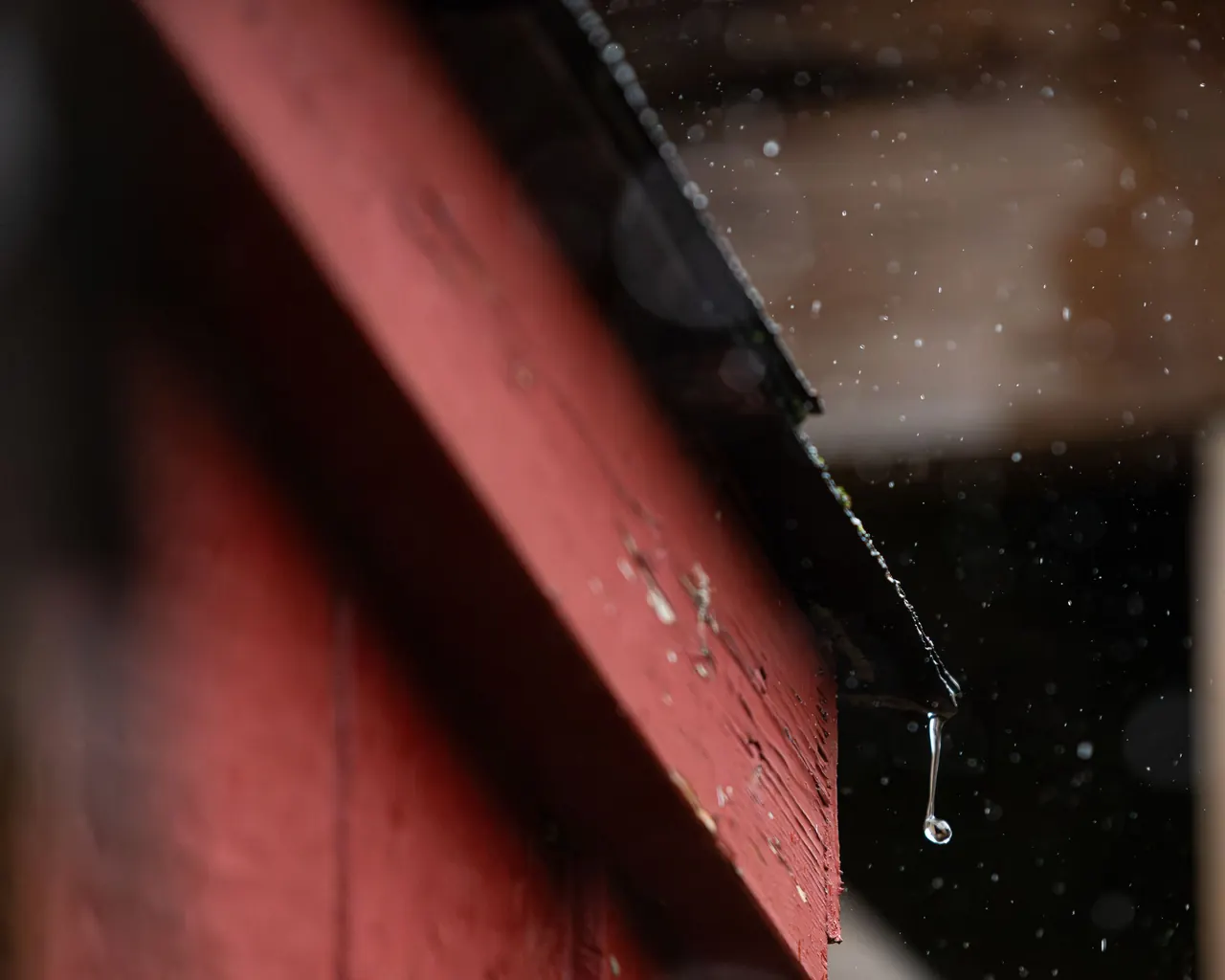
Rodding the boxed-in downpipes behind Station Way
We clear the gutter, then work on the downpipe, rodding or flushing it from the top or the bottom where the blockage is out of reach. We run water through the whole system to prove it flows to the drain.
Then we look for the reason it blocked: a section that has lost its fall, a bracket that has given way, an outlet too small for the roof, a hopper packed with nesting material, or a valley dumping debris into one spot. We fix what we can on the visit and explain anything bigger, with photos you can forward to the freeholder or managing agent. If the gutter has overflowed for a long time, we check the boards behind it for rot too.
The Which? roofer cost guide lists £75 to £350 excluding VAT for clearing all gutters front and back, a UK figure that does not include repairs found during the visit.
Once it is clear, keeping it that way is mostly about a regular clean, and our gutter cleaning page for the village covers timing. If the run itself is cracked or sagging, see our gutter repairs in the village. Where a blocked outlet has been flooding a flat roof behind a shop, our flat roofing page explains what to check. Rodding and flushing methods are on the blocked gutter repair page.
Frequently asked questions
Water pours off the gutter onto our shop sign on Station Way. Who should arrange the clear?
Usually the freeholder or whoever manages the building, but anyone can call us. We clear it, photograph the cause and send the findings and any repair price to whoever is responsible.
Our downpipe is boxed in behind the rear addition. Can you still clear it?
Usually, yes. We rod it from the gutter outlet and from the drain end. If it is cracked inside the boxing, we will tell you where and what it would take to reach it.
Our house on Station Way is locally listed. Does clearing or repairing its gutters need council approval?
No. Clearing a gutter is maintenance, and like-for-like repairs on a locally listed building are not a planning matter. Changing the gutter's material or profile is where it is worth asking the council first.





