



 Google reviews

Cornices and painted fronts
Edward Terrace, at 246 to 254 High Street, was built in 1868 by Edward Rabbits, the developer behind several of Sutton's Victorian estates. It is a row of five three-storey units, now painted white, finished at the eaves with double dentilled cornicing and brackets. Further south, the Italianate terraces at 19 to 29 have a prominent cornice with a dentilled bedmould. On fronts like these, the gutter sits at or just above the cornice, so anything it drips lands on the most decorative part of the building first.
A leaking joint or a sagging section on a parade like this does slow damage. Water soaks into the cornice and the brick below it, paint flakes, mortar softens, and the damp works into the top-floor flat. Fixing the gutter early is much cheaper than repairing a cornice later. Gutter repair means putting the fault right without replacing the whole system: resealing a joint, resetting or replacing a bracket, swapping a cracked section or reconnecting a downpipe.
Hoppers on long town centre downpipes
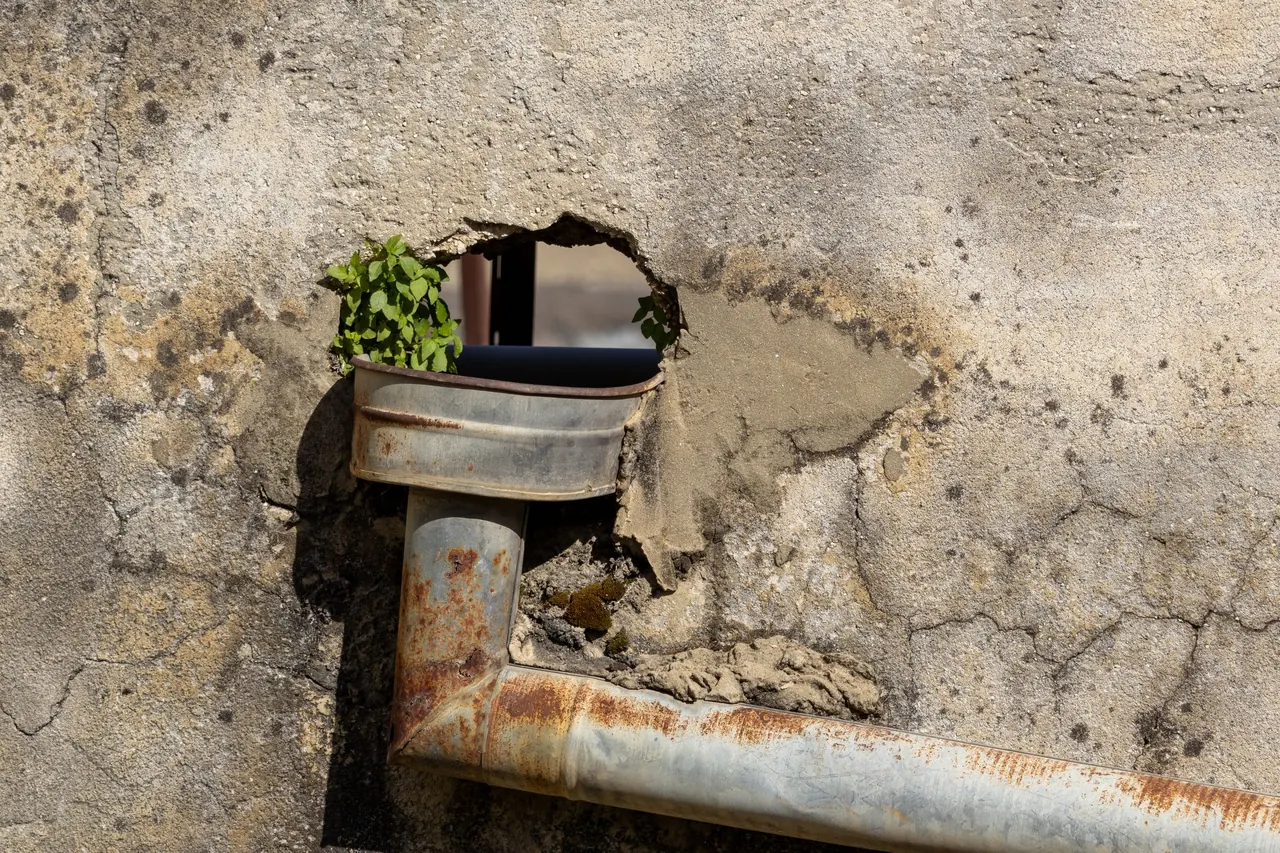
On tall buildings the gutter often empties into a hopper head before a long pipe to the ground. Hoppers crack, rust through if they are cast iron, or pull away from the wall, and because they sit two or three floors up, a leak can run for years. The same goes for the joints between sections of a long downpipe, especially where it steps out around a string course or cornice.
On the 1930s to 1950s parapet buildings, the hopper is fed by an outlet through the parapet. If the joint between outlet and hopper fails, water runs down the inside face of the wall instead of into the pipe. We reseal or replace the hopper and check the outlet at the same time; where the outlet itself is blocking, see our blocked gutter repair page.
Where original cast iron survives on an older front and the metal is sound, we repair it, resealing joints and replacing failed brackets or single sections, which matters on buildings where the conservation area expects like for like.
Runs shared between two buildings
Many High Street parades were built as a single run, but the buildings in them can now have different owners, so one gutter may pass along several properties. A leak at the boundary may come from either side. Responsibility for a shared run depends on the deeds and leases of both buildings. We can quote for the whole length and send photographs to both owners or agents, which is often the quickest way to get it fixed once.
When a run is failing everywhere, with brittle sections, cracked joints all along and a lost fall, repairs become a stopgap and new guttering is better value. As a guide, MyJobQuote's gutter repair cost guide gives an average UK repair at around £215, before any access equipment a three-storey front needs. If the board behind the gutter has gone soft, the main fascias and soffits page explains what replacing it involves.
Frequently asked questions
Can a cracked hopper head on a three-storey parade be replaced on its own?
Yes. A hopper can be swapped without touching the gutter or the rest of the pipe, provided the fixings into the wall are sound. We match the size and style to the building where it shows from the street.
The gutter on our parade drips onto the cornice. Will that damage it?
Over time, yes. Water sitting on a brick or moulded cornice softens the mortar and breaks down the surface, and in frost it can push pieces off. It is worth fixing the drip before the cornice needs work of its own.
Do you need to close the pavement on the High Street to repair a gutter?
Not usually. Many repairs can be reached from the rear or from a tower set up out of trading hours. For front work over the pedestrianised street, we plan access so the area underneath is kept safe while we work.





