



 Google reviews

Parades built as a single run
Several parades on Sutton High Street were built in one go as a single run. The street has the six red brick Italianate terraces at 19 to 29, put up around 1843 to 1847 before the railway arrived, the 1880s slate terrace at 60 to 76, of which eight buildings survive from an original fourteen, and Edward Terrace at 246 to 254, five units built in 1868. Buildings of one build often share a continuous roofline at the back.
That is where seamless guttering has a real job to do. A sectional gutter along the back of a three-storey parade has a joint every few metres, and each joint is a seal that will dry out eventually, drip onto a service yard and soak the wall below. Because it is two or three floors up, every repair needs access equipment. A seamless aluminium gutter is formed to the length of the run, so the only joints are at corners, stop ends and outlets. Along a long straight rear eaves, that removes most of the places a leak can start.
Whether a particular parade suits it depends on what is actually at the back: one continuous eaves, or a series of short runs broken by rear outriggers, stacks and later additions. We look before recommending it.
Where seamless does not fit on the High Street
A lot of the town centre is not a good fit, and it is worth being clear about where.
- Parapet buildings. The 1930s to 1950s buildings, such as the corner at 211, have flat roofs behind brick parapets and no eaves gutter at the front. Their water leaves through outlets into hoppers, so there is nothing for a seamless gutter to replace.
- Conservation area fronts. On the street side of the older parades, the draft management plan wants upper floor detailing kept and reinstated. A traditional profile in cast iron or a matching system is usually the better choice there, covered by our gutter installation service.
- Short, broken runs. Where the back of a building is stepped by outriggers every few metres, a seamless run has few joints to save, and a standard system does the same job.
And if your existing gutter is fairly new with one leaking joint, a gutter repair is better value than a new system.
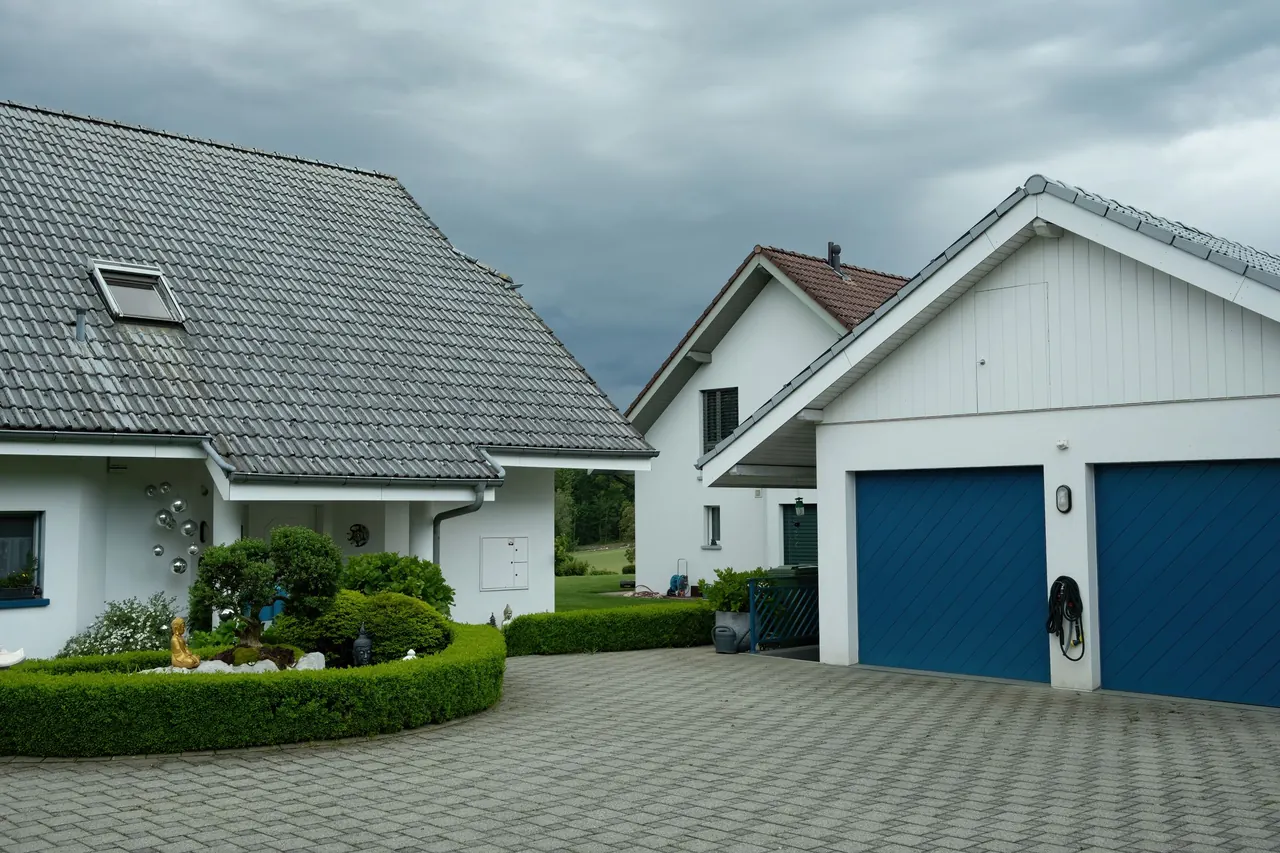
Measuring and fitting a rear run
Most rear runs on the High Street are reached from a service yard or rear access road, which is also where a tower or scaffold can stand without affecting the shopfront. We measure the roofline precisely, because each run is made to length, and check that the fascia boards behind will hold the brackets; on older parades they are often soft and are better replaced first.
The run is then formed to the measured length, fixed on brackets at the correct spacing with a steady fall to the outlet, and joined only at corners and outlets. Downpipes are connected properly at the bottom, and we run water through to check there are no low spots. Aluminium comes in coated colours, so it can be dark enough to sit quietly against old stock brick. As a guide, MyJobQuote's guttering replacement cost guide gives aluminium guttering at £55 to £78 per metre supplied and fitted, before access costs. The main seamless gutter installation page has more on the system itself.
Frequently asked questions
Can a seamless gutter run along the back of a whole parade like 19 to 29 High Street?
If the rear eaves is continuous, yes, and that is where it works best. Where each building has a different owner, they need to agree to the work together, and we can price each building's share.
Our building on the High Street has a flat roof behind a parapet. Is seamless any use?
Not for the roof itself, since there is no eaves gutter to replace. It can still suit a pitched rear addition with its own eaves, if that has a long enough run to be worth it.
Can the gutter be fitted from the service yard behind the shops?
Usually, yes. Rear access is the normal route for these jobs, and it keeps the work away from the pedestrianised front and the shop entrance.





