



 Google reviews

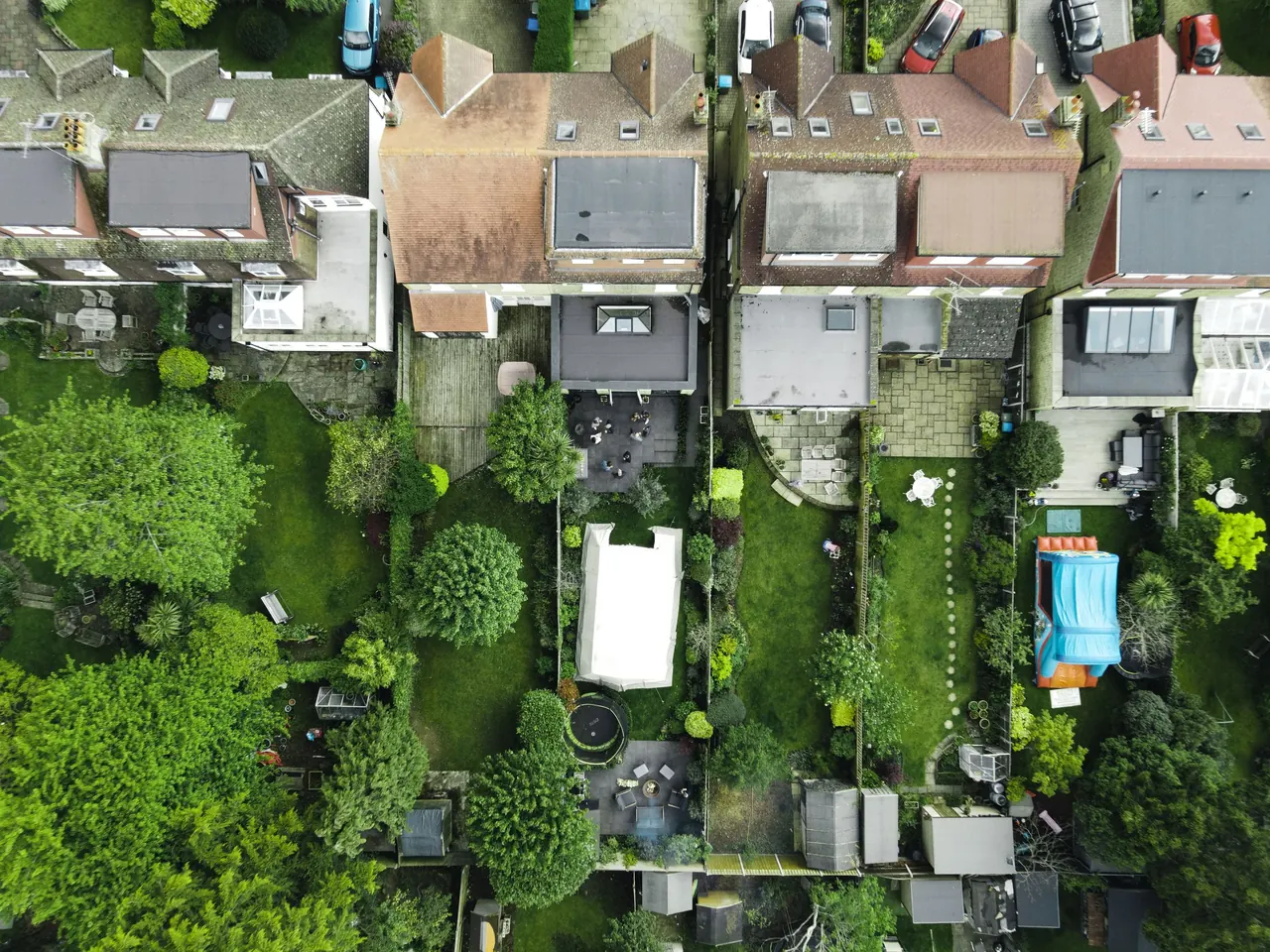
How the park-side plots filled with flat roofs
When Croydon Road's park side became part of a conservation area in 1970, it was still mostly detached houses in large plots. Sutton Council's Beddington Park conservation areas appraisal (2021) records some 1930s redevelopment and the subdivision of plots to provide bungalows backing onto the park, followed later by flats and cul-de-sacs such as Berkeley Court, Paston Close and Bloxworth Close.
A bungalow that needs more room usually gets it at ground level. Kitchen extensions, garden rooms and garages with flat roofs are the result, often added at different times by different builders, so one house can have two or three flat roofs of different ages. The newer cul-de-sacs add garages and porch canopies of their own.
Under the Croydon Road trees
A flat roof behind a park-side bungalow sits under some of the biggest trees in Beddington. The appraisal names sycamore, horse chestnut, lime and oak along Croydon Road. Leaves settle in the corners, moss takes hold in the damp, and the outlet or edge gutter blocks. Water then backs up against the upstands, which is where an older covering gives way first. Water lying on a roof two or three days after rain usually means a blocked outlet or a sagging deck, and our guide to water pooling on a flat roof explains when it matters.
Under trees like these, the covering choice has a practical side. EPDM rubber goes down in a single sheet with very few joints, which suits a large bungalow extension. GRP fibreglass can be formed round awkward upstands and kerbs. Torch-on felt suits like-for-like work. Whichever goes on, the edge detail has to let leaves wash off rather than collect, and booking gutter cleaning in Beddington after the leaf fall takes a lot of strain off the roof itself.
Rubber roofing runs to £110 to £160 per m² including labour by MyJobQuote's published national figures, so a large bungalow extension is a bigger job than a cottage back addition, and rotten decking under old felt adds to it.
Back additions between the Richmond Road cottages
North of the Wandle, flat roofs sit in a different place: on the back additions and kitchen extensions of the Victorian terraced cottages on Richmond Road and Wandle Road. These are small roofs squeezed between neighbours, meeting a wall on two or three sides, so most of their length is upstand and flashing. The covering itself is rarely the first thing to fail. The junction with the brickwork is.
Re-covering an existing flat roof like for like is routine in the Beddington Village Conservation Area. Raising it, changing its shape or adding a rooflight is the sort of change where Sutton Council may want a say, so ask them before you commit. If you are planning a new extension rather than re-covering an old one, our roof installation page for Beddington covers building the roof onto the house, and our main flat roofing page compares lifespans.
Frequently asked questions
Our Croydon Road bungalow has three flat roofs of different ages. Should they all be re-covered at once?
Not unless they are all failing. It is common for one to be sound while another is past patching. Where two roofs meet, though, doing both together avoids a joint between old and new coverings, which is where leaks tend to start.
Water comes in where the back addition of our Wandle Road cottage meets next door's wall. Is that the roof covering?
Usually not. On a roof hemmed in by walls, the lead or the upstand where the covering turns up the brickwork is the likelier fault, and it can often be renewed without re-covering the whole roof.
Is old felt on a garage behind a Paston Close house worth patching?
If it leaks in one spot and the rest is flat and firm, a patch can buy a few years. If the felt has blistered and crazed all over, or the deck flexes underfoot, re-covering is the better spend.





