



 Google reviews

Sandy Lane North: the oldest roofline in Bandon Hill
Walk Sandy Lane North from Beddington Grove to Plough Lane and you pass most of Bandon Hill's first generation of houses. The local history society's study of Beddington and Bandon describes three small cottages at 40, 42 and 44 (Well House) and a semi-detached pair at 46 and 48 that appear to date from the mid-19th century. At the Beddington Grove end, three shops and the houses beside them were built on land leased on Christmas Day 1871 and offered for sale in September 1872. At the Plough Lane end, the Model Cottages, now 57 to 61A Plough Lane and Grade II listed, were begun soon after the plot was sold in 1858 and, in the words of their listing, have yellow stock brick fronts with red brick dressings under plain tile roofs.
Roofs on houses this age have usually been repaired many times by many hands. What fails first is rarely the slate or tile itself. It is the nails that hold it, the battens under it, the mortar along the ridge, and the lead or cement where the roof meets a chimney or a wall. A slate that slides out in a gale is a sign that its fixing has gone, and the ones either side are probably not far behind.
Matching what is there, slate or tile
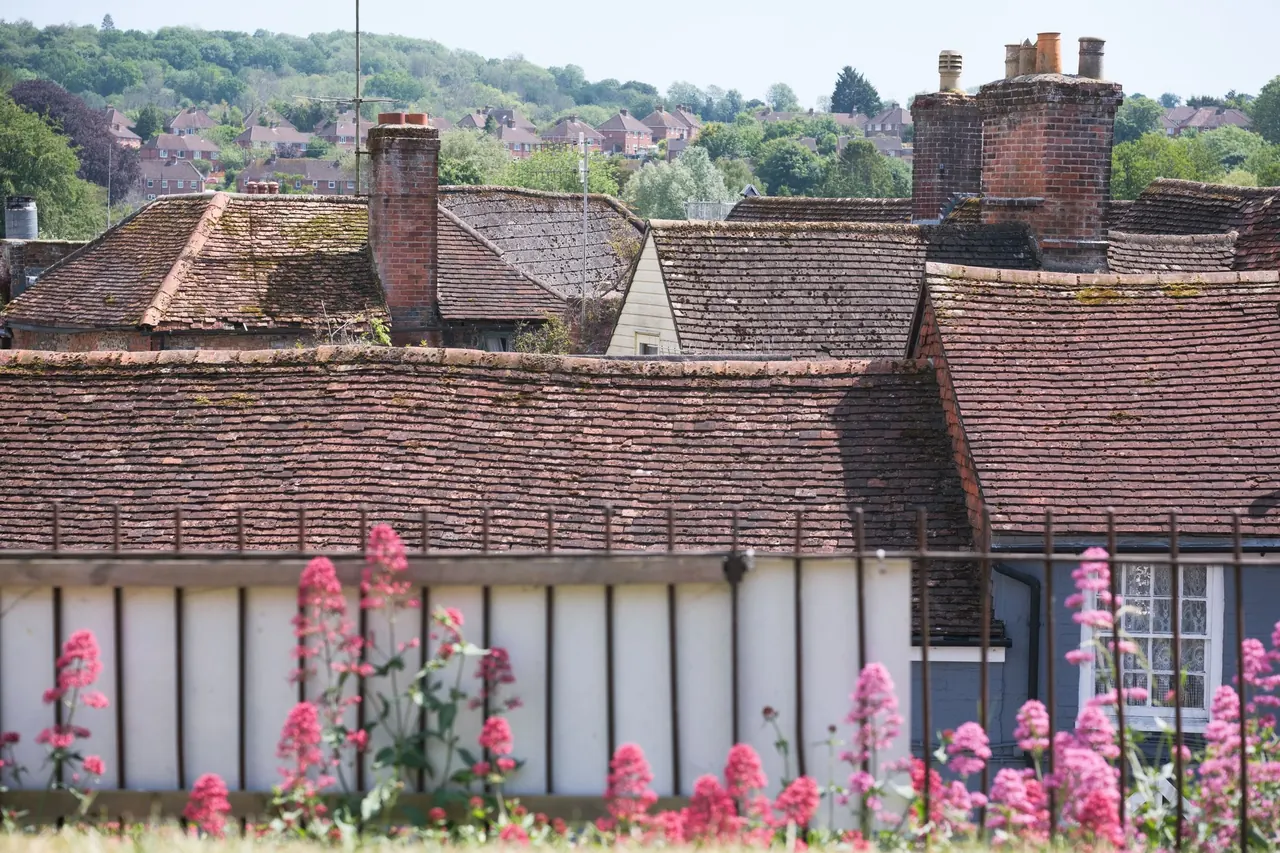
Bandon Hill does not have one roof material. The Model Cottages are tiled. The old New Inn and Taunton Place cottages on Upper Road were described as slate-roofed when they were let in 1881. The terraces that followed have their own mix, and many have been re-covered at some point with whatever was available at the time.
So a repair starts with finding out what is actually on your roof and matching it. For slate, that means the right size and thickness, fixed so it cannot slide again. For old tiles, it can mean reclaimed tiles of the same size and colour, because a modern tile may not sit on the same batten gauge. Where an earlier repair has used a cement fillet against a wall or stack, we replace it with a proper lead flashing rather than adding another layer of cement. The Sandy Lane / Upper Road area has been an Area of Special Local Character since 1988, so on a front slope it is worth getting the match right.
South of Stafford Road: ridges, hips and later additions
Cross the B271 and the houses change. Off Sandy Lane South and Foresters Drive they are mostly 1930s, with post-war houses towards the southern end of Foresters Drive. These roofs are usually tiled and hipped, and the typical faults are different: ridge and hip tiles whose mortar bedding has cracked and washed out, the small roof over a front bay, and the joint where a later side extension or dormer has been tied into the main roof.
A rocking ridge tile is rarely a broken one. In most cases the tile is sound and the mortar under it has failed, so we lift it, clean it off, rebed it and point it, replacing only the tiles that are cracked. The Which? roofer cost survey of November 2025 put a single new ridge tile at between £80 and £300 before VAT, depending mostly on access.
A stain on the landing, a fault at the back
On a Bandon Hill terrace, many leaks show up some way from their cause. Water can run along a rafter or the top of a ceiling before it drips, so a stain over the landing may start at the valley where the back addition meets the main roof. We visit and give you a free quote, often the same day, after looking at the roof from outside and from the loft where there is access. If the back of a terrace cannot be seen safely from a ladder, the drone does that part. If a repair will not solve the problem, we say so.
Our guide on whether you need a repair or a full replacement explains where the line usually falls. If the stack is the problem, our chimney repairs in South Beddington page covers it, and splits in a garage or extension roof are dealt with on our flat roofing page. The main roof repair page lists every repair we carry out.
Frequently asked questions
The cottages at 40 to 48 Sandy Lane North look older than the rest of the road. Is the roof as old as the house?
Probably not. A mid-Victorian cottage has almost always been re-covered or heavily repaired at least once. The loft usually tells the story: old riven laths, newer battens, felt from a later re-roof. Knowing which parts are original helps us decide what to repair and what to leave alone.
My ridge tiles off Foresters Drive are rocking. Do they all need replacing?
Not usually. On a 1930s or post-war hipped roof the tiles are often fine and the bedding mortar has failed. We rebed and point the loose ones, check the hips at the same time, and only replace tiles that are cracked.
Water is coming in where my back addition on Tharp Road meets the main roof. Why there?
That junction takes water from two slopes and often has a valley or a stepped flashing against the wall. On houses of this age it may have been patched with mortar or mastic, which cracks as the roof moves. We check the valley, the flashing and any back gutter together, because fixing one and missing another leaves the leak in place.





