



 Google reviews

End stacks on the Plough Lane Model Cottages
The four Model Cottages at the corner of Sandy Lane North and Plough Lane, now 57 to 61A Plough Lane, were built for the Rev. James Hamilton after he bought the plot in September 1858. The local history society's study of Beddington and Bandon describes an external chimney at each end of the row, one carrying a coat of arms and the other a plaque dated 1859. The listing describes yellow stock brick fronts with red brick dressings and plain tile roofs, and the whole range is Grade II listed, so work that changes the stacks or their materials needs listed building consent from Sutton Council.
An external end stack like these is exposed on three sides, not just above the roof. Rain hits the face of the brickwork all the way down, so the pointing works harder than on a stack that rises through the middle of the house. Where the stack meets the roof slope, the flashing has to seal a side joint as well as the top. And a stack with a dated or carved panel is not one to cover in render or a smear of sealant when it starts to leak.
Party-wall stacks on Upper Road and Tharp Road
On the terraces that followed, from the older cottages on Upper Road to the Tharp Road houses built between 1899 and 1903, the stacks mostly sit on the party walls and serve two houses at once. Each half of the stack has its own flues and its own pots, but the brickwork, the flaunching on top and the flashing where it meets the roof are continuous. Mend one side and leave the other, and water can still get in where the two meet.
Many of these stacks also have a back gutter, a small lead tray on the uphill side where the roof slope runs into the stack. Debris collects there, and when it blocks, water backs up under the flashing and into the loft. A leak that looks like a failed chimney is sometimes just a choked back gutter, so we check it before quoting for anything bigger. If the slates or tiles around the stack are part of the problem, the South Beddington roof repair page covers that work.
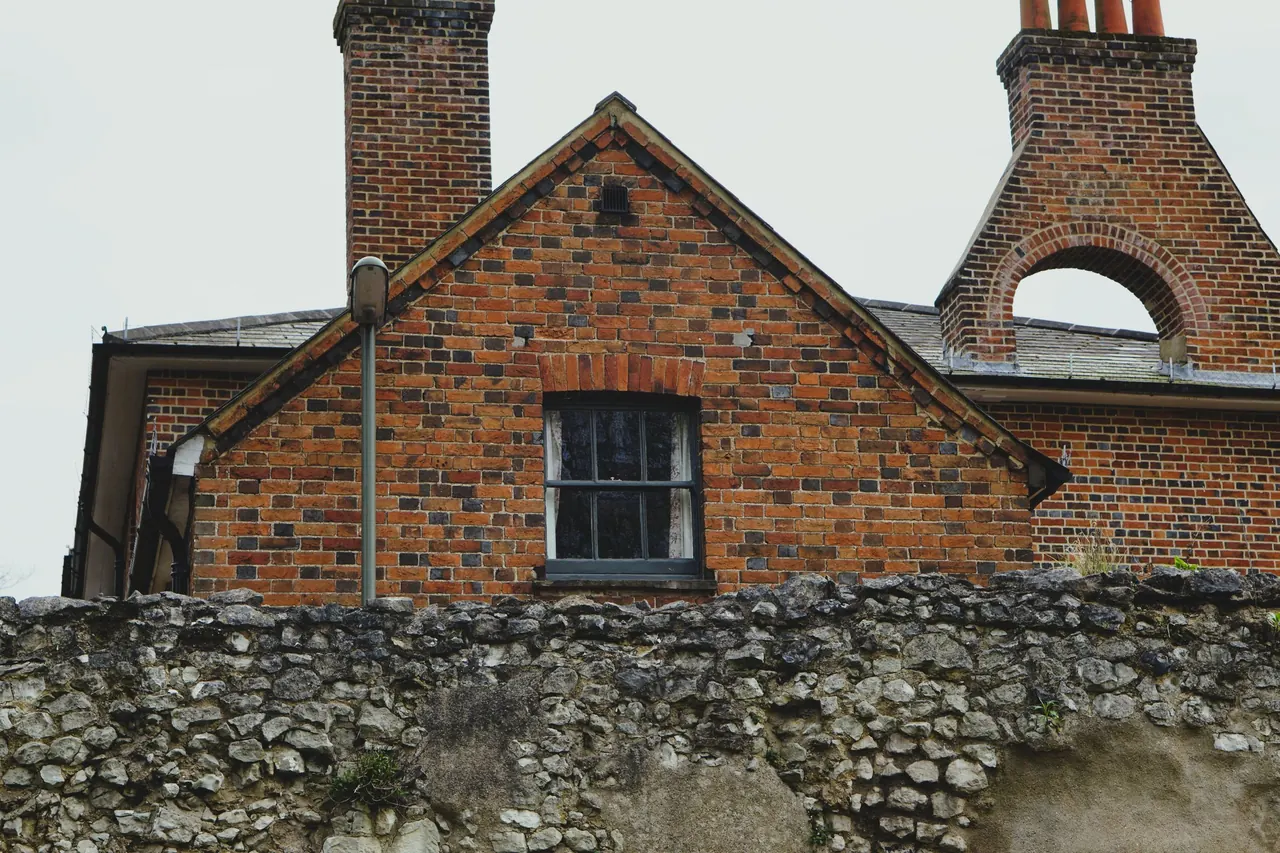
Leadwork and pointing on Bandon Hill's Victorian stacks
- Lead flashing: refitted where it has lifted, or replaced where it has split, with the top edge set into a raked-out mortar joint rather than glued to the face of the brick.
- Repointing: crumbling joints raked out and refilled so water cannot soak into the stack.
- Flaunching: the mortar bed around the pots renewed where it has cracked and lets water down the inside.
- Pots and cowls: loose pots reset, and unused flues fitted with a ventilated cap or cowl to keep out rain and birds while letting the flue breathe.
- Storm damage: a stack and the roof around it made safe after high winds.
Our chimney maintenance guide lists what you can check yourself from the ground or the loft.
Scaffold over a small front garden
Smaller jobs, such as refixing a length of flashing, resetting a pot or fitting a cowl, can often be done from roof ladders. Re-leading or repointing a whole stack usually needs a scaffold around it, and on a terrace with a small front garden that has to be planned with the pavement in mind. We look at the stack closely with the drone first, so you know before work starts whether a scaffold is needed. MyJobQuote's chimney flashing guide puts replacing all the leadwork on a stack at £350 to £920, with the top of that range applying when a scaffold goes up. More detail is on our main chimney repairs page.
Frequently asked questions
Can the coat of arms on a Model Cottages chimney survive repointing?
Yes. Repointing means raking out the old mortar joints and refilling them, not covering the face of the stack, so a carved or dated panel stays as it is. Because the cottages are Grade II listed, check with Sutton Council's conservation officer before work starts: a change of mortar or a new lead detail can need consent. We work around the panels by hand and leave the brick face clean.
Our Tharp Road stack has an old aerial bracket strapped to it. Could that be causing damage?
It can. Straps and brackets fixed into the joints can crack the pointing, and an aerial rocking in the wind loosens it further. If the aerial is no longer used, taking the bracket off and repointing the joints it was fixed into is a small job while we are on the stack.
Why does our stack only leak when rain comes across Mellows Park?
Wind-driven rain from one direction hits one face of the stack hard. If that face has worn pointing or a gap in the side flashing, water gets in only in those conditions. We look at each face of the stack separately rather than assuming the whole thing has failed.





