



 Google reviews

Three generations of roof on one row
Look along the back of a Bandon Hill terrace and you can often see three or four generations of roof side by side. Houses have been re-covered one at a time, decades apart, in whatever was cheapest or easiest then, while next door may still carry a covering that has had the same weather for well over a century.
Tharp Road shows why. According to the local history society's study of Beddington and Bandon, it was built up between 1899 and 1903. Sutton's 2024 draft character study uses it as its example of pre-1915 terraces: small two-storey houses with minimal front gardens, low walls and no off-street parking. Mellows Road and the terraced stretches of Sandy Lane belong to the same family of streets.
The signs that yours is past repairing are much the same as on any old roof: slipped slates or tiles across the whole slope rather than in one place, nails rusted through, battens soft enough to push a screwdriver into, and a loft where you can see daylight or where any felt has torn and hangs loose. If you are unsure, a drone and loft inspection shows us every slope and the timbers, and gives you photos to judge it by.
If your row is in the Sandy Lane / Upper Road character area
The Sandy Lane / Upper Road area was made an Area of Special Local Character in 1988. Sutton's 2018 Local Plan describes it as 8.7 hectares of large terraced Victorian and Edwardian houses. The designation is local: a like-for-like re-roof does not normally need planning permission, and nothing stops you replacing a failed roof. It is still worth checking with the council before you change how a front slope looks.
In practice, that means choosing a covering with the row in mind. A terrace where one house has a different colour or profile of roof stands out from the street for the next fifty years. Weight matters too. Heavier concrete tiles put more load on rafters cut for a lighter covering, so on an Edwardian terrace we check the timbers before recommending anything heavier than what was there.
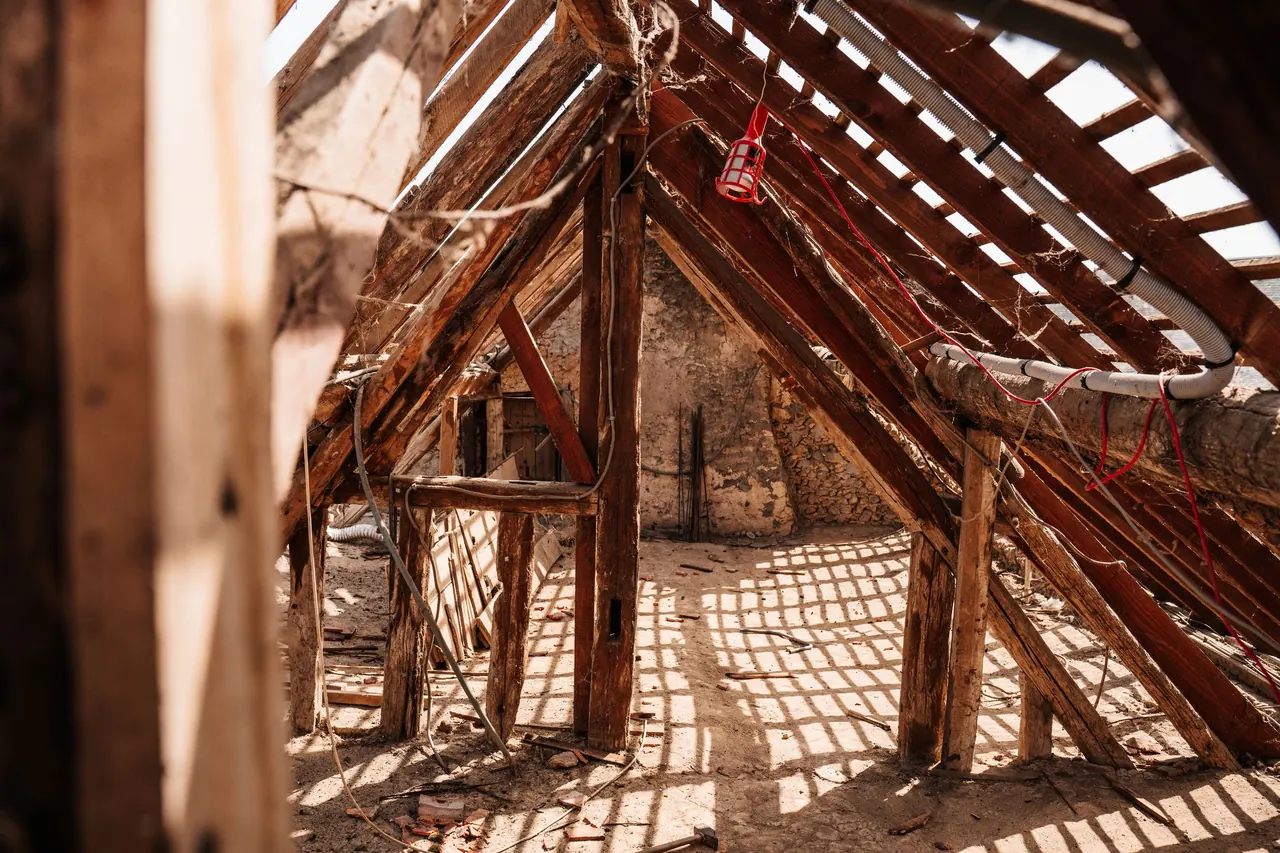
What we find under a 120-year-old terrace roof
Once the scaffold is up and the old covering, battens and any underlay are off, the roof shows its history. We look at every rafter, the purlins and the wall plates, and replace or strengthen anything rotten or split. Then a breathable membrane goes on, new battens at the gauge the new covering needs, and the covering itself from the eaves up, finished with the ridge, valleys and flashings around the stacks and the back addition.
Two things are particular to these rows. The first is the party wall: your roof meets your neighbour's along it, usually with a shared stack, and we finish that line so the step between your new roof and their old one does not become the next leak. The second is access. With a small front garden and no drive, the scaffold and the waste have to be planned with the street in mind, and anything that stands on the pavement or road needs a licence from the council. While the scaffold is up, it is the cheapest moment to renew the fascias and soffits as well.
The Which? November 2025 survey of roofers put a new tiled roof on an average three-bedroom house at £7,000 to £21,000 before VAT. A two-storey terrace roof is usually smaller than that, but scaffolding and access weigh more heavily on a narrow street.
Frequently asked questions
Tharp Road has no front gardens to speak of. Where do the scaffold and the waste go?
The scaffold usually stands across the front of the house and on the pavement, which needs a licence from Sutton Council, and the waste goes either into a skip on the road, which also needs one, or into bags that are taken away as the job goes. We plan this before the start date so neighbours know what to expect.
Can you keep the shared chimney stack when re-roofing my Mellows Road terrace?
Yes, in most cases. The stack stays, and we re-flash it into the new roof. If the pointing or the flaunching around the pots needs work, doing it while the scaffold is up saves paying for access twice. Your neighbour should know beforehand, because the stack is half theirs.
Our 1930s roof off Foresters Drive still has its original tiles. Should we replace it before it leaks?
Not just because of its age. The bigger hipped roofs south of Stafford Road tend to wear first at the hips and ridges, and many original interwar tiles are still sound. The question is the fixings, battens and underlay under them. An inspection tells you whether you have years left with repairs, or whether patching would only be putting off a re-roof. Our main roof replacement page explains the full process.





