



 Google reviews

First, whose emergency is it?
On the Roundshaw estate the quickest route to a dry ceiling depends on how you hold your home, so it is worth knowing before the next storm rather than during it.
- You rent from MTVH: call MTVH's emergency repairs line. The roof is the landlord's to repair.
- You own a leasehold flat or maisonette: the roof of the block is normally the freeholder's, so report it to MTVH or your managing agent first.
- You own your house freehold: the roof is yours, and you can call us direct. Our phone is answered at any hour on 0330 133 4111.
If you are a leaseholder and cannot get through, take photos and a note of the time you rang. That record helps when the repair and any damage are sorted out later.
Apeldoorn Drive, Spitfire Road and the open edges
Roundshaw Downs is 52.7 hectares of chalk and neutral grassland, woodland and scrub on the south side of the estate, and Roundshaw Park and its playing fields add more open ground to the west and east. In a storm that open ground gives the wind a clear run at the estate.
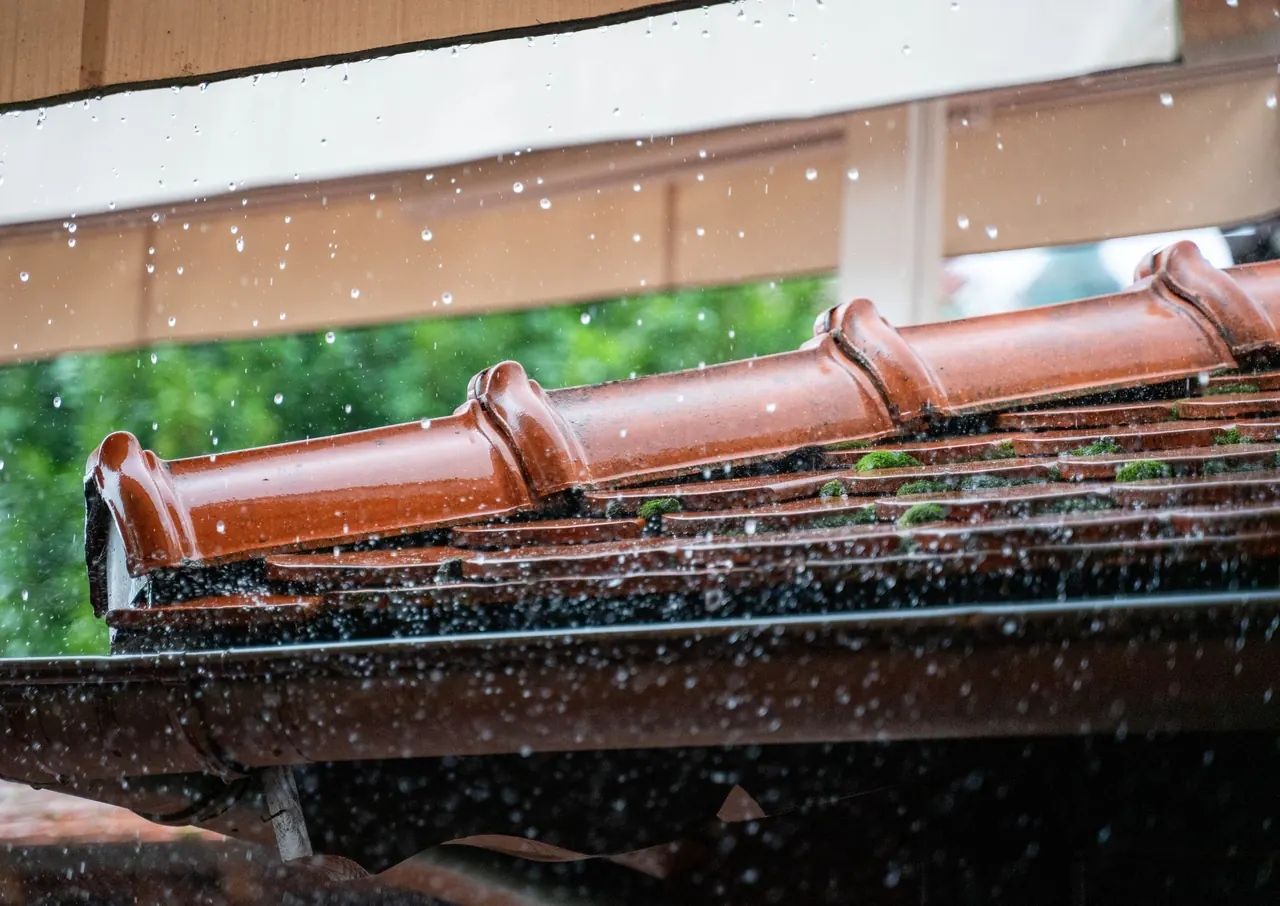
The houses that meet it first are on the outer rows. Apeldoorn Drive and Rheingold Way back onto the Downs, Lancastrian Road and Jean Batten Close sit between the playing fields and the Downs, and Spitfire Road and Redwing Road face the playing fields. Storm damage on these roofs usually starts at an edge: a ridge line lifted from one end, a run of verge tiles stripped off a gable, a gutter section hanging by one bracket, or rain driven through a gap at a flashing.
Most of these roofs date from the 1998 to 2010 rebuild of the estate. Being young does not stop a ridge or verge fixing letting go once the wind is under it.
Signs it cannot wait
- Water is coming through a ceiling, a light fitting or down an inside wall.
- Ridge tiles, verge tiles or a gutter section are loose above a front path, a shared footpath or a parking bay.
- Part of the covering has gone and you can see felt, membrane or timber.
- A flat roof over a porch or extension has split or peeled back at the edge.
- A branch has come down on the roof.
While you wait, keep people and cars clear of the side where material came down, because more can follow in the next gust. Catch the drip, move what you can away from it, keep away from any switch or fitting that has got wet, and take photos before anything is moved. Please stay off ladders in the wind. If nothing is falling and no water is getting in, a normal roof repair visit in Roundshaw is usually the better route.
What a temporary repair costs
The first job is to stop more water getting in and remove anything that could fall: refixing loose tiles, sheeting an open section and fixing the sheet down so the wind cannot take it, patching a split flat roof, or bringing down loose material. As a national guide, MyJobQuote's emergency roofer guide, updated October 2026, puts a temporary roof repair at £150 to £500, with the permanent repair priced separately.
Wind on open ground sets a limit. If gusts are still too strong to work at height safely, the roof work waits until the wind drops. Going up too early on an exposed roof puts both the roofer and the house at risk. Once the roof is safe, you get a price for the permanent fix, and the main emergency roof repair page explains the process in full.
Frequently asked questions
I am an MTVH leaseholder in a Roundshaw block and water is coming through from the roof at night. Who do I call?
Call MTVH's emergency repairs line first, because the roof of a block is normally the freeholder's to repair. Keep a note of when you rang and take photos of the damage as it happens.
Tiles from my Apeldoorn Drive roof have landed in the garden. Is the house safe to stay in?
Usually, yes. Keep people away from the side of the house where the tiles fell, as the rest of that ridge or verge may be loose. Call us so the gap can be secured before the next rain.
My Spitfire Road house lost ridge tiles in the storm. Will my insurer want anything from me?
Most insurers ask for photos of the damage and the cause, and a written report or invoice for the repair. Take pictures before anything is moved, and keep the temporary and permanent work on separate paperwork so each can be claimed. Our guide to spotting roof damage after a storm shows what to look for from the ground on a row that faces open land.





