



 Google reviews

Stacks the conservation area depends on
When Croydon Council wrote its appraisal of the Croham Manor Road Conservation Area, it listed the features that give the Chapman houses their character. Prominent brick chimney stacks are on that list, alongside the steep hand-made clay tiled roofs, catslides and gablets. The same appraisal names the loss of original features, brick chimney stacks among them, as a threat to the area.
That shapes how chimney work should be approached here. A stack that is leaking, leaning or shedding mortar is a reason to repair it properly, not a reason to take it down. The houses date from the 1920s and 1930s, so most of these stacks are coming up to a hundred years old.
The stacks are tall because the roofs are steep, and they stand on a hillside 90 to 100 metres above sea level, so they take the weather. The usual sequence of decline is familiar: the mortar on the windward side washes out, water gets into the brickwork, frost opens up the joints, and the lead flashing at the base loses its grip as the joint it is tucked into crumbles.
Ye Market and the villa chimneys lower down
The stacks are just as much a part of the street elsewhere in South Croydon. The council's heritage review describes brick chimney stacks setting a regular rhythm along the roof of 1 to 12 Ye Market on Selsdon Road, between tiled gables and high party walls, and tall stacks with clay pots on 111 to 113 South End. On Birdhurst Road and Birdhurst Rise it picks out corbelled eaves and chimney stacks as features of the villas.
On a parade, each stack usually serves more than one property, and the flashings sit against party walls as well as roof slopes. On a three-storey villa, the stack is high enough that a loose pot or brick is a hazard to the pavement as well as a leak. Both need planning before anyone goes up, which is why we photograph the stack first.
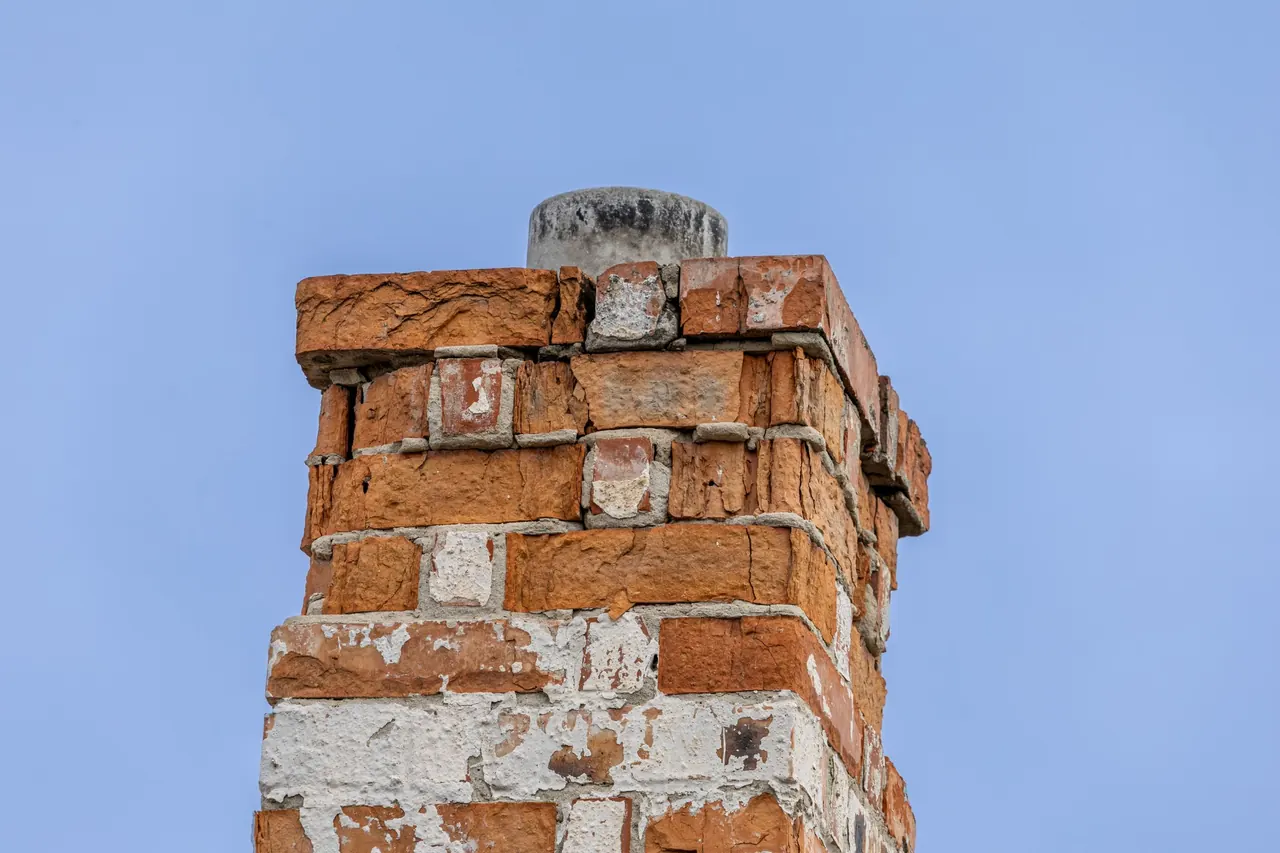
Lead, mortar and pots on a steep clay roof
Most chimney leaks come down to one of four things, and on these roofs we check each of them in turn:
- Flashing: the lead apron, side steps and back gutter around the base of the stack. On a steep clay-tiled roof the back gutter, on the uphill side, collects water and debris from the whole slope above it, so it is often the first part to fail.
- Pointing: mortar raked out and replaced. On these houses the mortar should be matched in colour and strength to the original, because a hard modern cement mortar can damage softer old bricks.
- Flaunching: the mortar cap around the pots, which cracks and lets water straight down the inside of the stack.
- Pots: reset on new flaunching, or fitted with a cowl where a flue is no longer used, so rain and birds stay out while air still moves through.
Lighter jobs, such as resetting a pot or dressing back a section of lead, can often be done from a roof ladder with the right safety equipment. Rebuilding the top courses or full re-leading usually needs a scaffold. The drone photos let you see the state of the stack before you decide.
The national MyJobQuote chimney leadwork guide gives £350 to £460 for full leadwork replacement without scaffolding. A tall Croham stack that needs a scaffold on a sloping garden will cost more, and we show the scaffold as its own line on the quote.
If tiles around the stack need attention too, our roof repair team in South Croydon handles them on the same visit. Our chimney maintenance guide goes further into why lead and mortar fail, and the main chimney repairs page covers every type of stack. Planning rules across South Croydon's conservation areas are summarised on our South Croydon roofers page.
Frequently asked questions
The stack on my Hurst Way house leans slightly. Is it dangerous?
Not always, but it needs looking at soon. Some old stacks lean because one side of the mortar has expanded over decades, and they have been that way for years. Others are moving now. We photograph it, check the brickwork and flaunching for fresh cracks and tell you whether it can be repaired in place or the top needs rebuilding straight.
Do you need scaffolding to repoint a chimney on a three-storey St Peter's Road villa?
For full repointing, usually yes. Working safely on all four faces of a tall stack for several days needs a proper platform. A small repair, such as resetting one pot, can sometimes be done from the roof with a ladder. We decide once we have seen the stack and the slope it sits on.
Can you match the brick if part of a Croham Manor Road stack has to be rebuilt?
We reuse as many of the original bricks as come down sound, cleaned of old mortar, and source reclaimed or new bricks as close as we can find for the rest. The mortar is mixed to match the colour of the existing joints, so the rebuilt section does not stand out against the rest of the stack.





