



 Google reviews

Pots, flaunching and lime on 1860s stacks
An 1860s stack fails from the top down. The flaunching, the mortar collar that holds the pots, cracks with frost and lets rain into the brickwork. The pots then work loose. Further down, the mortar joints wash out after well over a century of weather, and the lead flashing where the stack meets the slates lifts, splits or pulls out of its chase.
The estate has a lot of stacks worth keeping. The council's conservation area appraisal lists brick chimney stacks among the key features of the estate and the loss of chimneys among its threats. It picks out the houses at 16 to 22 Ashburton Road, built about 1900, for their tall stacks with a full set of matching pots, the four pairs at 23 to 28 Canning Road with central stacks and clay pots, and the Edwardian group at 164 to 178 Lower Addiscombe Road with prominent stacks.
The appraisal also names repointing with cement mortar instead of lime as a threat. That is a practical point as well as a heritage one. Soft stock brick laid in lime needs to dry out through its joints. Hard cement pointing traps the moisture in the brick instead, and the faces of the bricks start to spall off. On the estate we agree the mortar for your stack with you before any repointing starts, with the council's guidance in mind.
Rendered stacks on Bingham Road
North of the estate, the Arts and Crafts houses at 10 to 24 Bingham Road have plain rendered stacks, with a red brick feature stack set centrally on the front of each group of four, according to the council's Local Heritage Area review. A rendered stack hides its brickwork, so the first sign of trouble is usually a crack in the render near the top, or a patch that sounds hollow when tapped. Water gets behind the render, freezes, and pushes it off.
Patching cracked render on a stack that is otherwise sound is a reasonable repair. Where the render has come away in sheets, it is better to take it back, check the brick and joints beneath, and re-render or repoint. The flashing at the base needs checking either way, since a leak blamed on a stack often comes from the lead below it.
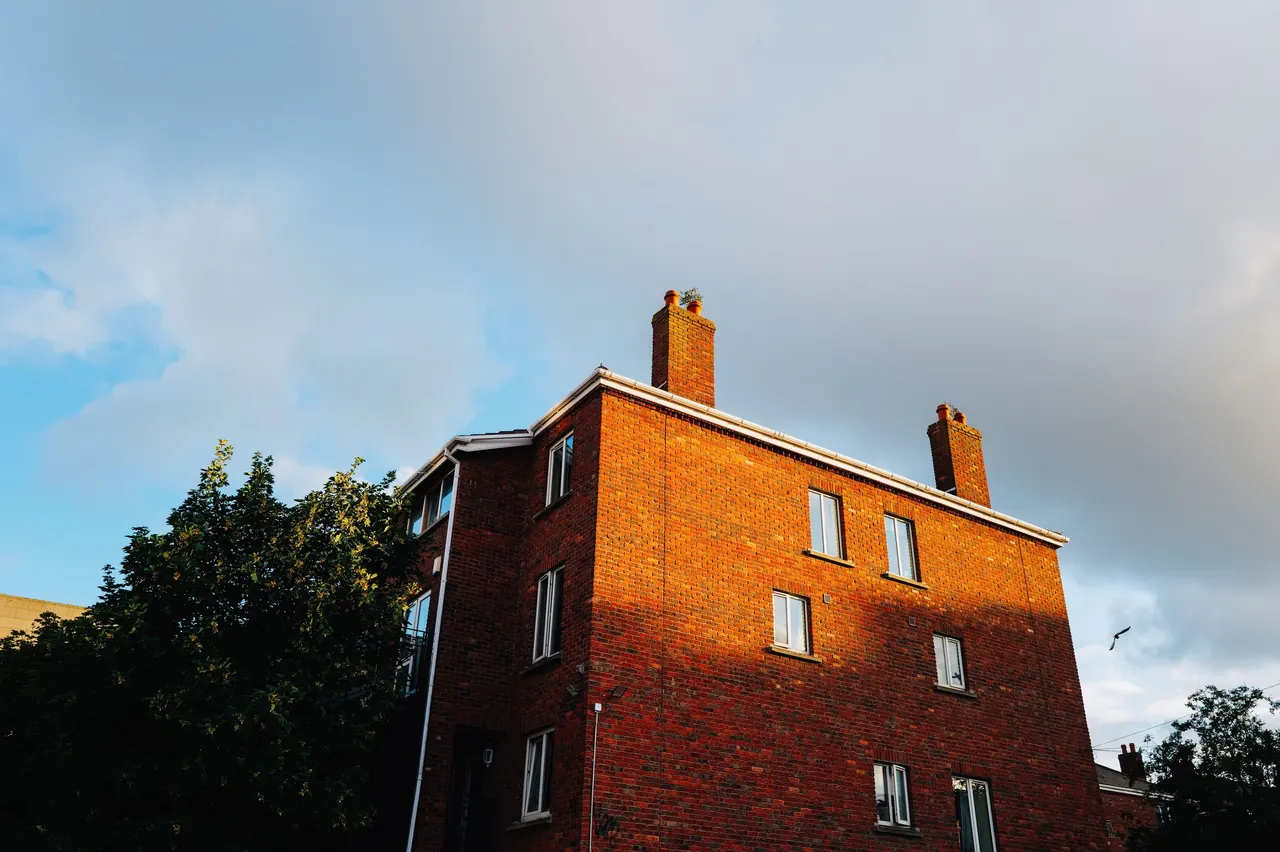
Central stacks three storeys above Canning Road
The top of a central stack on a three storey semi with a lower ground floor is a long way up, and on the narrow side gaps of the estate there is rarely room for a ladder to reach it. We fly the drone first to look at the pots, flaunching, brickwork and flashing in close-up, and you see the photos. That tells us what needs doing, and whether a roof ladder will do or the job needs a tower or scaffold.
Then we repair what has failed: rebedding or replacing pots, renewing flaunching, repointing open joints, and renewing lead flashing with the lead dressed into a raked-out joint. Unused flues get a ventilated cap so they stay dry without trapping damp. If the slates round the stack have slipped, we deal with them on the same visit through our Addiscombe roof repair service.
On removal: the appraisal treats the loss of chimneys as harmful. It does not list an Article 4 Direction for the estate, though the council keeps the right to serve one, so check the current position with Croydon's planning team before a stack comes down. Our chimney maintenance guide covers the routine care, and our main chimney repairs page lists the full range of work.
MyJobQuote's leadwork guide gives £700 to £920 nationally for full chimney leadwork with scaffolding, which is the more likely case on a house this tall.
Frequently asked questions
Should my Canning Road stack be repointed in lime or cement?
On the estate the council's appraisal lists cement repointing as a threat, and points owners towards lime. The brick is soft and was laid in lime, which lets it dry out through the joints. We agree the mortar with you before starting.
The rendered stack on our Bingham Road house has cracked near the top. Can it be patched?
If the rest of the render is firmly bonded, yes. We cut out the crack, fill and seal it, and check the flaunching above, since water through a cracked collar is a common cause. If the render sounds hollow over a large area, re-rendering is the better job.
One of the matching pots on our Ashburton Road stack has cracked. Can you match it?
We look for a reclaimed or new pot of the same shape and colour so the set still reads as one. If an exact match is not available, we show you the closest options before fitting one.





