



 Google reviews

Scaffold over a lower ground floor on Clyde Road
The big semi-detached pairs on Clyde and Canning Roads stand three storeys over a lower ground floor, with hipped or gabled slate roofs and a central stack. Re-covering one is a large job before a single slate comes off. The scaffold has to rise from the front garden past four floors of windows, the side gaps between houses are only a few metres, and materials have to be loaded somewhere that does not block the pavement or next door's steps. On these houses the scaffold is a big share of the cost and the programme, and access is often agreed with the neighbours before work starts.
Once it is up, the job runs in a set order:
- Strip. Slates, battens and old underlay come off. Sound slate is set aside, and where there is enough it goes back on the front slope with new slate making up the rear.
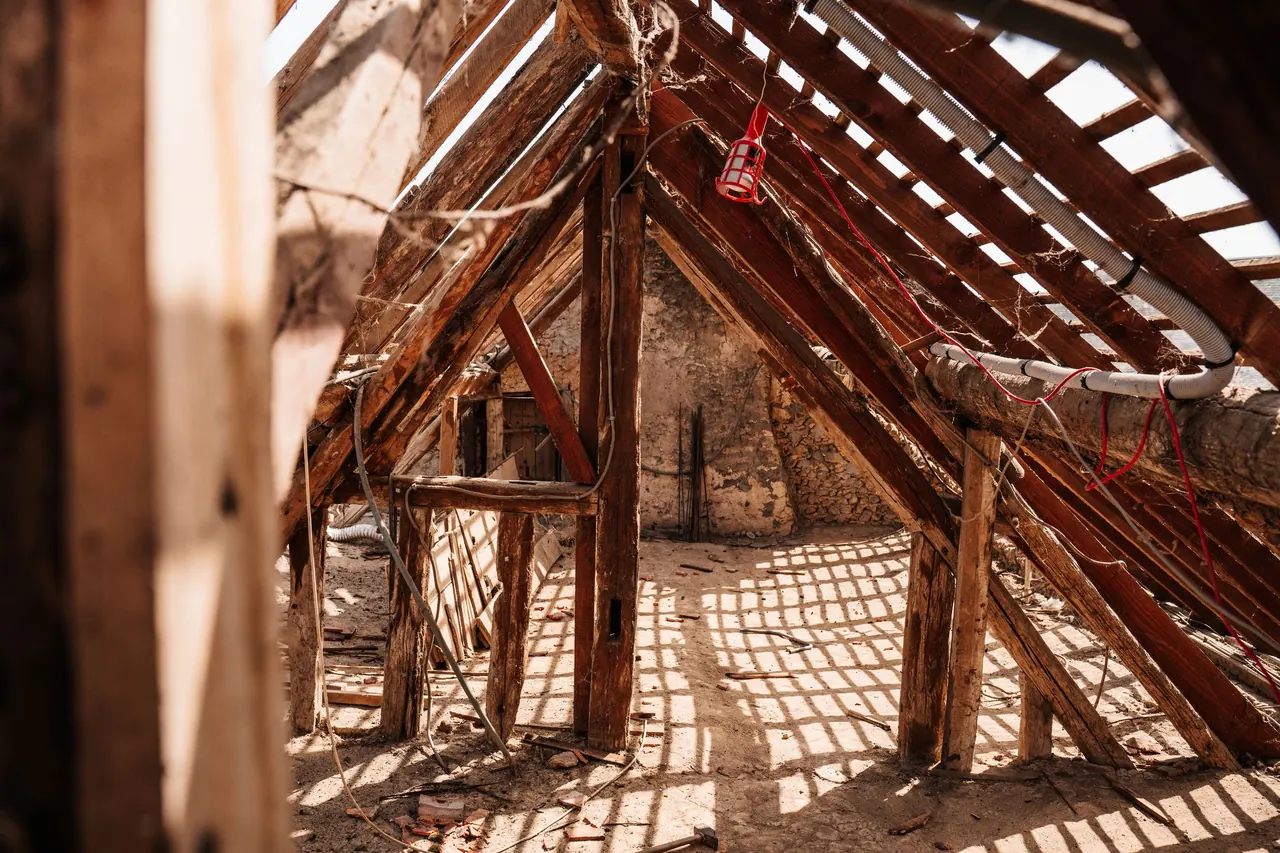
- Timbers. We check rafters, purlins, hip boards and wall plates. If we find more rot than expected, we show you and price it separately before carrying on.
- Re-cover. Breathable membrane, new battens, then the covering from the eaves up, with new ridges, hips and valleys.
- Stack and abutments. New lead at the central stack and at any back addition. While the scaffold is up, the fascias and soffits and the gutters are worth a look too.
Concrete tile, or the slate the house was built for
Some estate roofs have already been re-covered once. Croydon Council's appraisal and management plan notes that each of the large Clyde Road pairs has seen alterations and simplifications, roof structures among them, and it lists non-traditional roofing materials among the threats to the estate's character. It counts replacing them with hand-made clay or natural slate as an enhancement. Slate is also much lighter than concrete tile, which takes load off rafters sized for it in the 1860s.
Not every old roof here needs replacing. If the trouble is confined to one slope or one valley, a roof repair in Addiscombe is the better spend. A full re-cover makes sense when slates are slipping on every slope, the loft shows daylight in several places, or the old underlay has gone brittle along its length.
Ashburton Road dormers, Bingham Road clay and the later streets
On Ashburton Road, the Edwardian houses at 1 to 7, 40 and 50 to 64 have red tiled roofs with pairs of dormers. A re-roof there is clay, with the dormer cheeks and the soakers at each side renewed as part of the job.
Bingham Road sits outside the conservation area in a Local Heritage Area of its own. Its Arts and Crafts houses, built between 1890 and 1910, carry natural clay hanging tiles and clay finials, and a re-roof in clay keeps them reading as a set.
Most Addiscombe houses are on neither. On the later streets round Ashburton Avenue and Colworth Road, a like-for-like re-roof is normally treated as maintenance, and the choice of covering is yours. Inside the conservation area, including its two 20th century cul-de-sacs off Ashburton Road, check with the council before changing the covering on a slope that faces the street.
As a national guide, the Which? roofer cost guide puts a new tiled roof on an average three-bedroom house at £7,000 to £21,000, excluding VAT. A tall Clyde Road pair in natural slate, with its scaffold, sits towards the upper end of that. Our main roof replacement page covers each stage in more depth.
Frequently asked questions
Can a re-roof on a Canning Road semi be combined with a loft conversion?
The scaffold makes it tempting, but the management plan says roof extensions on three and four storey buildings will generally not be permitted. A conversion that stays inside the existing roof shape, with rooflights on the rear slope, is a different question to put to Croydon's planning team before the scaffold goes up.
Will re-roofing an Edwardian house on Ashburton Road mean losing its pair of dormers?
No. The dormers stay and the new covering is worked round them. Their cheeks, tops and the soakers or lead at each side are renewed at the same time, because a new roof with old dormer weathering simply moves the leak.
Does going back from concrete tile to slate need the council's approval in the East India Estate?
The appraisal lists it as an enhancement, so it is the change the council wants to see, but confirm with Croydon's planning team before ordering slate. Building Regulations are a separate matter, and the Planning Portal has a guide to re-roofing rules.





