



 Google reviews

Concrete tiles on the Tamworth Road and Handcroft Road estates
Croydon Council's borough character appraisal groups the 1964 to 1979 houses off Tamworth Road and at Handcroft Road as planned estates with small rear gardens. Roofs of that period were commonly covered in interlocking concrete tiles over a felt underlay.
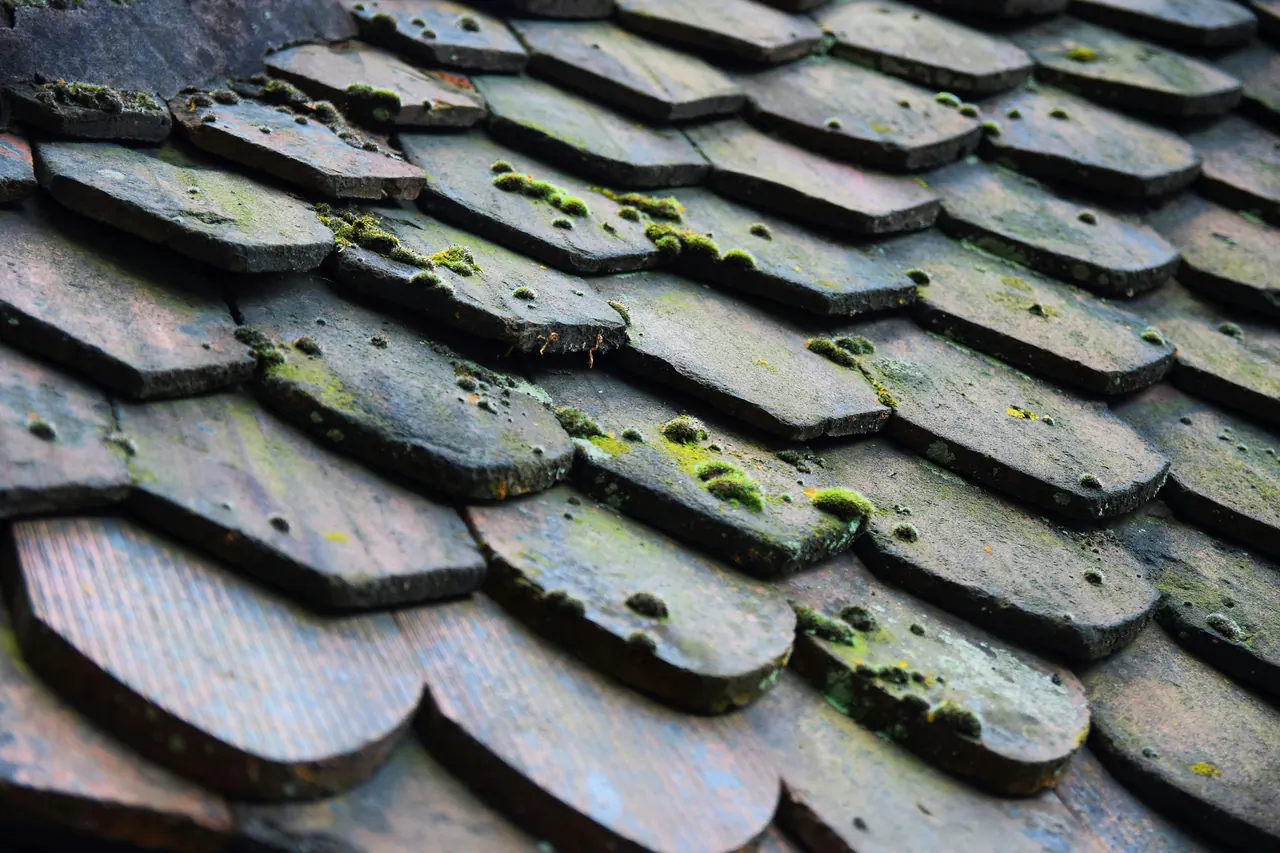
Checkatrade's roof replacement guide gives concrete tiles a working life of 40 to 75 years. Tiles laid in 1970 are 56 years into that range. Age alone is no reason to re-roof, but on these houses the warning signs tend to arrive together: tile surfaces worn rough so they hold moss and water, nibs that snap when a tile is lifted, felt that has gone brittle and torn at the eaves, and battens soft at the ends. Once each repair breaks more tiles than it fixes, replacement is the better use of the money. A West Croydon roof inspection with photos is the cheapest way to find out which side of that line you are on.
On an estate house, the new roof normally goes back in a modern concrete or clay tile of similar profile, so it sits comfortably with the neighbours' roofs, laid over a breathable membrane and new battens. The ridge and verges can be dry-fixed, which takes away the mortar joints that fail first on the old roofs.
Putting slate back on Wellesley Road
The villas of the Wellesley Road (North) Conservation Area are far older, from the 1840s onwards, and were slated. Where one has since been re-covered in heavier concrete tiles, the timbers underneath were still sized for slate. The conservation area guidance lists non-traditional roofing materials as a threat to the area and names their replacement with natural slate as an improvement it wants to see. A full re-roof is the moment to do it, and the lighter load is kinder to old rafters.
On a three-storey villa the scaffold is the biggest single cost after the slate. It has to rise from a front garden behind a boundary wall, beside one of the busiest roads in the town centre, and we plan that with you before the price is fixed. Gutters, fascias and soffits are normally renewed while the scaffold is up; our West Croydon fascias and soffits page explains what that involves on period eaves.
Re-roofing a whole block or terrace at once
On the Handcroft Road blocks of flats and maisonettes, the roof belongs to the building. A re-roof is normally commissioned by the freeholder or managing agent and paid for through the service charge. Doing the whole roof in one go keeps the covering, ridge and edges consistent and means one scaffold rather than several. On a terrace of houses, neighbours sometimes agree to re-roof together for the same reason.
Liam, our Lead Roofer, looks at the roof, the timbers from the loft and the access, then sets out materials, scaffold, waste removal and a rough programme in writing. For a sense of national costs, Checkatrade's same guide gives about £8,000 as the UK average, with most homes between £4,000 and £19,000. The main roof replacement page has more detail, and our article on how long a new roof lasts compares coverings.
Frequently asked questions
Our Handcroft Road block has leaseholders and a freeholder. Who arranges the re-roof?
The freeholder or the managing agent, in almost every case, because the roof is part of the building rather than any one flat. Major works usually need a formal consultation with leaseholders before the cost can be passed on, so allow time for that before the scaffold is booked.
Will the rafters on a Wellesley Road villa need work when the concrete tiles come off?
Sometimes. Timbers sized for slate can sag after decades under heavier tiles. We check the rafters, purlins and wall plates once the roof is open and price any strengthening separately, so you know what is essential and why.
Does re-roofing a house off Tamworth Road mean upgrading the loft insulation?
Usually. Replacing a roof covering normally counts as building work under the Building Regulations, and where it is practical the roof's insulation has to be brought up to standard. The Planning Portal sets out when that applies.





