



 Google reviews

Rotting timber on the Tamworth Road and Handcroft Road estates
On the red-brick estates of the 1960s and 70s off Tamworth Road and Tavistock Road, and on the Handcroft Road blocks, the eaves are long and plain. Where they still have their original painted timber fascias and soffits, the boards have had around half a century of weather. Paint fails at the joints first, water gets behind it, and the board rots from the back while the front still looks passable.
On these buildings a full replacement in uPVC is usually the right answer: new fascias and soffits, vented where the roof needs it, fitted with new guttering at the same time. For a block of flats or a row built together, quoting the whole building keeps the roofline uniform. Capping, which covers the old board with a uPVC sleeve, is cheaper but only sensible where the timber underneath is completely sound, and on boards of this age it seldom is.
As a national guide, Checkatrade lists £90 to £170 per linear metre for replacing fascias and soffits, with three-storey blocks needing scaffold costing more. The main fascias and soffits page has more detail.
Deep eaves on the earliest Wellesley Road villas
Croydon Council's Wellesley Road (North) appraisal describes the earliest houses at the north end of the road, from the 1840s and 1850s, as restrained Classical villas with console brackets, deep eaves and decorative ironwork. Overhanging eaves and console brackets appear again on its list of key features for 69 to 91 and 72 to 76 Wellesley Road. It asks owners to repaint timber features as routine maintenance, and encourages removing new features that detract from the area's special character.
Covering old fascias and soffits in white plastic, as happens on many houses elsewhere, is the wrong answer here. On these villas the fascia is part of a deep, moulded eaves detail, and wrapping it changes the profile the appraisal is trying to protect. The approach is repair. We open up the eaves, cut out timber that has rotted, fit new timber of the same section, refix the soffit boards and leave the whole lot ready for painting. Where water has been getting in for years, usually from a leaking gutter above, we check the rafter ends behind before closing up.
Many of these houses spent years empty before conversion, and with a raised lower ground floor below, even the two-storey villas put the eaves well out of ladder reach, so a scaffold is normally needed. If the gutters are coming down anyway, it is the moment to deal with them too; our gutter repair page for West Croydon covers cast iron that can be saved.
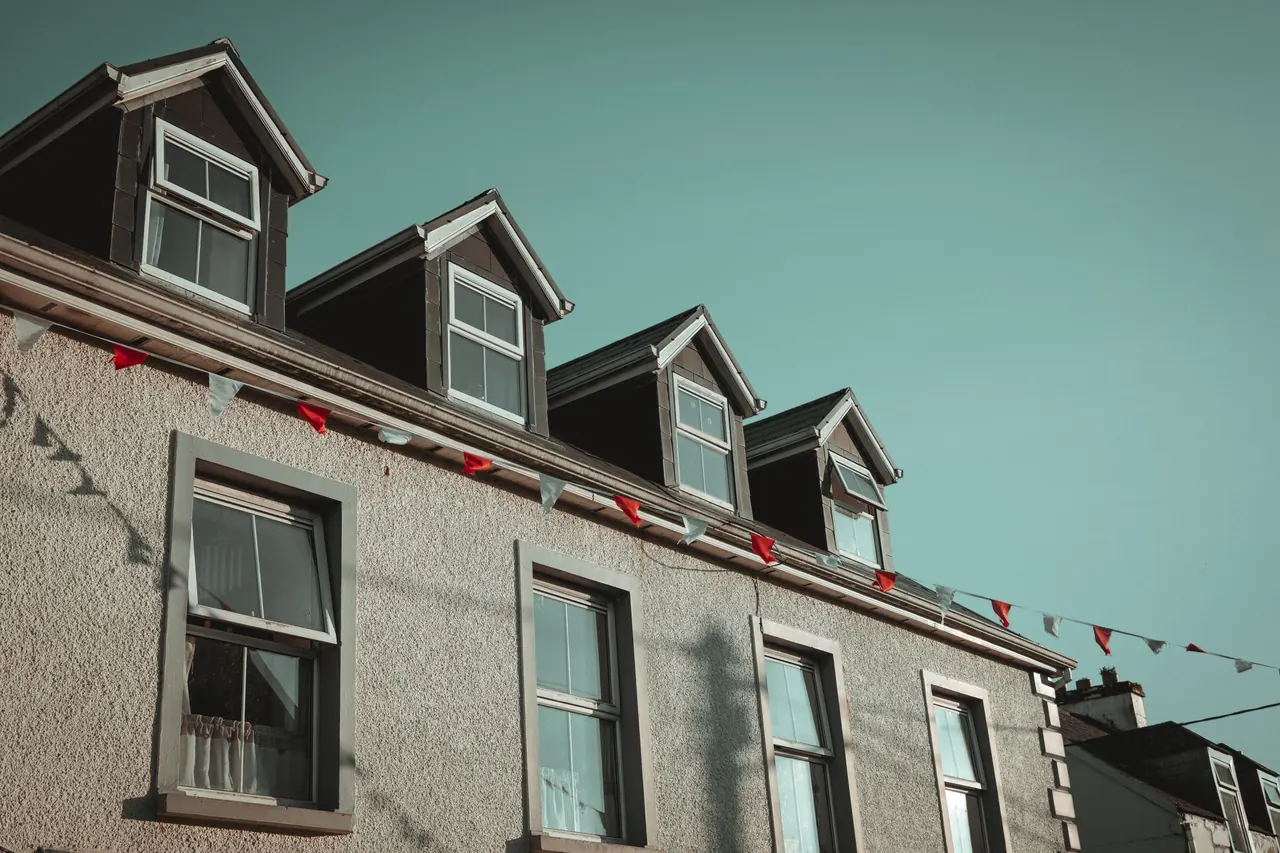
Broad Green terraces: matching the row
On the terraces around Broad Green, outside the conservation area, owners can choose their material freely. What usually decides it is the row. Each house's fascia is one short length in a continuous line, so a new board of a different depth or colour stands out. We match the depth and line of the neighbours' boards where we can, and close the ends neatly at each party wall so there are no gaps at the joins. If the roof is being re-covered, it is worth doing the eaves at the same time; our roof replacement in West Croydon page explains the order of work.
Frequently asked questions
A console bracket under the eaves of our Wellesley Road villa has split. Can it be saved?
Often. A split bracket can usually be repaired and refixed once the eaves are opened up and the water source is stopped. If it has rotted through, a matching copy can be made, and we'll talk it through with the freeholder and, where needed, Croydon's planning team before anything is replaced.
Our house between Ruskin Road and Tamworth Road still has painted timber fascias. Should they go to uPVC?
Outside the conservation area, usually yes. uPVC doesn't need repainting, which saves putting up ladders or access every few years. We check the rafter ends while the old boards are off, since that is the only time they can be seen.
The soffit boards on our Nova Road terrace have gaps where they meet next door's. Is that a problem?
It can be. Gaps let wind-driven rain and nesting birds into the eaves, and a gap often means the board has shrunk or dropped because the timber behind is going soft. We check the fixing and close the joint properly when we replace or repair the board.





