



 Google reviews

Bracketed eaves on the Italianate villas
A gutter that has leaked for years on an Outram or Havelock Road villa does its damage out of sight. The fascia rots from the back, water reaches the soffit boards and the rafter ends, and the tops of the eaves brackets start to soften, all behind paint that still looks fine from the pavement.
These villas have shallow roofs that oversail the walls by a good distance, with the eaves often carried on brackets, and the council's estate appraisal lists those brackets among the estate's key features. Along Lower Addiscombe Road, the villas at 138 to 142 have projecting bracketed eaves with the detailing picked out in white. The fascia carries the gutter at the front edge, the soffit closes the underside of the overhang, and the brackets sit in the soffit at regular spacing, so one failed board puts all three at risk.
The appraisal recommends regular repainting of timber features as basic upkeep. That is the cheapest way to keep original boards going. Once paint has broken down, water gets in at joints and end grain and the wood rots from the back, where it cannot be seen.
So on these villas we repair rather than replace wherever the timber allows. A rotten length of fascia or soffit is replaced on its own, in timber to the same profile, and the sound boards either side are kept. Damaged brackets are pointed out for repair rather than boxed over.
Bargeboards from Ashburton Road to Bernard House
The Edwardian houses brought gables, and gables brought bargeboards. The appraisal notes:
- 4 and 6 Ashburton Road, a pair of detached houses with cross-gabled roofs and white painted timber bargeboards
- 164 to 178 Lower Addiscombe Road, an Edwardian group with bargeboards, hanging tiles and prominent stacks
- Bernard House at 192 Lower Addiscombe Road, built before 1868, with cast iron bargeboards
- Cedars Cottage on Elgin Road, a small late 19th century cottage with decorative bargeboards
North of Lower Addiscombe Road, the Bingham Road houses have large gables with timber boarding and half-timbered gables with ridge detail and clay finials. A bargeboard on a gable like that takes weather on both faces and at its foot, where it meets the eaves. That is where rot starts. Where a section has to be replaced, we match the profile and any simple shaping of the original so the gable still reads as a pair with next door. Cast iron bargeboards, as on Bernard House, are a specialist casting job beyond our work, though we can deal with the roof edge behind them.
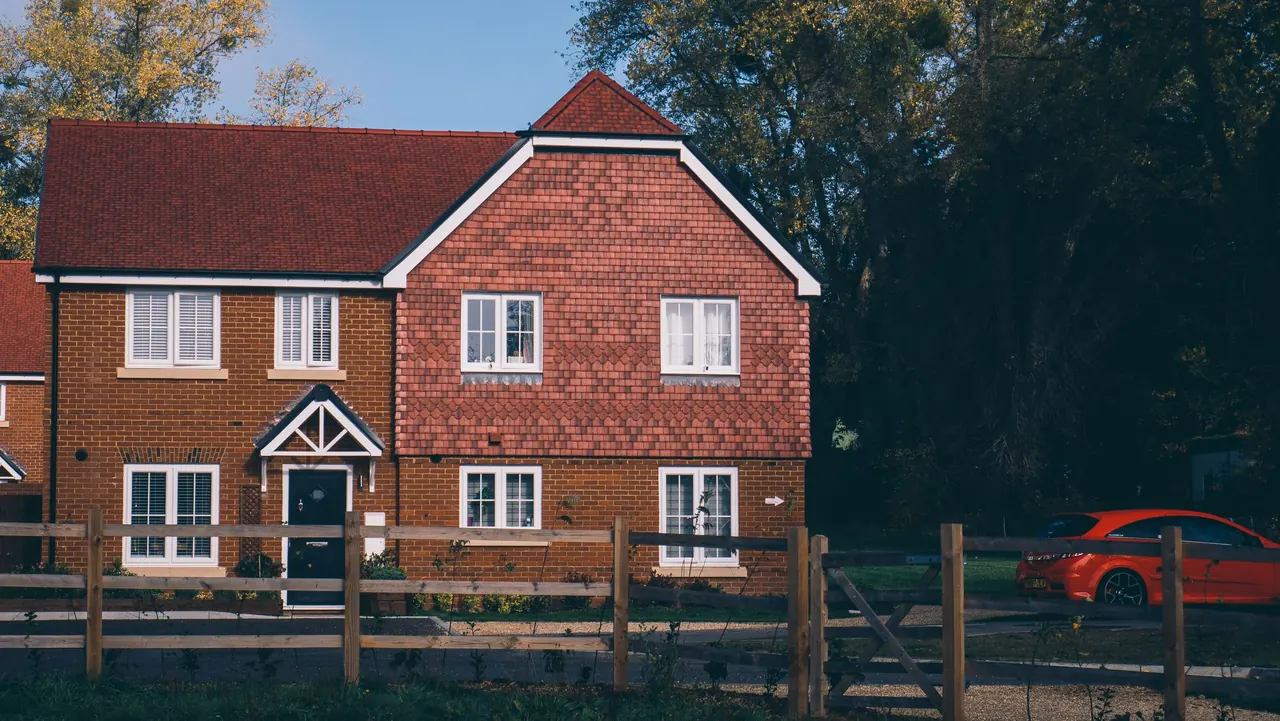
uPVC on the later houses, from East India Way to Ashburton Avenue
On the 20th century houses of Ashburton Close and Ashburton Gardens, newer infill such as East India Way, and the later streets beyond the estate round Ashburton Avenue, the roofline is plain and practical. Full replacement in uPVC is the long-term answer there, in white, black, grey or woodgrain, with ventilated soffits where the roof space has no other eaves ventilation. The two cul-de-sacs are inside the conservation area, so if you plan a colour that will stand out from the street, ask the council first.
Capping old timber with a thin uPVC board is cheaper, but only works over timber that is fully sound. Over rot it hides the problem, and on a bracketed villa or a decorated gable it would hide the detail too.
Because the fascia carries the gutter, it often makes sense to do both together. See our Addiscombe gutter installation page, and if an overflowing gutter is what rotted the board, our blocked gutter repair in Addiscombe page. Checkatrade's fascia and soffit guide gives a ballpark national average of about £150 per linear metre for replacement. Our main fascias and soffits page explains the service.
Frequently asked questions
Can you copy a decorative bargeboard on a Lower Addiscombe Road gable?
Where the pattern is a simple shaped edge, a replacement section can be made to match the surviving board. Elaborate carving may need a specialist joiner, and we tell you if that is the case before quoting.
Can I replace timber fascias with uPVC on a villa in the East India Estate?
The appraisal favours keeping traditional features and lists the loss of historic architectural features as a threat. On a street-facing elevation of a period house, repairing the timber is usually the better route. Check with Croydon's planning team before changing the material.
The paint on our Ashburton Road bargeboards keeps flaking. Is the wood rotten?
Not necessarily. Paint flakes when moisture gets behind it, often at an open joint or the foot of the board. We check how sound the timber is, replace any soft sections, and leave the board ready to be repainted.





