


 Google reviews

Limes on Clyde Road, cherries on Havelock Road
A gutter under a lime tree in late summer is rarely full of leaves. It holds a dark, sticky mat of seed and dust stuck to the gutter floor, and it does not wash through on its own. Clyde Road has whole avenues of those trees. The council's conservation area appraisal describes pollarded limes along Clyde Road, singles out the cherries on Havelock Road, and records oak, cedar, birch, holly, yew, beech and fir across the estate, with several mature trees in rear gardens. Trees in a conservation area are protected: owners must give the council six weeks' notice before felling or pruning, so the leaf load is not going anywhere.
Each kind fills a gutter differently:
- Lime. Leaves, winged seeds and, through summer, sticky honeydew from the aphids that feed on them. The honeydew binds seed and dust into that mat.
- Cherry. Blossom falls in spring, small enough to wash straight into outlets, and the leaves follow in autumn.
- Conifers and cedar. Needles lodge in valleys and gutters behind the house all year, and are easy to miss because they do not come down in one go.
- Oak and beech. Big leaf drops in late autumn, often onto the rear roofs from garden trees.
The old Wilderness and the deep back gardens
The estate was laid over the grounds of the East India Company's military college. About two thirds of those grounds were farmed, and the woodland to the south was known as The Wilderness, with elm, lime, oak, walnut, ash, beech, chestnut, fir, hornbeam and sycamore. Several of the same species, oak, beech and fir among them, still grow in the estate's gardens.
Plots run 40 to 50 metres deep, so there is room behind the houses for trees of real size. Their leaves fall onto the back roofs, and on a three storey semi those back gutters and valleys are the ones nobody sees. Front gutters get noticed when they overflow over the porch. Back gutters can block for years before a stain shows up in a bedroom.
Away from the trees, old slate roofs shed grit and moss into the gutters too, and a north-facing slope in shade grows moss faster.

Three storeys up: reaching the back gutters, and the cost
Under limes and cherries, one clean a year is rarely enough: a late autumn clear once the leaves are down, and a spring clear after blossom and seed, before summer storms. Houses well away from big trees can usually manage with the autumn visit, and our article on how often to clean gutters covers the general advice.
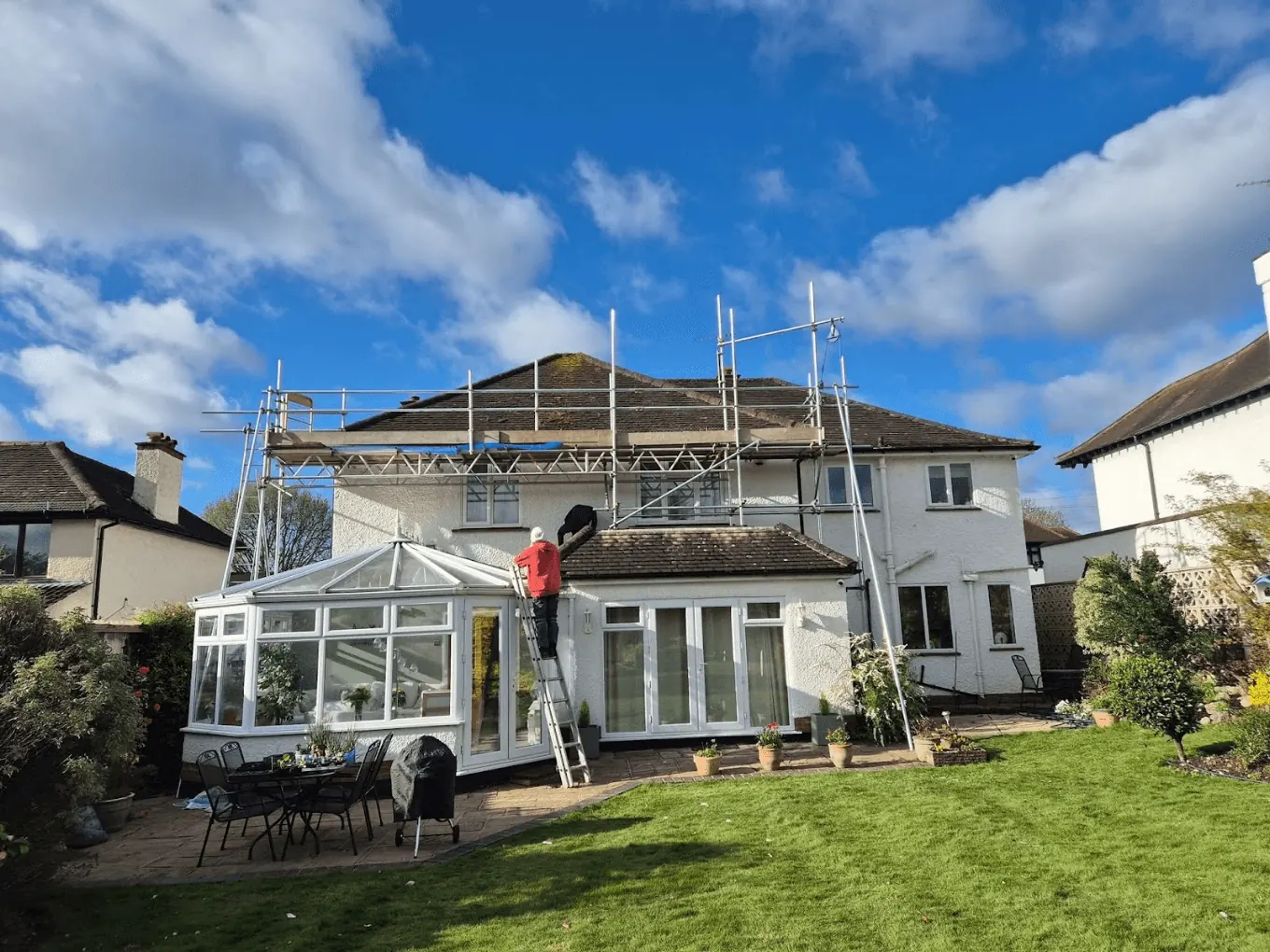
On the estate the harder question is reach. A three storey semi over a lower ground floor has its top gutters a long way up, and side gaps of a few metres leave little room to work from the ground. Height and access are what move the time and the price most, so we look at how each gutter can be reached safely before booking, and on the tallest houses we can check the back runs by drone first. Under the limes the job is as much scraping as scooping, and valleys on a gabled house get the same attention as the gutters.
As a national guide, MyJobQuote's gutter cleaning costs average about £180 for a three storey house against £100 for a semi, with London rates at the higher end. If we spot a cracked joint or a sagging run, our gutter repair service in Addiscombe can put it right, and where years of overflow have rotted the board behind, see our fascias and soffits page. Our main gutter cleaning page explains the service in full.
Frequently asked questions
Why are gutters under the Clyde Road limes so hard to clear?
Because of the honeydew. It glues seeds and leaves into a crust that sits on the gutter floor and narrows the outlet. It needs scraping out and flushing, not just scooping, and if it is left over winter it holds water against joints and brackets.
When should gutters under the Havelock Road cherries be cleared?
Late spring, once the blossom has finished, and again in late autumn after the leaves. The spring clear is the easier one to forget, and blossom in an outlet blocks it just as well as leaves do.
Can the top gutters on a three storey Canning Road semi be cleaned without scaffold?
Often, but not always. It depends on how high the eaves are, how much room the side gap leaves, and what the ground below is like. We look at the access before booking and tell you if a particular run needs a tower or scaffold, so the price is clear before anyone goes up.





