



 Google reviews

Low eaves on St Saviour's Road
On St Saviour's Road, low cottages in dark red brick went up as council housing from 1975 to 1980, designed under P. G. Vincent, then head of the borough's Department of Architecture. They sit among older 19th century artisan houses, so one short street holds two very different rooflines.
Being low, the cottages have eaves much closer to the ground than the Victorian houses around them. That usually makes the boards easier to reach and the job simpler to set up. Where the original 1970s boards are still in place, they are worth a close look for soft timber at the joints, behind the gutter brackets and at the ends where boards meet a wall. Paint can hide a lot. A screwdriver pushed gently into the timber tells you more.
Where later owners have already replaced or capped the boards, the questions are different: whether the capping was fixed over sound wood, whether the soffit was ventilated, and whether the gutter brackets went into the board or only into the plastic over it.
Painted timber on Selhurst's Victorian terraces
On the older terraces across Selhurst, the front eaves are usually plain, with a painted timber fascia carrying the gutter and sometimes very little soffit. Many have been replaced or capped over the years. The board often runs straight across from one house to the next, so a rotten section can sit right beside a sound one, and the join between two owners' boards is a common place for water to get behind.
The backs are busier. Back wings and extensions bring more short runs of fascia, more corners and, where there is a gable, bargeboards on the sloping edge. Those get less attention than the front, partly because nobody sees them. A gutter that has overflowed at the back for a few winters will often have soaked the board behind it.
Signs that boards need work: soft or crumbling timber, paint lifting in strips, dark staining under the gutter, a gutter that sags because its brackets have lost their grip, gaps in the soffit, and water marks on the wall below the eaves.
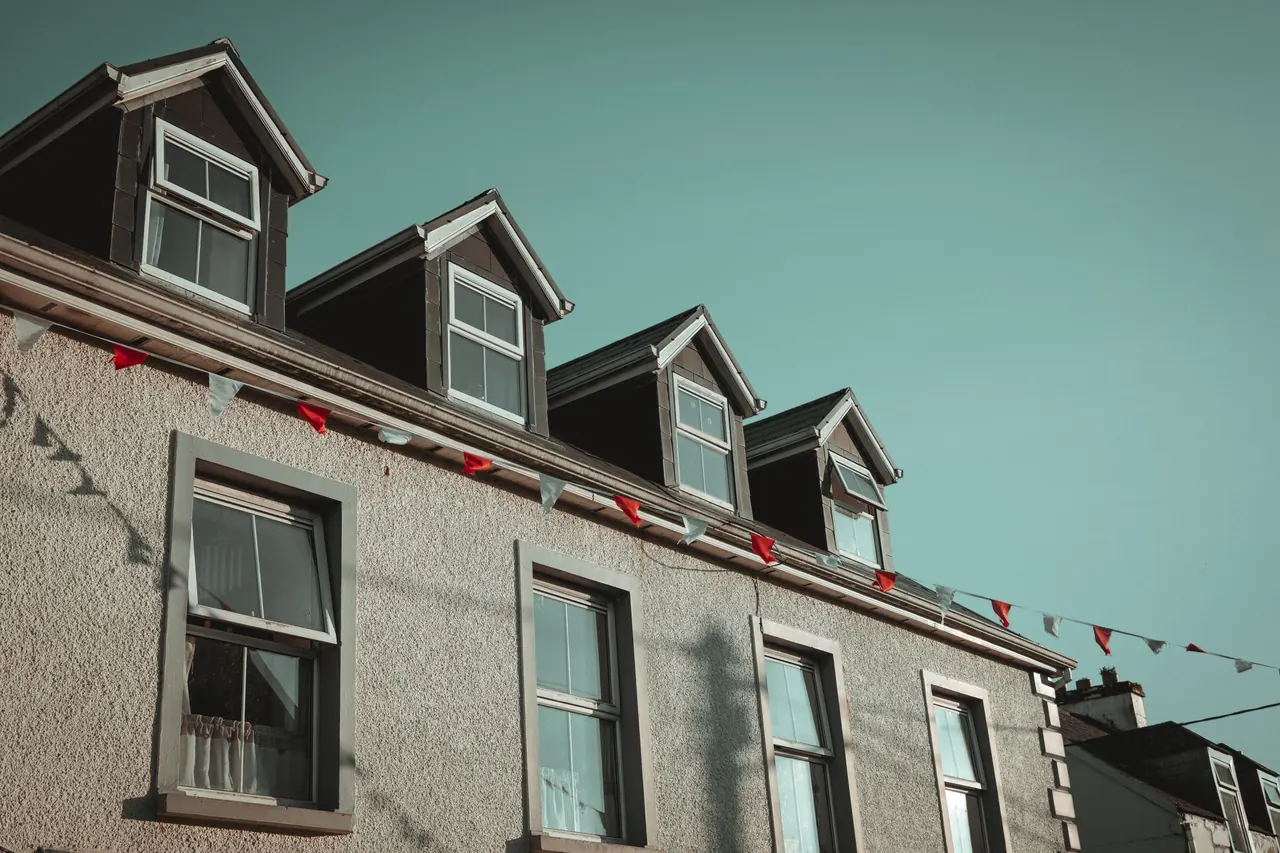
Checking the timber before anything is covered
A short damaged length can often be cut out and replaced on its own. If the boards are rotten along most of their length, or the gutters are coming down anyway, replacing the whole run makes more sense.
Capping, where a thin uPVC board is fixed over the existing timber, is cheaper than full replacement, but only works over timber that is completely sound. Capping over rot hides the problem while the wood keeps decaying behind it. So we test the boards before recommending capping. Full replacement in uPVC comes in white, black, grey and woodgrain finishes, and ventilated soffits help air move through roof spaces with no other eaves ventilation, which matters on old slate roofs prone to condensation.
A replacement runs in a set order: survey, a clear price, gutters and old boards taken down carefully, rafter ends checked and repaired where needed, new boards fitted, and gutters reconnected to the downpipes. The gutters come off anyway, so it is the obvious time to fit new guttering in Selhurst if yours are tired.
As a guide, Checkatrade's fascia and soffit guide puts replacement at around £90 to £170 per linear metre. Keeping gutters clear with regular gutter cleaning is the simplest way to keep new boards dry. Our main fascias and soffits page has more detail, and we do the same work in Thornton Heath.
Frequently asked questions
Our St Saviour's Road cottage still has its original roofline boards. What should we look out for?
Soft timber at the joints and ends, paint that keeps flaking in the same places, and gutter brackets that have worked loose. If the boards are sound, a repaint or capping may do. If they are soft, they need replacing.
Our fascia runs straight into next door's on a Victorian terrace. Where does ours stop?
Normally at the party wall line. We cut back to a sound point there and make a neat, sealed join with the neighbour's board. If theirs is rotten at the join, we show you so you can raise it with them.
Do soffit vents matter on an old slate roof with no underlay?
They can help. Old slate roofs often breathe through gaps between the slates, but once a roof has been re-covered with membrane or the loft insulated, eaves ventilation becomes more important. We look at how your roof space is ventilated before choosing the soffit.





