



 Google reviews

Damp on a top-floor chimney breast
The first sign is often indoors. A patch of damp spreads on the chimney breast in a top bedroom, a brown tide mark appears on the timbers beside the stack in the loft, or bits of mortar and pot turn up in the gutter after a windy night. On a stack shared by two houses, one side often shows the damp before the other.
The late Victorian and Edwardian houses west of the railway are two and three storeys, and their stacks rise above steep roofs. A stack takes rain from every side and wind on every face. Over a century, that wears the pointing back until water soaks into the brick, cracks the flaunching that holds the pots, and works the lead loose where the stack meets the slope. A pot that looks out of line from across the road is worth taking seriously, because it is sitting on that flaunching.
A drone flight gives us clear photos of the pots, flaunching, brickwork and lead without anyone climbing up, so you see the fault and we can tell you whether the repair needs scaffolding before we price it.
Stacks Croydon's appraisal picks out
Croydon Council's appraisal of the Chatsworth Road Conservation Area lists brick chimney stacks among the key features of its houses, then names a few: the notable stack and gablet at 53 Chatsworth Road, the hipped roofs, dormers and chimney stacks of the locally listed Edwardian villas at 86 to 92 Chatsworth Road, and a prominent chimney at 28 Coombe Road on the southern edge of the area.
For anyone who owns a villa on these streets, that means the stack is part of how the house is judged. Rebuilding the top courses in a different brick, cutting the stack down or leaving it capped and bare all change the roofline, and the Article 4 Direction brings roof alterations under planning control. Our page on the Direction sets out where the line between repair and alteration falls.
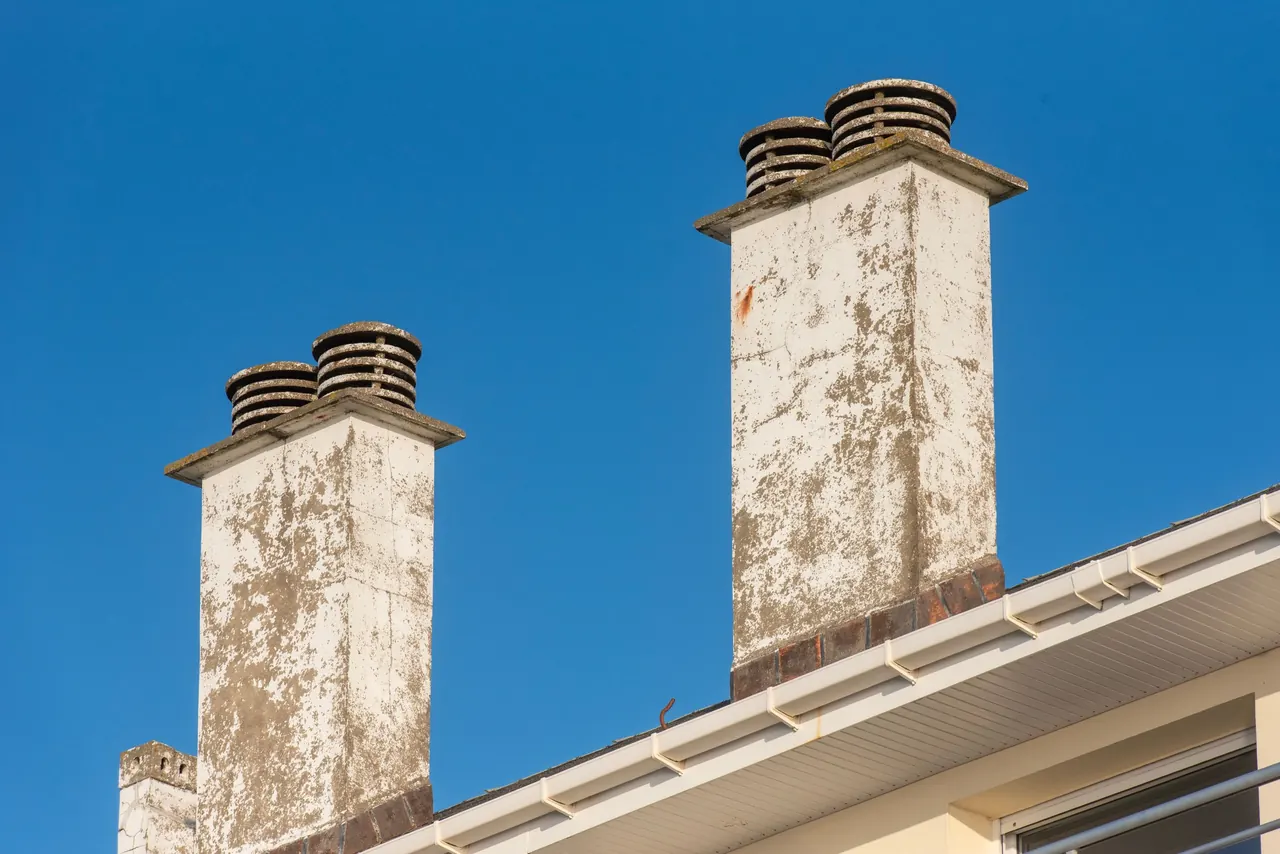
Matching brick, mortar and lead on a villa stack
The repair follows the stack from top to bottom. Pots are reset and flaunching renewed, failed joints are raked out and repointed in a mortar that suits the brick, and the lead is renewed where it has split or lifted. As general good practice, lead flashing should be tucked into the mortar joints and dressed to the slope, not stuck on with sealant, which cracks and lets go as the stack and roof move. Where the top courses have to come down, they are rebuilt in a matching brick and the original pots go back on where they are sound.
Small jobs, such as resetting a pot or refixing a short length of flashing, can often be done from roof ladders. Full repointing, new lead around the whole stack or rebuilding the top courses usually needs a scaffold round the stack, and on a three-storey villa that scaffold is a large part of the cost. If slates or tiles around the stack have slipped, our roof repairs on the Chatsworth Road villas deal with them on the same visit.
For scale, MyJobQuote's chimney leadwork cost guide lists full leadwork replacement at roughly £350 to £460 nationally before scaffolding. Our main chimney repairs page covers each repair in more detail.
Frequently asked questions
Our house is one of the locally listed villas at 86 to 92 Chatsworth Road. Does that change how the stack is repaired?
Local listing does not need its own consent the way statutory listing does, but the Article 4 Direction still applies, and the council has named those stacks as part of the houses' character. Repairing in matching brick, mortar and lead keeps the work as maintenance.
Will a stack on a three-storey Mulgrave Road villa need a full scaffold?
Not always. Resetting a pot or refixing a short length of lead can often be done from the roof. Repointing the whole stack or renewing all of its lead usually needs a scaffold, and the drone photos tell us which before we quote.
Can the top of the stack be rebuilt so it still looks original?
Yes, where the brick can be matched. Only the loose courses come down, they are rebuilt in a matching brick and mortar, and the original pots go back on where they are sound.





