



 Google reviews

Long downpipes on three-storey Manor Road
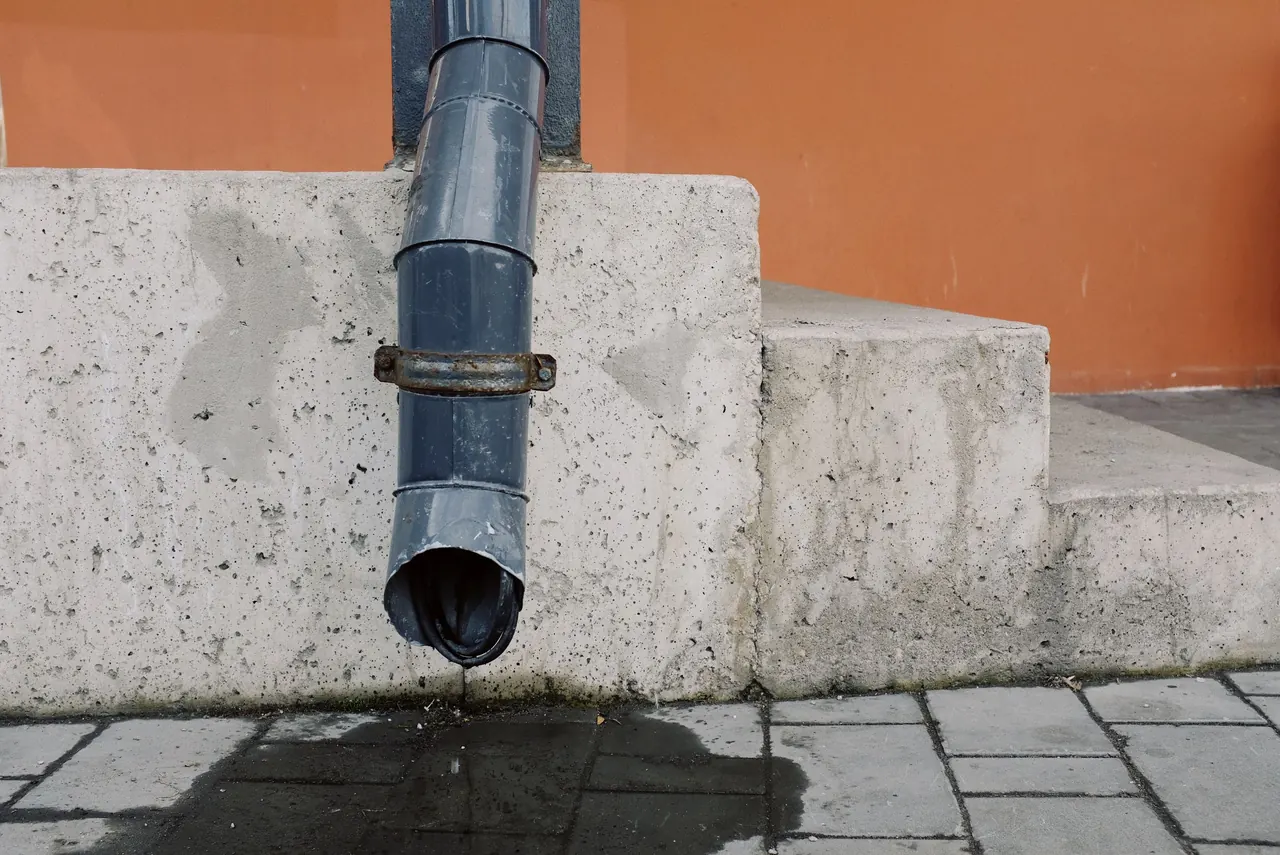
Nos. 18 and 20 Manor Road step up to three storeys, with tall, thin gables and raised entrances at first floor level. Houses of that height, like the larger villas round Holy Trinity, have downpipes running the full height of the wall, with an offset at the eaves and a bend or shoe at the bottom. A blockage at one of those bends cannot be cleared from the gutter. The gutter fills, the downpipe stays dry, and water spills over the front or backs up under the eaves.
On these we work out where the blockage sits before touching anything. A dry downpipe under a full gutter points to the pipe; a pipe that runs while the gutter still spills points to the gutter itself or its fall. A pipe blocked at a bend is rodded and flushed, and one that has cracked or come apart at a joint has that section replaced.
Behind the parapet on Manor Terrace
Manor Terrace, Nos. 8 to 16 Manor Road, has steep slate roofs and a front cornice and parapet topped with ball finials. A parapet like this usually hides a lined gutter that empties through one or two outlets, out of sight from the street. When an outlet chokes, the water has nowhere to go but inwards, and it can show on a ceiling well away from the outlet. The 1930s parade at the corner of Croydon Road and Manor Road also has a parapet, broken by gables, and any roof draining behind it carries the same risk.
Clearing the outlet stops the overflow. Fixing the fault means finding why it choked: an outlet too small for the roof it serves, a lining that has sagged and holds a pool where silt settles, or a missing grille that lets leaves wash straight into the pipe. The trees round the Green make that last one more likely on the houses facing it.
When the same corner blocks every winter on the 1907 terraces
A gutter that blocks in the same place each year has a reason. On the interwar semis and the terraces of Lavender, Mint and Bernard Roads the usual one is a dropped bracket: a dip forms, debris settles in it, the weight deepens the dip and the overflow returns each winter. The fix is to reset the brackets and restore the fall so water and debris carry through to the outlet. Other causes are an outlet at the wrong end of a long run, a joint that has opened and catches leaves, or a downpipe offset packed with silt. Clearing any of these without fixing it just books the next visit.
For scale, MyJobQuote's 2026 guttering guide gives published figures of £60 to £250 to re-secure or realign a sagging run, and £80 to £250 to replace a downpipe. If the boards behind the gutter have gone soft from months of overflow, our fascia and soffit work in Wallington deals with them, and the main blocked gutter repair page explains each step. For yearly clearing rather than a fault, see gutter cleaning in Wallington.
Frequently asked questions
Water is coming through the ceiling of my flat above the Croydon Road parade. Could it be a blocked outlet?
It is one of the first things to rule out. A gutter full behind a parapet overflows inward rather than over the front. We check the outlet and the lining, clear it, and send the freeholder or agent photos of what we found.
The downpipe on my three-storey house in Old Town gurgles in heavy rain. Is it blocked?
Gurgling usually means water is forcing its way past a partial blockage, often at a bend. The pipe may keep draining slowly for months before it stops altogether. Rodding and flushing clears most of these, and a section is replaced if the pipe has cracked.
Can a dropped bracket really cause a blockage on my Bernard Road terrace?
Yes. A dip of a centimetre or two is enough to hold water and silt, and on a shared terrace gutter it can send overflow down next door's render as well as yours. Resetting the bracket and the fall is a small job next to the damage it prevents.





