



 Google reviews

Old cottage stacks on Church Road
Along Church Road and round the Cricket Green, the chimneys of the older cottages and villas break up the roofline. On stacks of this age a common fault is not the lead itself but what was done to it later. Cement fillets and mastic smeared over a lifted flashing look tidy for a few years, then crack away from the brick and let water track straight down the inside of the stack, where it shows as damp on a chimney breast upstairs.
The right repair is to cut the cement out and dress new lead, with its upper edge tucked into a raked-out mortar joint and pointed in. On a stack that sits on a slate roof, the side flashings are stepped and soakers go under each slate course, which takes longer than on a tiled roof but lasts far longer than a fillet. The villas on the green also carry lead porch canopies, and those are worth checking on the same visit, since the lead there is the same age as the chimney flashing.
Many of these houses are inside the Mitcham Cricket Green conservation area, as described in Merton Council's appraisal and management plan. Repairing a chimney like for like is maintenance; taking a stack down or changing its height or outline is a different matter, so check with the council first. If the slates around the stack are part of the problem, our page on roof repairs in Mitcham covers those, and they can be done on the same visit.
Party-wall stacks on Inglemere and Pitcairn Road
On the Edwardian terraces of Inglemere Road, Grenfell Road and Pitcairn Road, and on the 1920s and 1930s houses round Lavender Avenue, many stacks sit on the party wall and serve two houses. The flaunching on top, the mortar bed that holds the pots, is usually the first thing to crack. Once it does, rain gets into the top of the stack and the pots can work loose.
We renew the flaunching, reset or replace loose pots, and repoint the stack where the joints have opened. A flue that is no longer used can take a ventilated cap to keep rain and birds out while still letting air through. A flue still used for a fire or stove needs a cowl or guard made for a working flue, so we check how each one is used before fitting anything.
For a sense of cost, MyJobQuote's chimney flashing guide gives national guide figures of £150 to £250 for a patch repair to lead flashing and £350 to £460 for full replacement of the leadwork, before scaffolding.
The gothic stacks at 205-207 Commonside East
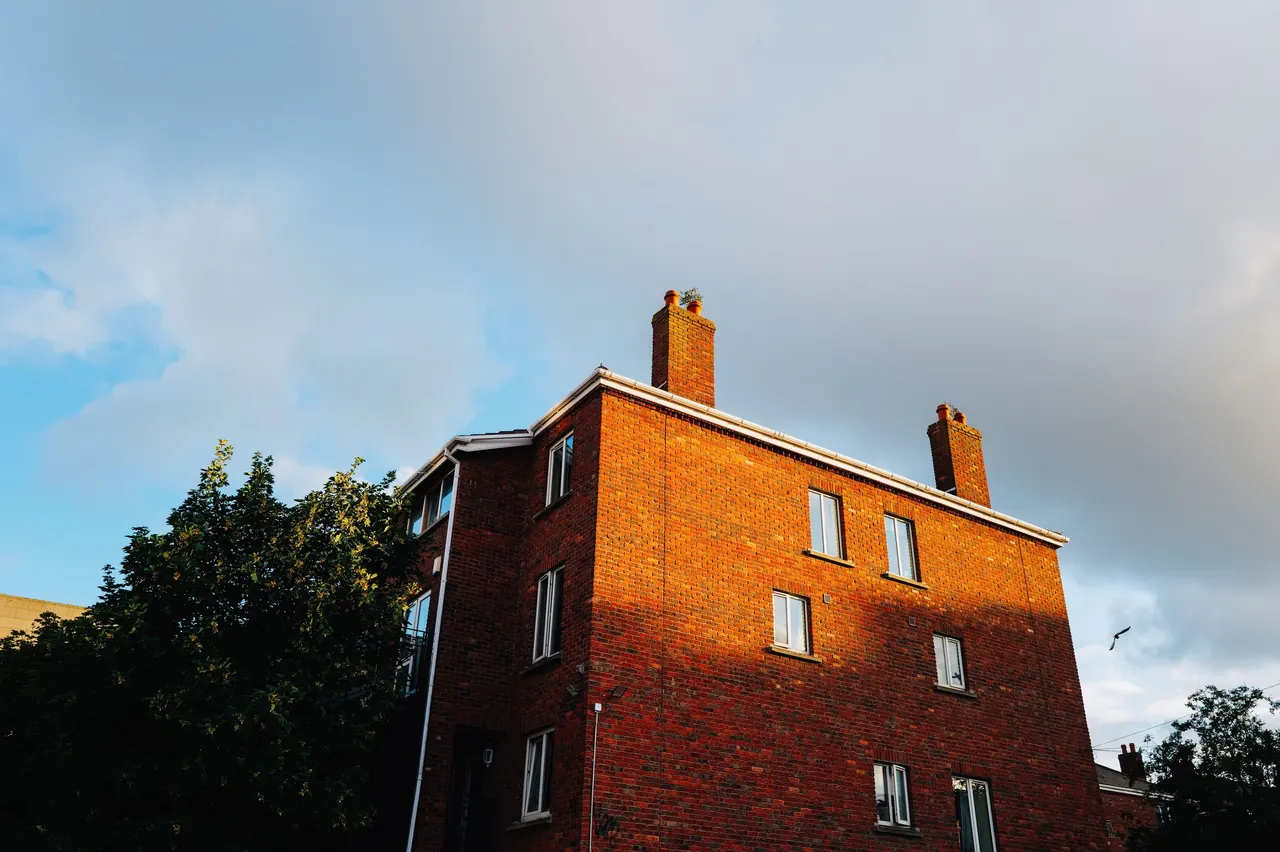
Facing the common, 205-207 Commonside East is a locally listed early to mid-Victorian pair in a domestic gothic style. Merton Council's Mitcham Common character study describes red brick, clay tiled roofs, steep paired gables and ornate chimneys that are tall, diagonal, single and grouped, with stepped brickwork, and asks that alterations on this stretch follow the original detailing and materials.
Stacks like these take more care than a plain square chimney. The stepped courses and diagonal shafts leave a lot of exposed joints, and frost works at every one. Repointing has to follow the line of each step in a mortar that matches the original, and any replacement brick needs to match in size and colour. Work at that height on a slender stack usually needs scaffolding, so we look at it closely first, and the quote includes the scaffold from the start. Our chimney maintenance guide lists what to look at from the garden each year, and the main chimney repairs page has the full service.
Frequently asked questions
There is cement round the flashing on my Church Road cottage's chimney. Should it come off?
Usually, yes. Cement and mastic over old lead crack and hold water against the stack. We cut them out and dress new lead into the brickwork.
Our Mitcham Park semi is in the Cricket Green conservation area. Does repointing the chimney need consent?
Like-for-like repointing and new lead are normally treated as maintenance. If you want to change the stack itself, such as lowering it or removing pots, ask the council before any work, because the house sits in a conservation area.
Can the diagonal stacks on 205-207 Commonside East be repointed without changing how they look?
Yes. The pointing follows each step of the brickwork in a matching mortar, and any spalled brick is replaced with one of the same size and colour, so the outline stays as built.





