



 Google reviews

Prominent stacks on the Wandle Bank cottages
The early to mid 19th century millworker cottages at 9 to 13 and 16 and 17 Wandle Bank are statutory listed. Merton's Wandle Valley Conservation Area appraisal picks out their prominent chimney stacks as one of the features that give them their character, alongside their hipped slate roofs and gauged brick arches.
That shapes every repair. On brickwork of that age the mortar is normally lime, and repointing should match it: hard cement mortar on soft old brick traps moisture and can blow the faces off the bricks. Replacement bricks need to match in size and colour, and the lead at the base should be dressed in the traditional way, in short steps tucked into the joints. Anything that changes the stack, such as lowering it, taking it down or replacing the pots with a different style, needs listed building consent first. We can talk through what the repair involves before you approach the council.
The same appraisal describes Singlegate School on Christchurch Road, the former Mitcham Board School of 1897, with tall decorative stacks over steeply pitched slate roofs. Its stacks are listed with the building, so the same like-for-like rules apply.
Cement fillets on the terrace stacks
On the red-brick terraces off Robinson Road and the 1930s houses on the Gardens roads, many stacks have had decades of patch repairs. A common one is lead flashing taken off at some point and replaced with a smooth band of mortar, or a smear of sealant, where the brickwork meets the tiles. From the garden it looks fine. In heavy rain it cracks away from the brick and lets water run down inside the stack, and the stain often appears on the chimney breast in a bedroom or in the loft beside the stack.
Where we find one, we take it out and fit properly dressed lead, stepped into the mortar joints and lapped over a soaker or apron at the base. While the stack is reachable, the other usual suspects get checked too: open mortar joints high up, cracked flaunching round the pots, and pots that have split or worked loose. A drone photo before we price shows the stack close up, so you know what it needs before anyone climbs. If the tiles around the stack are part of the problem, our roof repair work in Colliers Wood covers that side.
A stack nobody uses any more
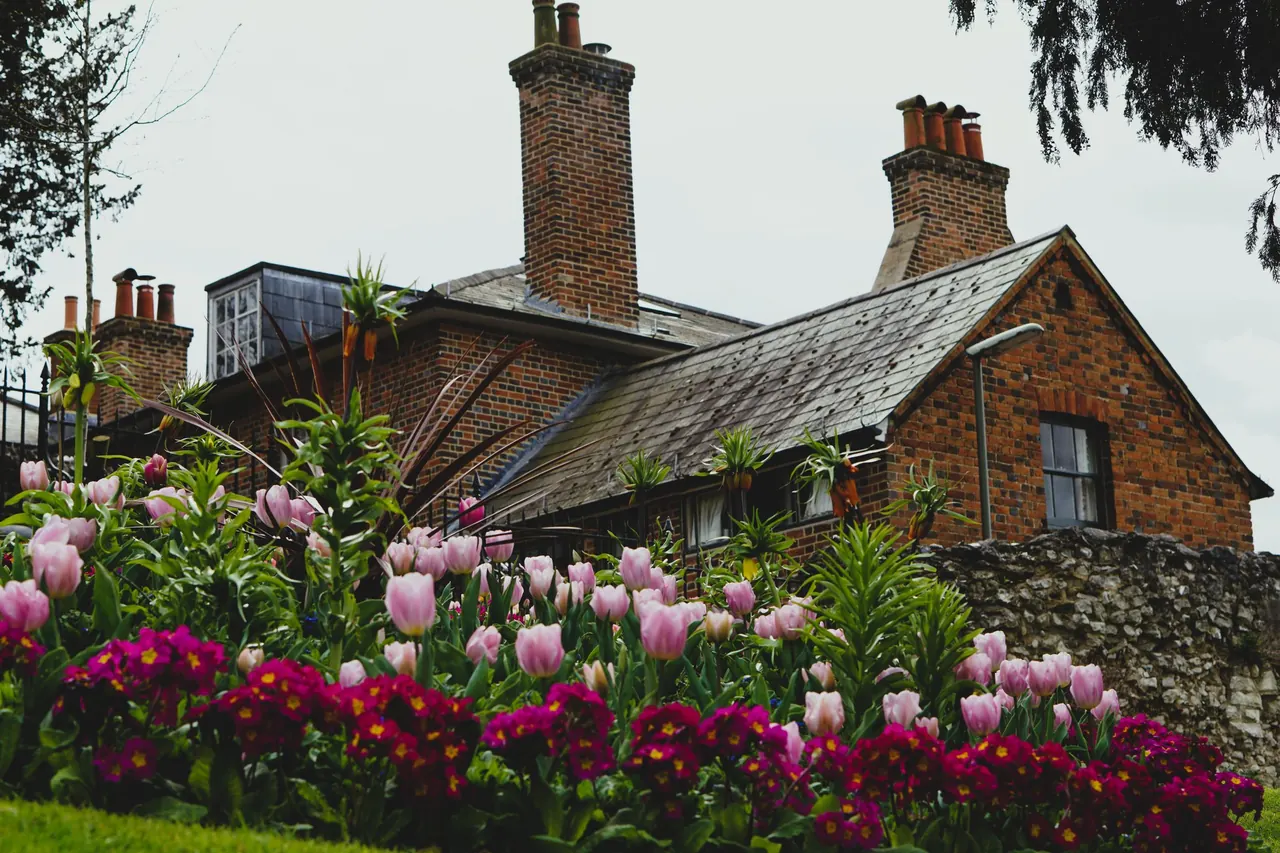
Many fireplaces on these streets have been blocked up or fitted with gas fires, but the stacks above them still stand in the weather. A disused flue still needs care at the top. An open pot over a dead flue lets rain straight down inside the breast, and a flue sealed at both ends can trap moisture. The usual answer is a ventilated cap or cowl that keeps rain and birds out and lets air move, fitted once we know how each flue is used. Our chimney maintenance guide lists the signs to watch for from the garden, and the main chimney repairs page explains each type of repair.
Frequently asked questions
Can the chimney on a listed Wandle Bank cottage be repointed in cement?
It should not be. Hard cement mortar on old soft brick traps moisture and can damage the brick faces. Repointing on a listed cottage should match the original mortar, which on brickwork of that age is normally lime.
How can I tell from the garden whether the stack on my Harewood Road house has lead or a cement fillet?
Lead looks like grey metal stepped up the side of the stack in short sections. A cement fillet is a smooth sloping band of mortar between the tiles and the brickwork. If you cannot tell, a drone photo shows it clearly.
What does re-leading a stack on a Colliers Wood terrace cost?
MyJobQuote's chimney leadwork guide lists £150 to £250 for a patch repair to chimney flashing and £350 to £460 for full leadwork replacement without scaffolding, as national figures. Whether your stack can be reached from roof ladders or needs a scaffold makes the biggest difference.





