



 Google reviews

A gutter in the middle of the roof
Stand outside the Royal Standard at 180 High Street and all you see is a brick parapet. Behind it is what Merton's Wandle Valley Conservation Area appraisal calls a double-pitched "London roof": two slopes falling inwards to a central valley gutter. The appraisal notes that some of the earlier domestic buildings in the area were roofed the same way, because it was a more economical way to span the building.
The catch is that every drop of rain from both slopes ends up in that one valley, and it leaves through a single outlet. If leaves, silt or a nest choke it, the valley fills and overtops its lining into the ceilings below, and nobody sees it filling. This is the kind of roof where an inspection pays for itself. A drone looks straight down into the valley, so the lining, the outlet and the slopes either side can be photographed without anyone climbing over a parapet just to look. If it needs clearing, that work is covered under blocked gutters in Colliers Wood.
The parade at 182 to 192 High Street next door has its own hidden roof: a pitched roof behind the front parapet, sloping to the rear. Flats above shops on the A24 often have no idea what condition their roof is in until water arrives, and an inspection gives the freeholder and the leaseholders the same photos to work from.
Reading the roof on an 1877 terrace
Most houses in Colliers Wood are not pubs or parades. They are the red-brick terraces on the 1877 estate roads and the 1930s infill on the Gardens roads, and their weak points sit in different places. On the older terraces, the joint where the tiles meet the raised parapet gable and the short valleys either side of the front gable are where faults usually start. On the 1930s houses, the tiled canopy over the porch and the hips and ridge come first. On the stock-brick houses with slate, it is slates sliding out of line as their nails corrode.
A loft check, where there is a hatch, adds what the outside cannot show: damp staining on rafters, wet insulation and daylight between tiles. Matching the two tells you whether a stain on a bedroom ceiling comes from your roof or from next door's side of a shared valley.
Buying here? A buyer's survey on a terrace off Robinson Road is usually done from the ground, so the back slope and the valleys behind the front gable may not have been seen at all. Our guide to a roof inspection before buying a house covers what to ask for before you exchange.
Flying near the Wandle Park pylons
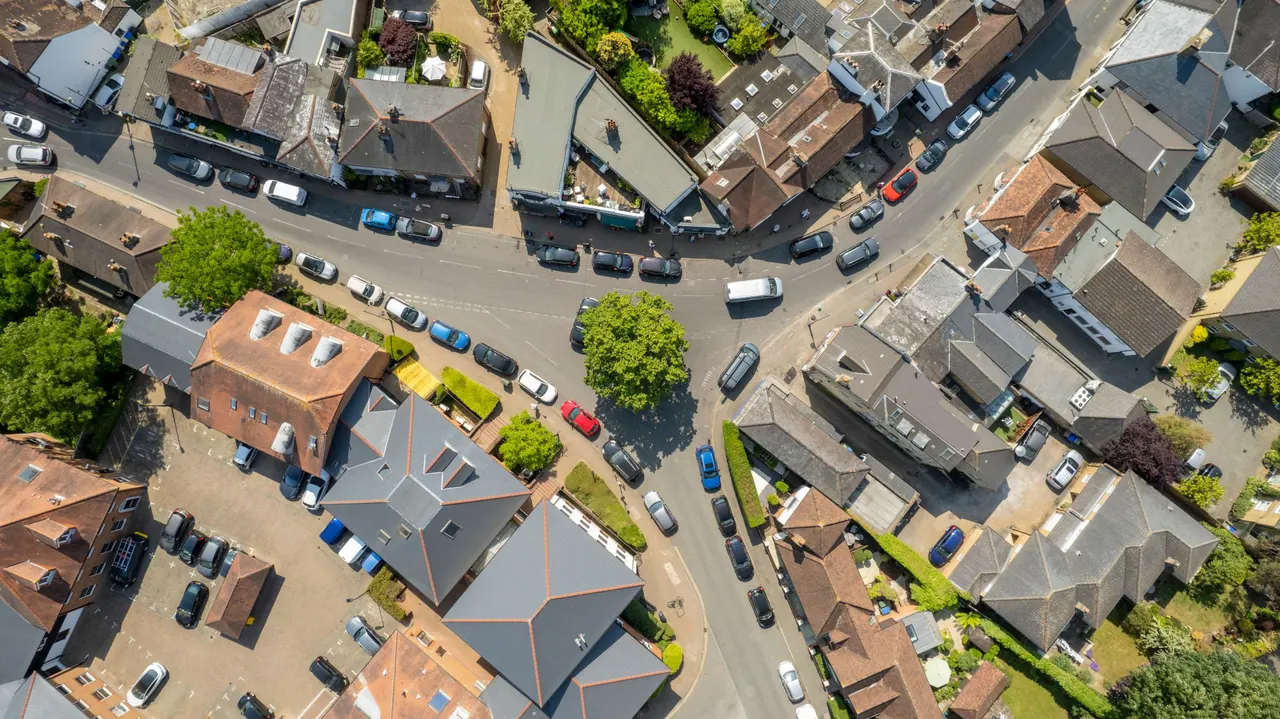
Every flight is planned around the wind, the trees and overhead cables, and near Wandle Park the cables matter. Merton's borough character study notes the overhead power lines that cross the park, with pylons at the northern end of Byegrove Road and at the southern end of the park.
For houses well away from the lines it makes no difference. For roofs close to the park we plan a route that keeps a safe distance, and where that is not possible we look from a ladder and the loft instead, or come back when conditions allow. The photos you get are the same set, taken from a different spot.
In the conservation area, which takes in Wandle Bank and the High Street frontages, those photos are also a dated record of the covering your roof has now. That helps if you plan changes later and need to show what was there, and on Wandle Bank, where some listed cottages have already lost their slate, it settles what is actually on yours. How the drone survey itself works is explained under roof inspections.
Frequently asked questions
Our flat is above a shop at 182 to 192 High Street. Can the roof be checked without scaffolding the front?
Usually, yes. A drone can photograph the slope behind the front parapet and the parapet itself from above, and the rear can often be reached from the back if a closer look is needed. Scaffold only comes into it if the photos show work that needs it.
What would an inspection pick up on a 1930s house in Colwood Gardens?
Worn ridge and hip mortar, slipped or cracked tiles, the joint where the porch canopy meets the wall, and the state of the underlay in the loft. On a roof that age the battens and underlay often say more about the years left than the tiles do.
Will the photos show whether a stain is from our roof or next door's on Cavendish Road?
They show exactly where the fault sits, including which side of a shared valley or party wall it is on. That gives you something clear to take to your neighbour before any repair is agreed.





