



 Google reviews

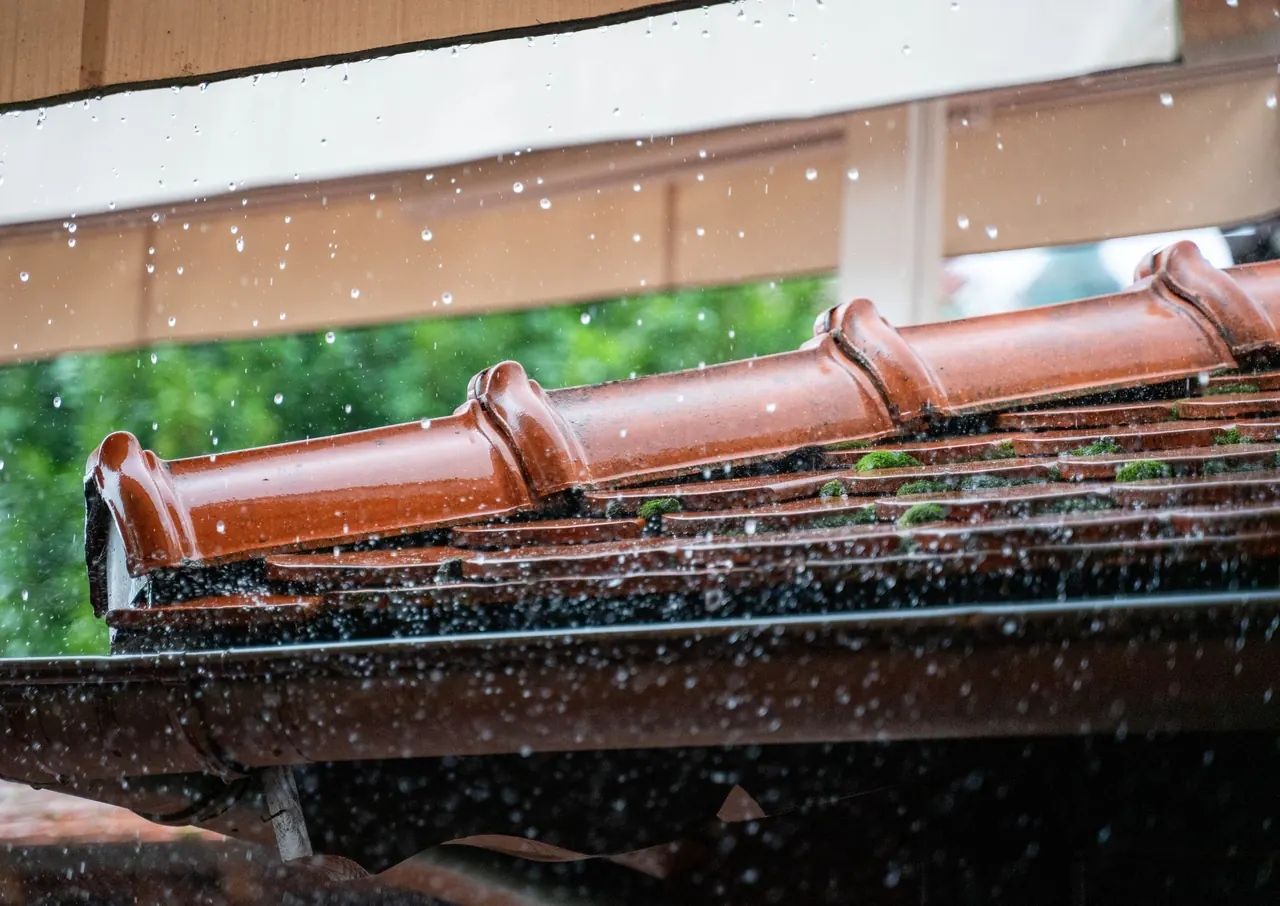
Tiles off a terrace in a storm
Most emergencies on the residential streets either side of the High Street start the same way. A storm lifts tiles from a front slope, loosens the ridge, or peels back the lead where the roof meets the stack or the raised parapet at the end of the row. On the 1877 roads, where a front gable projection meets the main roof it forms two short valleys, and in a cloudburst those can back up under the tiles into the front bedroom.
If tiles have come down, keep people away from the path below and do not go up a ladder in the wind. If water is coming in, move what you can, catch the drips and switch off the lighting circuit in that room if water is near it. Take photos inside, and from the ground outside if it is safe, because the cause matters for an insurance claim: home policies commonly treat sudden storm damage differently from wear. Our post on spotting roof damage after a storm covers what to look for once the weather clears.
On site the aim is to stop the water and remove any danger: refixing or replacing tiles, sheeting an open area, taking down loose brickwork from a stack, or clearing a valley that has overflowed. If the chimney has been damaged, the rebuilding then passes to our chimney repairs in Colliers Wood. Sometimes the permanent repair can be done on the same visit. In high wind or heavy rain it often cannot, and you get a price for the permanent work before it is booked.
Water through a flat above a shop
The High Street is part of the A24, and much of its frontage is shops with flats above. Merton's Wandle Valley Conservation Area appraisal describes 182 to 192 High Street as a three-storey parade of shops with flats and offices above, its pitched roof set behind a front parapet and sloping to the rear. From the street you see only the parapet, so damage is usually reached from the back, and the parapet itself is checked for loose bricks or coping before anyone works above the pavement.
On Christchurch Road, the parade at 2 to 24 has a flat roof behind a parapet. A split covering or a choked outlet there sends water straight into the top-floor flat. Water that arrives with a downpour and stops soon after usually points to a blocked outlet, and our page on blocked gutters in Colliers Wood explains why the low ground here makes that worth taking seriously.
In a flat, the roof may belong to the freeholder. Tell the freeholder or managing agent as soon as you can. We can make the roof safe on your call, record what we found and did, and then deal with whoever is responsible for the permanent repair.
Calling us out at night
We answer the phone 24 hours a day, every day of the year, on 0330 133 4111. Our base is on Kenley Rd in Morden, about 1.7 miles from the middle of Colliers Wood. When you call we ask what you can see, whether water is coming in and whether anything could fall, which tells us what to bring and whether anything needs doing before we reach you.
If reaching a roof safely in the dark is not possible, we make the inside as safe as we can and come back once the roof can be worked on safely.
Frequently asked questions
Tiles have blown off our terrace on Park Road and the loft is wet. Is that an emergency?
If rain is getting in or more tiles could fall, yes. Keep the area below clear, catch what water you can and call us. A few missing tiles with dry weather forecast can usually wait for a normal visit, but an open roof in rain cannot.
Water comes through my top-floor ceiling on Christchurch Road only in heavy rain. Is that the roof or the outlet?
On a flat roof behind a parapet, water that arrives with a downpour and stops soon after usually means a blocked outlet letting water build up and overtop the upstand. Water that keeps coming after the rain points to a split in the covering. We check both.
The roof over our High Street flat belongs to the freeholder. Can we still call you?
Yes. Stopping water coming into your home does not have to wait. We make it safe, note what we found for the freeholder and their insurer, and quote the permanent repair to whoever is responsible.





