



 Google reviews

Two houses, one stack
On the late Victorian terraces round St Mary's Church, Squarey, Keble and Huntspill Streets among them, the main chimney stack rises from the party wall. Your flues run up one side and your neighbour's up the other, and the lead flashing wraps round both halves. The same pattern runs through the Fairlight streets on Pevensey and Khartoum Roads.
That shared arrangement shapes every repair. Water that gets in through tired pointing on next door's face can track through the brickwork and show on your chimney breast. New lead on your side meets old lead on theirs, and that join has to be made carefully or it becomes the next leak. Where both owners agree, doing the whole stack in one go is cheaper for each of you than two separate jobs, because the access only has to be paid for once. Bigger work, such as rebuilding a stack on the party wall, can bring in the Party Wall etc. Act 1996.
On a stack of this age the faults are usually a mix of lead that has lifted or split, lime mortar washed out of the joints, cracked flaunching round the pots, and pots that have loosened in their bed. Plenty have been patched with tar or flashing tape over the lead, which cracks with the seasons and hides what is underneath.
The small stack on the back addition
Many of these terraces also have a smaller stack on the back addition, which typically served the back kitchen. It often sits right against the valley where the back addition roof meets the main roof, so its flashing and the valley lining share the same water. When a back kitchen ceiling stains, it can be hard to tell which of the two failed without lifting a few slates. We check them together. If the flue is no longer used, taking the stack down below the roof line and slating over it is sometimes the simpler answer, and if the slates round it need work too, it can be done as part of a roof repair on the same visit.
A drone photo of each stack before we quote shows whether the work can be done from roof ladders or needs a scaffold, so you know that before the price is set. For scale, MyJobQuote's chimney leadwork guide currently gives £150 to £250 for a patch repair to chimney lead where no scaffold is needed. A full re-lead of a shared stack is a bigger job, and the main chimney repairs page covers pots, cowls and repointing in more detail.
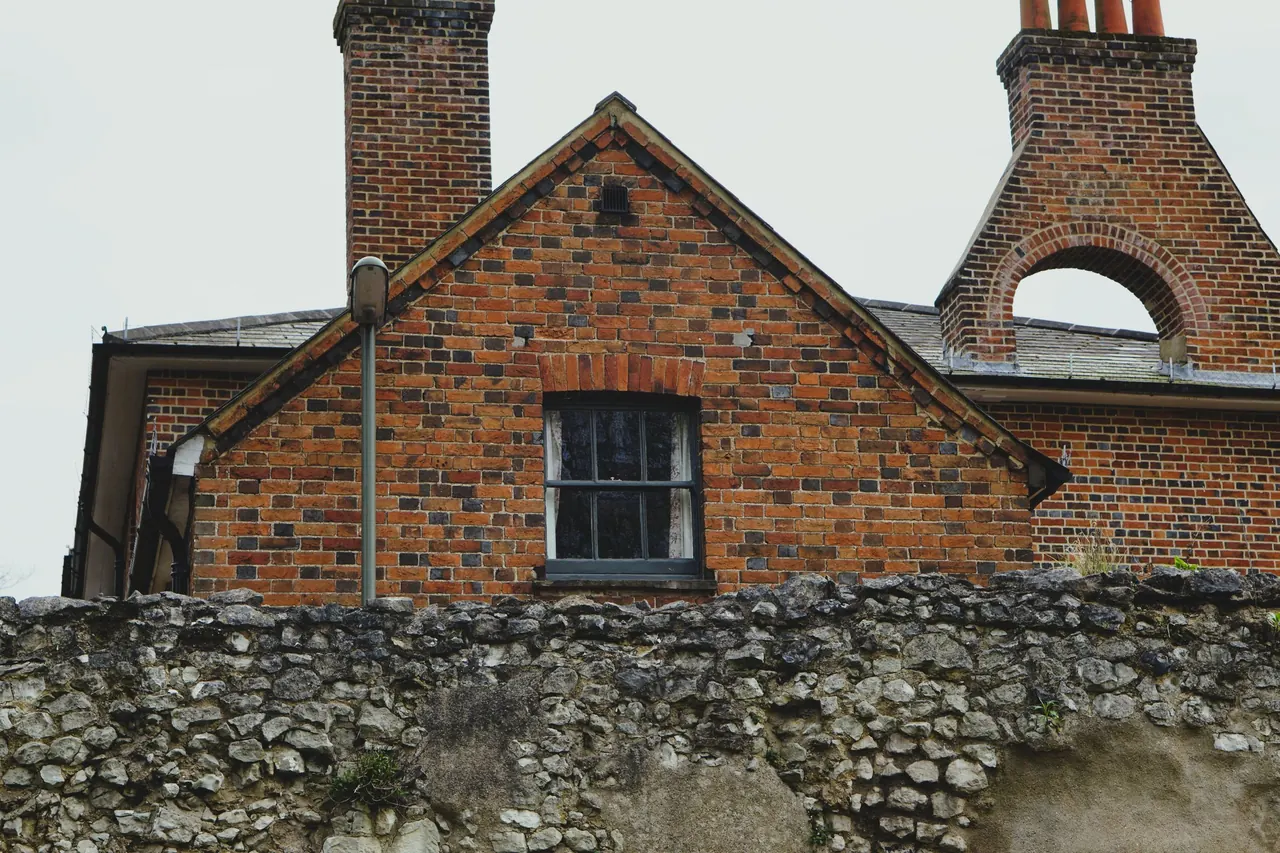
The Tudor-style clusters at the almshouses
Garratt Lane has the area's showpiece stacks, on the St Clement Danes almshouses. The Grade II listing describes prominent clusters of Tudor-style chimneys rising between each two pairs of cottages, and the listed lodge carries three octagonal chimneys on its central stack. Chimneys like these are part of why the group is listed. Repairs need matching brick, a suitable lime mortar and lead, and anything that alters them needs listed building consent. The council owns the cottages, so it commissions that work. Our article on chimney flashing problems shows what failed lead looks like on any stack.
Frequently asked questions
Damp is showing on our chimney breast, but our side of the stack on this terrace looks fine. Could it be next door's?
It can. Water entering through next door's pointing or flashing can travel through the shared brickwork. Photos of both faces of the stack usually show where it is getting in, and we can share them with your neighbour.
The back addition chimney on our terrace is no longer used. Should it come down?
It is an option worth pricing. Taking a disused stack down below the roof line and slating over it removes a flashing and a set of pots from the weakest corner of the roof. If the flue still serves a boiler or stove, it stays and gets new lead.
What does work on the almshouse chimneys on Garratt Lane involve?
Matching brick, lime mortar and lead, with scaffold designed round the clustered shafts. Anything beyond a like-for-like repair needs listed building consent, which can cover the method as well as the look, so the council plans the work before the scaffold goes up.





