



 Google reviews

Finding the block before clearing it
An overflow can start in three places, and clearing the wrong one wastes your money. On Summerstown's late Victorian terraces, where pipes have been added, moved and patched for more than a century, it is worth working out which before anyone starts pulling handfuls out of a gutter.
- The gutter outlet: water spills along the length of the gutter, but the downpipe below is dry in a storm. The block is at the outlet or the top of the pipe.
- The downpipe: water backs up and spills near the outlet, the pipe is wet on the outside, and you may hear it gurgle. The block is at a bend, an offset or the shoe at the bottom.
- The gully or drain: the downpipe runs, but water bubbles up or floods round the gully at its foot. The gutter may be perfectly clear.
We check from the bottom up. Running water down the pipe from above shows where it stops, and looking at the gully tells us whether the problem is ours at all. If the gutter itself is simply full of leaves and seed, that is a job for our Summerstown gutter cleaning instead.
Cast iron downpipes and their offsets
Houses of this age on the Fairlight streets and round St Mary's often keep some cast iron downpipes, with offsets where the pipe steps round a sill, a string course or the corner of the back addition. Those offsets and the shoe at the bottom are where silt, moss and slate grit settle. Cast iron also cracks at the back, against the wall, where you cannot see it, so a pipe can leak into the brickwork for years before anyone notices a damp patch inside.
Clearing a packed cast iron pipe means working from the top and the bottom, rodding or flushing it until water runs freely, then checking the joints and brackets. A length that is cracked right through is better replaced in the same visit, in cast iron to match or plastic if you prefer. As a guide, MyJobQuote's gutter repair guide currently lists downpipe replacement at £80 to £250. After any clearance we flush the whole run and watch it drain, and if a sag or a lost fall caused the blockage, we reset it so debris does not collect in the same place again.
Gullies on low ground
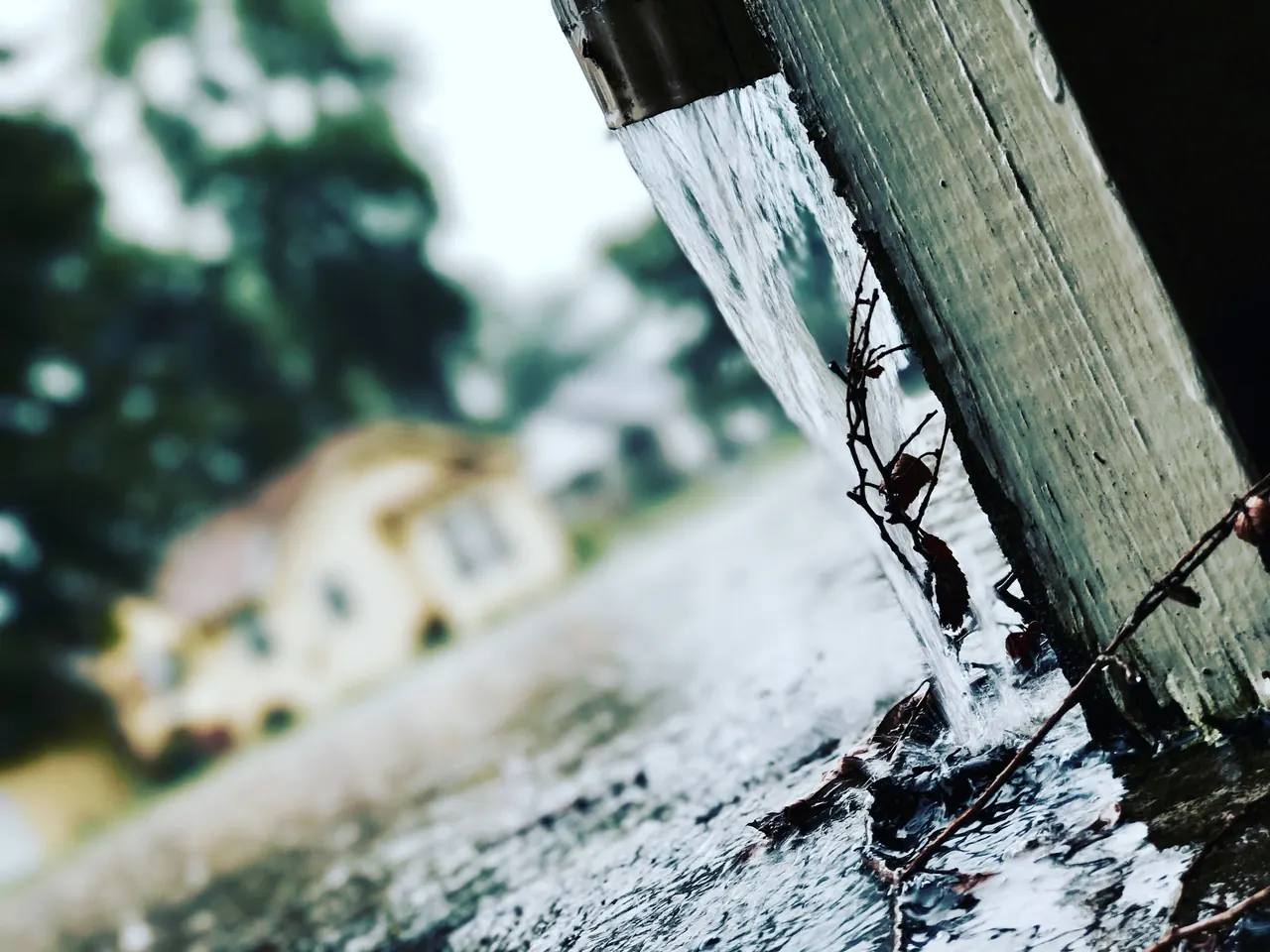
Summerstown sits in the Environment Agency's River Wandle at Wimbledon flood warning area, and the Summerstown 182 project describes the road called Summerstown as still prone to flooding. On ground like this, drains have a harder time in a long storm, and a gully that backs up can look exactly like a blocked gutter from inside the house.
If the downpipe is running freely and water is rising out of the gully, the fault is below ground. That is a drainage job rather than a roofing one, and we will tell you so rather than charge you for clearing a gutter that was never blocked. Failed joints and dropped brackets found during a clearance are handled under gutter repairs, and the main blocked gutter repair page covers the causes of blockages in more detail.
Frequently asked questions
The gully by the front door of our terrace bubbles when it rains. Is the gutter blocked?
Probably not. If the downpipe is delivering water and the gully cannot take it, the block is in the gully trap or the drain beyond. Running water down the pipe confirms it, and if the fault is in the drain we will point you to a drainage firm.
The cast iron downpipe on the back addition of our Victorian terrace seems to leak at the back. How do you find it?
We look behind the pipe with a mirror and a light, feel for damp brick, and watch it with water running. Cracks at the back and failed joints at offsets are the usual culprits, and a cracked length can be swapped on its own.
Does being near the Wandle make blocked downpipes more likely?
Not the downpipes themselves. What low, wet ground does is make an overflow matter more, because water dumped at the foot of a wall dries slowly, and it makes gullies more likely to back up in a long storm.





