



 Google reviews

Church Lane's corbelled stacks
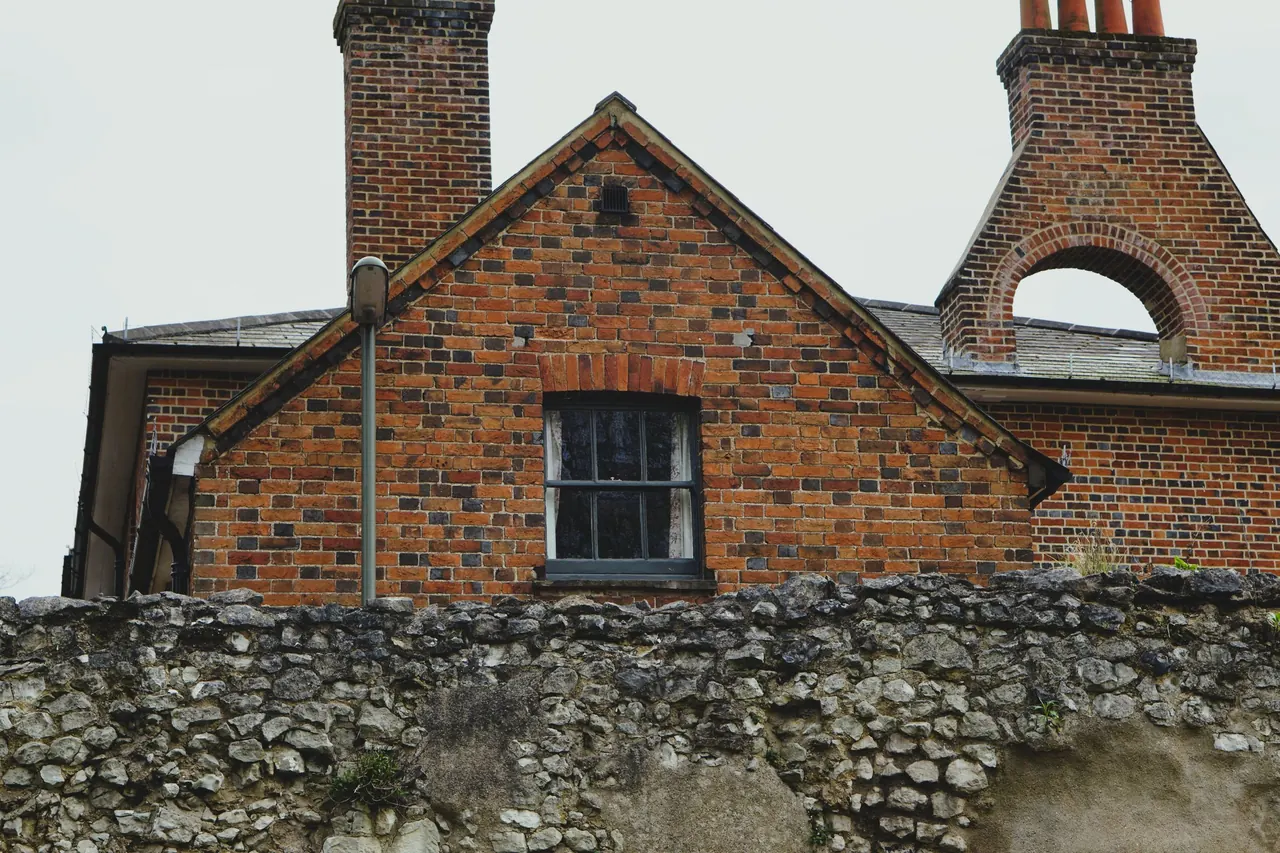
Look up on Church Lane and the chimneys are what you notice first: tall, corbelled and Tudor in style. Wandsworth Council's appraisal of Totterdown Fields says they are unlike any others on the estate. Across the rest of the estate, Tudor-style chimneys break up the roofline, with the most dramatic ones usually at the end of a group of cottages. These stacks are Edwardian, built between 1901 and 1911 in the Tudor manner, and after more than a century of weather they show it.
A corbelled stack steps out in courses of brick as it rises. Every projecting course is a ledge where rain sits and frost works into the joints. Over time the mortar on those ledges erodes first, then the brick faces start to spall. At the top, the flaunching around the pots cracks and lets water into the core of the stack. At the bottom, the lead where the stack meets the slate lifts or splits.
The answer is careful repair, not simplification. The council's guidance says chimneys on the estate should not be altered and pots should not be removed. So a tall stack stays tall, its corbelling stays, and its pots go back on.
Pointing a Totterdown stack in the right mortar
The guidance is just as clear about repointing brickwork: use a cement and lime mortar, carefully matching the existing joint, its texture and colour. A cement and lime mix allows slight movement and reduces the risk of cracking. A hard, pure cement mortar does the opposite, trapping moisture in soft stock brick and pushing the damage into the brick faces.
On a stack of yellow stock brick that is one part of a terrace designed as a single composition, colour matters too. A patch of grey cement pointing on one cottage's stack can show along the whole street. We rake out the failed joints, repoint in a cement and lime mortar matched to the existing joint, and keep the joint profile the same as the rest.
Lead is the other half of the job. We renew lifted or split flashings and soakers where the stack meets the slate, and rebed loose pots in new flaunching. If the slates around the stack are cracked, our Tooting roof repair page explains how we deal with them on the same visit.
End-of-group stacks and shared stacks on the estate
Beyond Church Lane, the appraisal notes that the most dramatically styled Tudor-style chimneys are usually placed at the end of a group, where they finish each terrace as a single composition. An end stack stands more exposed than those along the middle of a row, so its outer face and its cap take the weather from more than one side. Those are the joints we look at first.
Along a terrace, a stack on the party wall usually carries flues from both sides, so a repair is best agreed with next door, or with the other flat where a cottage is two homes. The drone gives close-up photos of the pots, flaunching and lead before anyone climbs, and tall stacks like those on Church Lane usually need a chimney scaffold for the work itself. If you want the stack looked at before any work is booked, a roof inspection in Tooting covers it.
As a published guide figure, MyJobQuote gives £150 to £250 for a flashing patch repair and £350 to £460 for full leadwork replacement, before scaffolding. Our chimney maintenance guide covers yearly checks, and the main chimney repairs page explains the work in general.
Frequently asked questions
What mortar should be used to repoint a stack on Totterdown Fields?
Wandsworth's guidance asks for a cement and lime mortar matching the existing joint, texture and colour, because it allows slight movement and reduces cracking. That is what we use, rather than a hard cement.
The stack at the end of our Okeburn Road terrace is the tallest in the row. Why does it need more work than the rest?
End stacks were usually the showpiece of the group and stand more exposed, so the mortar on their outer faces and the flaunching at the top wear faster. We check those first and repair to the same design, since the council's guidance is that the estate's chimneys are not altered.
Does a corbelled stack on Church Lane need scaffolding?
Usually, yes. These stacks are tall and the work involves the whole face, so a chimney scaffold is the safe way to do it properly. The drone survey shows what is needed before you commit.





