



 Google reviews

When a Totterdown slope is past refixing
Slates sliding on course after course of the same slope mean the nails, and often the battens, have reached the end together. Refixing them one at a time then stops being worth the money, and that is the point at which a slope, or a whole roof, is stripped and re-laid. One slipped slate is still a repair, and our Tooting roof repair page explains how it is refixed.
Wandsworth Council's management strategy for Totterdown Fields names rotted or broken fixings and cracked slates as the common defects of the estate's ageing roofs, so this is the decision many cottage owners reach sooner or later.
On these cottages a replacement is not a free choice of covering. The estate has had an Article 4 Direction since 1990, and it brings re-roofing in a different material under planning control. The council's guidance asks for new materials as close to the original as possible and says synthetic slates should be avoided. In practice, a Totterdown re-roof is a re-slate.
Old slate to the front, new slate to the back
The guidance is specific about how a large replacement should be done. A proportion of the existing slate should be re-used, with the old slates going back on the front of the building and new ones laid at the rear. That keeps the weathered look of the street side, where each terrace was designed as a single composition, and puts the brighter new slate where mostly the gardens see it.
So the strip is careful. Slates come off by hand, and each one is checked for cracks, flaking and worn nail holes. The sound ones are sorted by size and stacked for the front slope. New natural slate of a matching size goes on the rear. The guidance also asks for re-roofing to stay consistent with the group, so we look at the neighbouring roofs before choosing the new slate.
The chimneys stay as they are. Leadwork, hips and ridges are renewed as part of the job. On the front-gabled cottages, the deep eaves with no visible fascia are kept to the same detail.
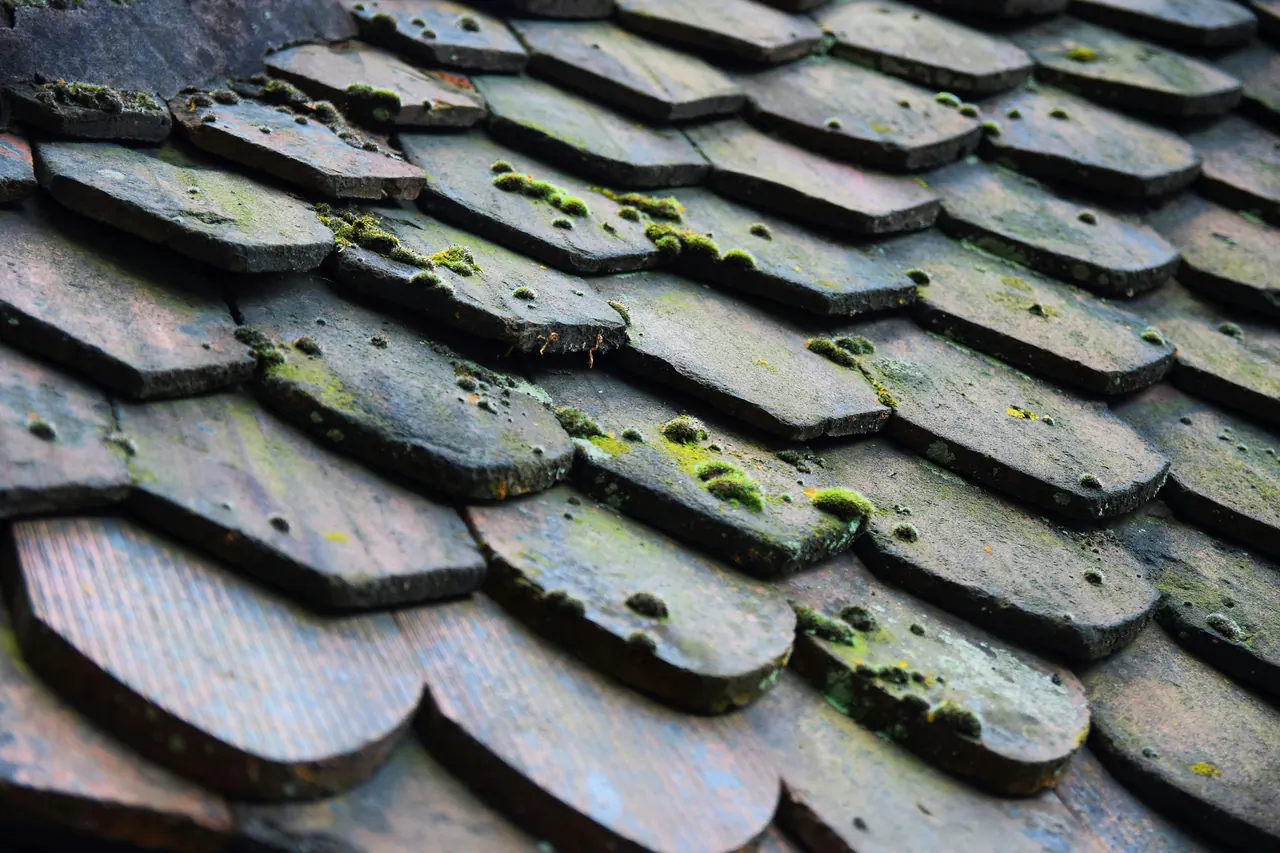
What happens under the slate on a joined terrace
On every cottage the slopes run into the neighbours' roofs at the party walls, so the new slate has to be laid and flashed to meet next door's old roof cleanly, and the scaffold often has to cross a shared front path. Where a cottage is two flats under one roof, both owners need to agree the job. We raise these points when we quote.
Under the new slate goes a breathable membrane and new battens, and the whole roof is checked from the loft before the old covering comes off. Rafters that have been wet for years around a failed valley or stack are repaired while the roof is open, which is far cheaper than coming back to them later.
Re-covered Victorian roofs towards Longley Road
South of the estate, the late Victorian houses towards Longley Road are a different job. Some have already lost their slate to concrete tile, as almost every house in the nearby Mellison Road Conservation Area has, which our Tooting Broadway roof replacement page covers in more detail. Concrete tile is heavier than the slate these roofs were framed for, so a re-roof here starts in the loft, with the rafters, purlins and wall plates checked before the covering is priced.
For a London benchmark off the estate, MyJobQuote's published guide lists £4,000 to £4,900 for re-roofing a typical three-bedroom semi with a standard gable roof, before scaffolding. A hand-sorted natural slate re-roof on Totterdown Fields will sit well above that figure, and extra timber work or a stack to flash around pushes it further. If you are not sure your roof is past repair, our article on repair or full replacement walks through the signs, and the main roof replacement page has more detail.
Frequently asked questions
Which slates go back on the front of my Derinton Road cottage?
The sound originals. Wandsworth's guidance is to re-use old slate on the front, where the street sees it, and lay new slate on the rear. We sort every slate as it comes off and keep the best for the front slope.
Can I use synthetic slate on my Okeburn Road roof to save money?
The council's guidance says synthetic slates should be avoided on Totterdown Fields, and changing the covering needs planning permission under the Article 4 Direction. Natural slate is the practical choice.
Does the chimney on my Church Lane cottage come down during a re-roof?
No. Wandsworth's guidance is that the estate's chimneys should not be altered and pots should not be removed. The stack stays as it is, and the lead around its base is renewed so it meets the new slate properly.
Would slate take weight off the concrete-tiled roof on my house near Longley Road?
Natural slate is lighter than interlocking concrete tile, which helps where old timbers are struggling. We still check the rafters and purlins first, because years under a heavier load may have left damage that needs repairing either way.





