



 Google reviews

A slate on the path: what it usually means here
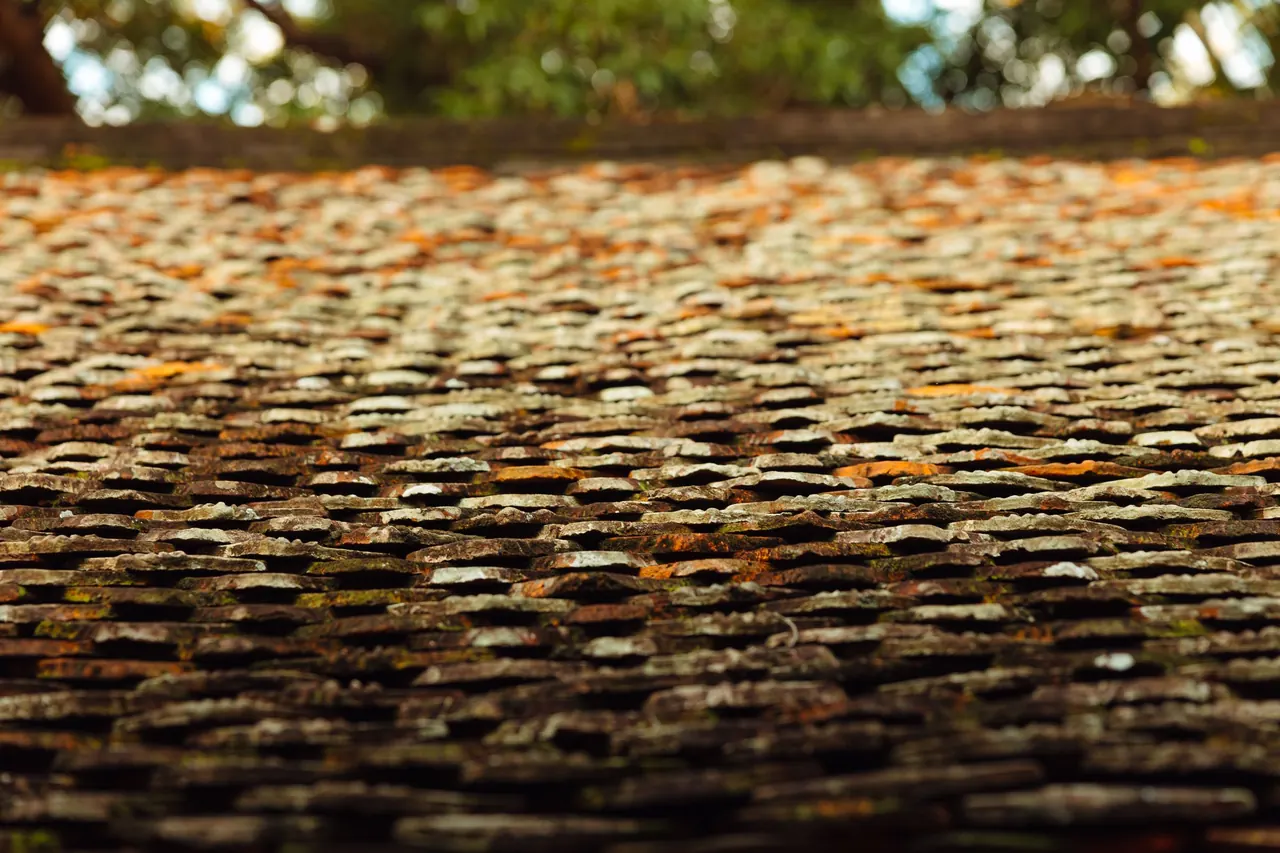
On Totterdown Fields, a slate lying on the front path is often a fixing story rather than a storm story. Wandsworth Council's appraisal lists the common defects of the estate's ageing roofs as rotted or broken fixings and cracked slates. The slate itself is often still sound. The nail that held it has rusted through, and the slate has simply slid out of the course.
That matters for how a repair is done. A slate cannot be nailed back from the outside, because its fixing holes sit under the course above. The usual method is to slide the slate back into place and hold it with a tingle, a strip of lead or copper fixed to the batten in the gap and folded up over the bottom edge of the slate. Where a batch of slates has gone in one area, we may lift the courses above and re-nail properly. If the slate is cracked, it is replaced with natural slate of the same size and a close colour.
When we find several slipped slates spread across a slope, we tell you. Tingling one slate at a time is fine for an odd failure. Across a whole slope, it becomes a repair you pay for again and again.
Totterdown's three roof shapes and their weak spots
The appraisal describes three basic roof shapes on the estate, and each leaks in its own places.
Hipped roofs, sometimes with heavy projecting gables. The hips are bedded in mortar that cracks and washes out, and where a gable projects from the main slope, the valley between them collects leaves and silt. A blocked valley sends water sideways under the slates.
Roofs with eaves at first-floor level and dormers in the side. These have long slopes and a set of joints around every side dormer: the cheeks, the apron and the soakers where dormer meets slate. A leak here can show up a room away from the cause.
Double-pitched front gables with a deep eaves projection and no visible fascia. The verges take driving rain, and the mortar along them is often the first thing to go.
All three share the estate's Tudor-style chimneys. If the leak is at the stack, our chimney repairs in Tooting cover the lead and pointing.
Off the estate: The Gables and the re-covered terraces
South of the estate, towards Longley Road, the late Victorian houses are mostly outside the Totterdown rules, and some of their roofs have been re-covered at some point, often in concrete tile. The faults there are different: ridge and hip mortar that has cracked and washed out, valleys worn through where two slopes meet, and the flashing where a back wing joins the main house.
The Tooting History Group picks out The Gables at 107 to 109 Longley Road, a pair with three gable fronts side by side. Gables set next to each other mean short valleys and small gutters between them, which take the water from two slopes and fill with leaves. That is where we look first on any roof of that shape.
As a published guide, the Which? survey of roofers' costs puts replacing one to six standard tiles at £75 to £400 excluding VAT, with London towards the top. Slate work on the estate is its own job and is priced on what we find. When a slope is past refixing, our Tooting roof replacement page explains how a Totterdown re-slate runs, and the main roof repair page covers repairs in general.
Frequently asked questions
Do I need planning permission to repair the slate on my Cowick Road cottage?
No, as long as the repair is in matching slate. The estate's Article 4 Direction brings a change of roof covering under planning control, and a repair like for like is not a change. The council asks for materials as close to the original as possible and says synthetic slates should be avoided.
Can you match the slate on my Ruislip Street cottage?
We match natural slate by size, thickness and colour as closely as we can. Where only a few are needed on the street side, sound slates can come from the rear slope for the front, with new ones fitted at the back, as the council suggests for larger jobs.
Water is coming in near the side dormer of my Totterdown cottage. Is it the dormer or the roof?
It could be either. The cheeks, the apron flashing and the soakers between dormer and slate are all common entry points, and on a long slope the water can travel before it shows. We check each one before deciding what to repair.





