



 Google reviews

Mortar on the drive below the gable
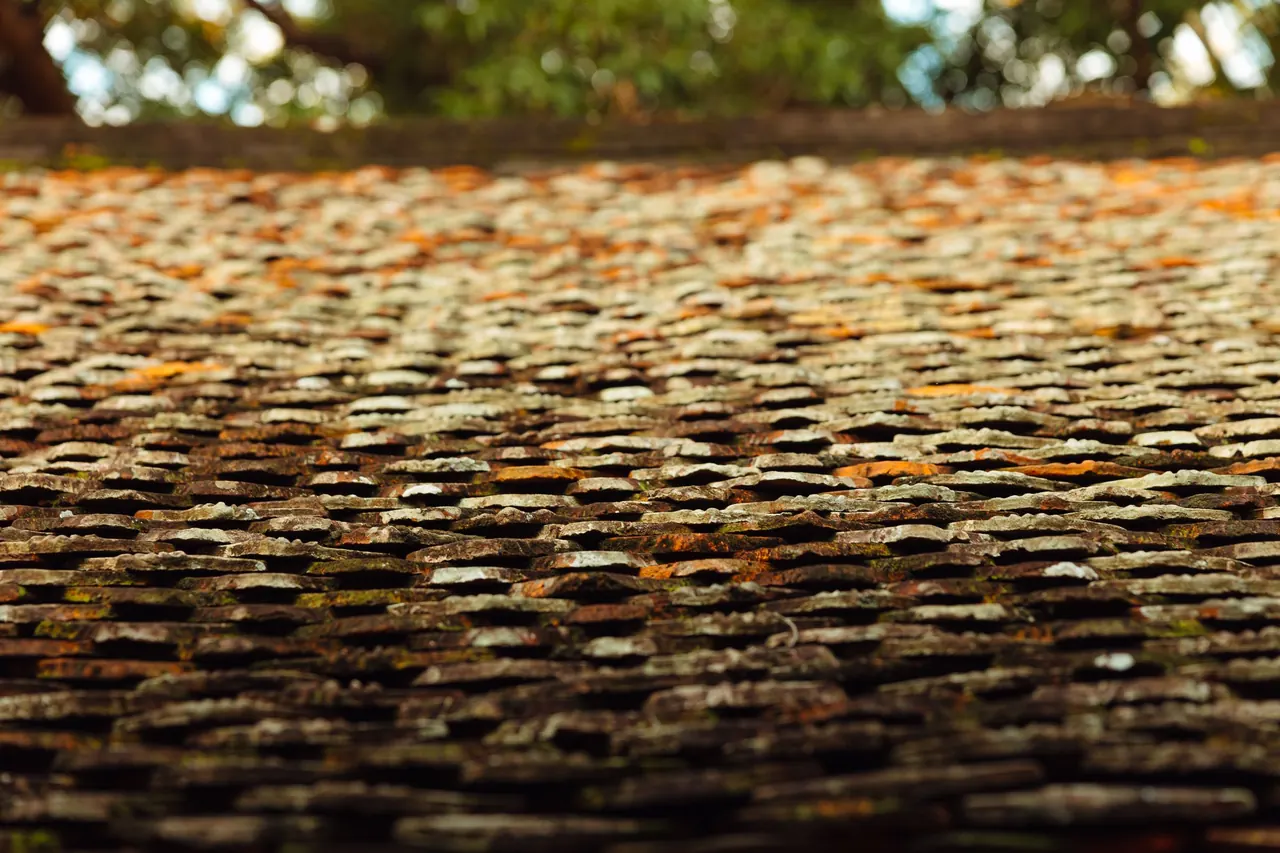
A small pile of grey or cream mortar on the parking bay, under the end of the roof, is easy to sweep up and forget. On the pantile houses in the closes off Liberty Avenue and Brangwyn Crescent, it usually means the verge is breaking up. A pantile verge on a house of this age is normally bedded in mortar on an undercloak strip. Thirty-odd years of sun, frost and wind-driven rain crack that mortar, pieces drop out, and the end tiles are then held by their nails alone. Once the wind can get under the edge, it can lift tiles in a run.
The closes make this more common than on a straight street. The houses step back in short staggered blocks, so a close of twenty houses has far more gable ends than a terrace of the same size. The end houses take it hardest, and so do the three-storey ones, where the verge is highest.
The repair is to take off the loose end tiles, check the undercloak and battens, refix the tiles and re-bed the verge along its full length, not only where pieces have fallen. Where the neighbours' verges on the same block are cracking the same way, it is worth knowing, because they were built together.
Ridges, hips and the top-floor stain
Ridges and hips go the same way as verges. The bedding cracks, the ridge tile rocks, and rain driven along the ridge gets in at the top of the slope. From inside, it often shows as a stain near the party wall in a top-floor room, some distance from the fault. On a pantile roof, water that gets past a tile runs down the underlay before it finds a gap, so the stain is often lower than the cause, and the loft is checked as well as the outside.
A slipped pantile is rarely alone. If its nail has rusted, others laid at the same time are likely to be the same, so the tiles round it are checked before one is refitted. If you are not sure where water is coming from, a roof inspection in Merton Abbey shows the dormer and the slope above it without a ladder going up.
Dormer cheeks on the taller houses
A dormer brings three new joints into a pantile roof, along each cheek and across the front. Pantiles have a deep roll, so the flashing at those joints has to be dressed closely over the profile. Where a dormer was finished with mortar fillets instead of lead, or the lead has been pushed up as the tiles moved, water runs behind the cheek and appears in the wall below the dormer or in the ceiling beside it. Where a dormer has a flat top, that can fail too, usually at the edge trim or where it meets the main slope.
Slate and clay at the mill buildings
A few roofs in Merton Abbey are far older. Merton Council's Merton Priory appraisal records red pantiles and some plain clay tiles on slender steel trusses on the earlier mill buildings, with slate on the Coles Shop and the Apprentice Shop. Repairs there are about keeping what is there: refixing slipped slates, replacing broken tiles with ones of the same type and colour, and renewing flashings in lead. The buildings are in the Wandle Valley Conservation Area and several are listed or locally listed, so any change of material needs the council's agreement first.
Where several faults turn up at once, our article on repair versus full replacement explains how to weigh it up. If water is coming in right now, go straight to emergency roof repair in Merton Abbey, and the general detail is on the main roof repair page.
Frequently asked questions
Mortar keeps falling out of the verge on my end house in Dreadnought Close. Can it be fixed for good?
It can be put right properly. The loose end tiles come off, the undercloak and battens are checked, the tiles are refixed securely and the verge is re-bedded in fresh mortar along its full length.
My neighbour in the same block off Liberty Avenue has just had their verge redone. Should I do mine now?
It is worth a look. Houses in one block were built together, so their verge mortar has had the same years of weather. If yours is cracking too, doing it while the neighbour's work is fresh keeps the two ends of the block looking the same, and one set of access can sometimes serve both.
Why is my top-floor ceiling damp beside the dormer?
Usually the flashing along the dormer cheek, or the joint between the dormer roof and the main slope. Less often it is the flat roof itself. All three are checked before deciding what to fix, since resealing the wrong joint wastes money.





