



 Google reviews

High eaves at The Nook and Bennett's Courtyard
Bennett's Courtyard, beside Merton Abbey Mills, is two long yellow brick blocks of flats. The Nook off Liberty Avenue was built to the scale of a mill building, and the blocks on the south side of Windsor Avenue run along the edge of the Pickle. All three have long, straight eaves well out of reach of a ladder.
On a building that long, a plastic gutter needs many lengths clipped together, and each union seal hardens and drips in time. On a house, a dripping joint is a ladder job. On a block of flats, it is a scaffold or access-platform job, and nobody notices the drip until the brick below stains. Running aluminium the full length of each straight eave removes those mid-run joints. What is left is a joint at each corner, stop end and outlet, so the number of places that can leak drops sharply.
Union joints also catch debris. Each one is a small ridge across the channel, and wet leaves and silt build up against it. On the blocks nearest the trees, a run with no ridges flushes through more cleanly, though outlets still need to be generous and the gutters still need clearing.
When the managing agent commissions it
On a block, the gutters belong to the freeholder, so seamless guttering is something the managing agent commissions rather than an individual flat owner. That changes how the job is planned. The cost of access is often the biggest single item, so it makes sense to do every elevation in one go, and to look at the fascias and downpipes while the access is up. Where the existing gutter is undersized for the roof, the new runs can be a larger profile at the same time.
A seamless run is only as straight as the board behind it, so soft or warped fascias are replaced first, as covered on our fascias and soffits page for Merton Abbey. Aluminium comes in coated colours, so the gutters can follow the brick or the window frames on the block. Our main seamless gutter installation page explains how the runs are measured, formed and fitted.
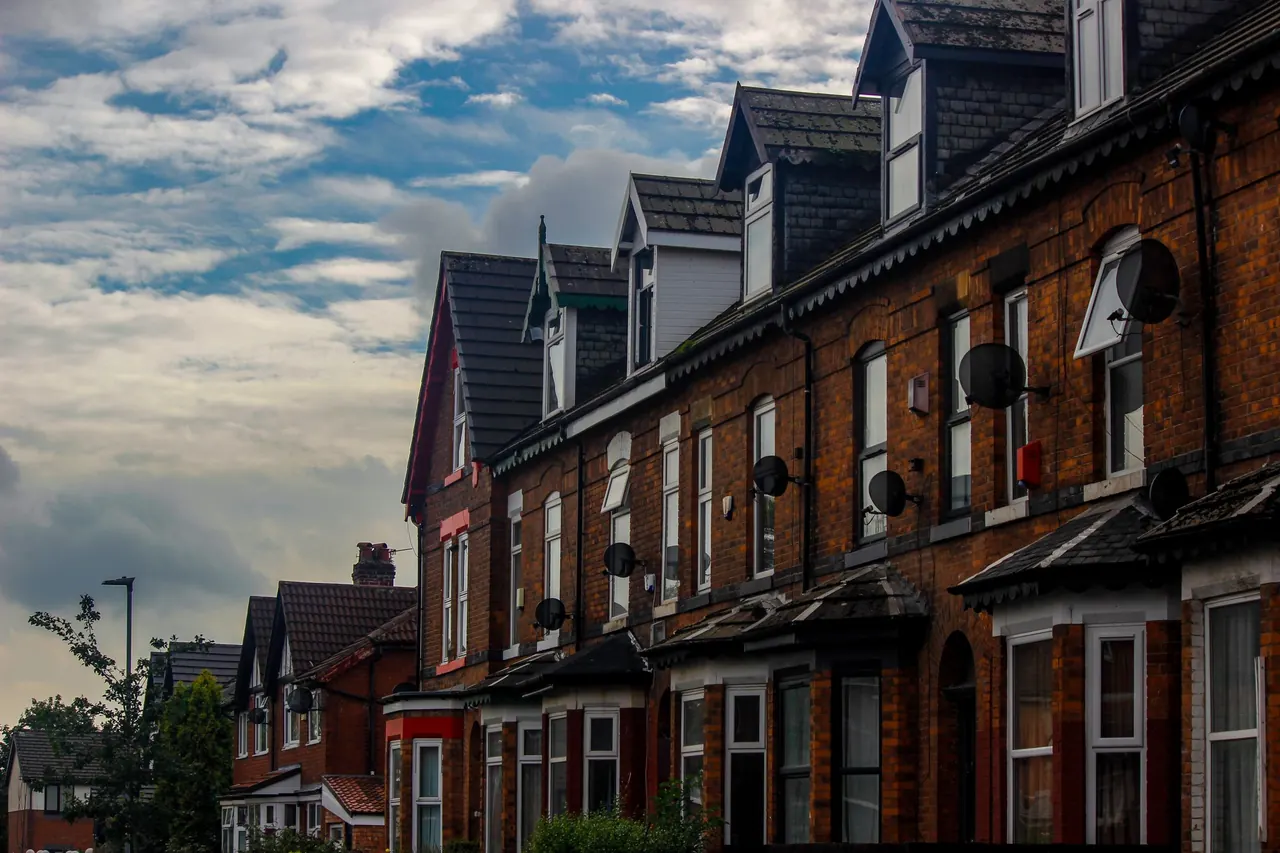
End-of-block flank walls in the closes
The 1980s and 1990s houses round Liberty Avenue and Brangwyn Crescent are a different case. Their eaves step in and out at every house, so most front and rear runs are short, with a corner at one or both ends. On a run like that there are few mid-run joints to remove, and a well-fitted sectional uPVC gutter is usually the better value, as our Merton Abbey gutter installation page explains.
The exception is the house at the end of a block. Where a flank or rear eave runs straight for several metres without a step, a seamless run along that side removes the joints on that length, while the short stepped front can keep a sectional gutter. The run is measured and both options compared before you decide.
At the mills themselves, the older buildings keep black cast iron. They sit in the Wandle Valley Conservation Area and some are listed, so aluminium is not the right material there.
Frequently asked questions
Our managing agent at The Nook wants fewer gutter leaks. Is seamless an option for a block?
Yes, and long runs on a block are where it works best. We survey the eaves, outlets and downpipes and quote the agent directly, including access.
Would seamless suit the long flank wall of my end-of-block house off Brangwyn Crescent?
Possibly. If the flank eaves run straight for several metres without a step, a seamless run removes the joints along that length. The short front can stay sectional.
Can seamless aluminium be fitted on a building at Merton Abbey Mills?
Not usually. The older buildings there have black cast-iron gutters, sit in the Wandle Valley Conservation Area, and include Grade II listed buildings, so replacement is normally like-for-like cast iron agreed with the council.





