



 Google reviews

Stacks and flues in the Liberty Avenue closes
Most homes in Merton Abbey are the 1980s and 1990s houses and flats off Liberty Avenue and Brangwyn Crescent, and the first question there is whether your house has a chimney at all. Houses of that period were generally built with central heating, so some have no stack at all, only a flue or vent pipe coming through the tiles. Others have a brick stack set into the pantile roof. Look from the end of the close or the back garden before calling, because the two are very different jobs.
If you have a stack, the weak point is where it meets the pantiles. A pantile has a deep roll, so the lead flashing beside the stack has to be dressed down over that profile in one piece, with an apron at the front and a back gutter behind. Lead that was cut short or finished with mortar fillets lets water in during driving rain, and it shows as damp on the chimney breast or in the loft beside the stack. Flaunching round the pots, open mortar joints and loose pots are the other usual repairs, and a cowl or cap keeps rain and birds out of a flue that is no longer used.
If you have no stack, a leak round a pipe through the roof is a roof job rather than a chimney job. The seal or flashing round the pipe is renewed and the pantiles round it refixed, as covered on our Merton Abbey roof repair page. Gas flue terminals themselves are a matter for a Gas Safe engineer, not a roofer.
Everett's Terrace: two houses, one stack
On Phipps Bridge Road, Merton Council's Phipps Bridge appraisal records a row of millworkers' cottages built in 1824, in London stock brick, with pairs of short chimney stacks on each party wall line and plain clay pots. It lists 84 to 94 Phipps Bridge Road, Everett's Terrace, on the council's local list.
A short party-wall stack catches less wind than a tall one, but two roofs meet against it. The flashing on one side protects one house and the flashing on the other side protects the next, so a failure can show on either side of the wall. Two hundred years in, the soft stock brick matters too. A repair in hard cement mortar can trap water in the brick face and make it spall, so mortar for repointing is matched to the brick.
The appraisal also records that the cottages have been re-covered in concrete interlocking tiles. These are too thick and deeply profiled for the small lead soakers used beside a stack on slate, so the lead has to be dressed over the tile roll in one piece. When a re-roof is done without renewing that lead, the old flashing is often left short or patched with sealant, which can look fine from the road and still leak.
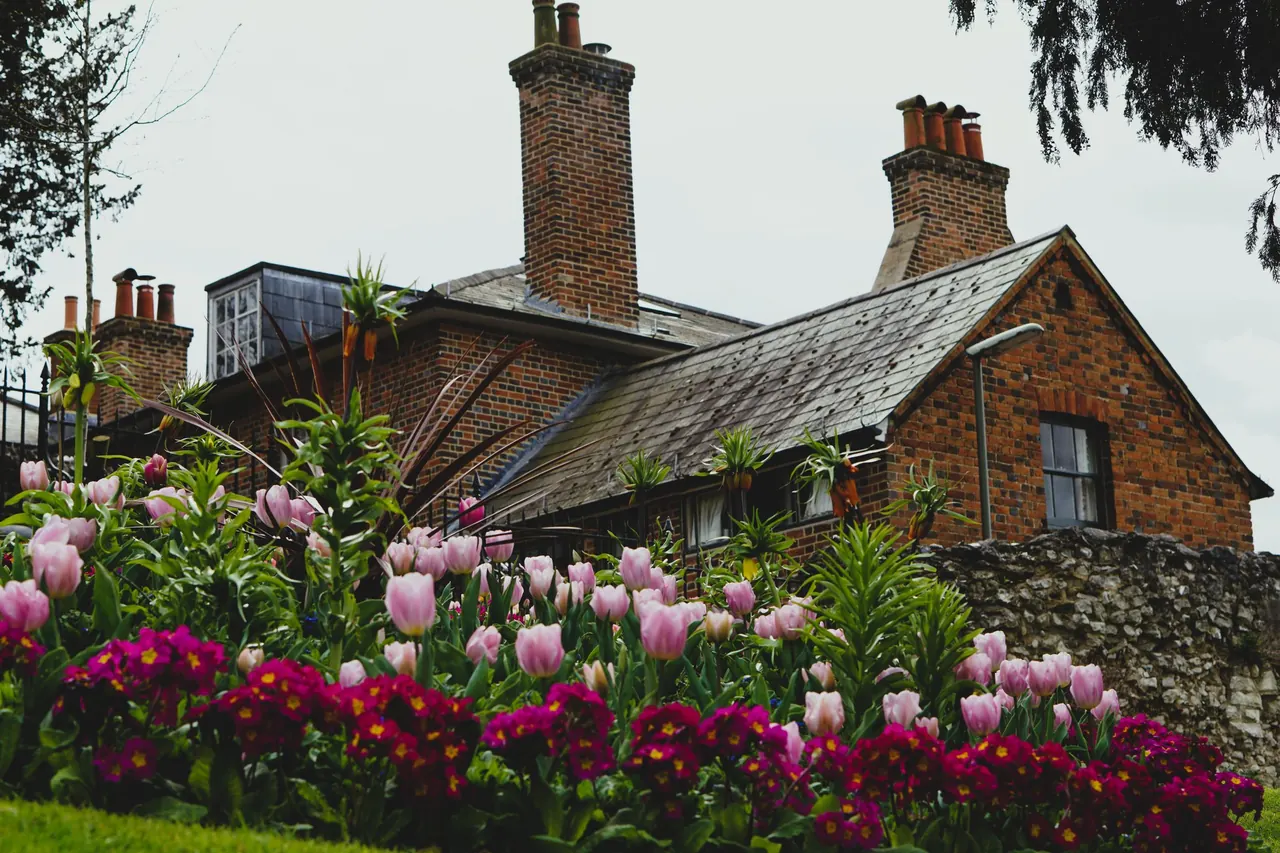
The Colour House at the mills
Round Merton Abbey Mills, the council's Merton Priory appraisal notes that chimneys are rare. It picks out the Colour House, with a prominent projecting brick stack at its south-western end, and the Watch-Man's Cottage attached to the Show House. The Colour House is Grade II listed, so repairs there have to be like for like and agreed with the owner and, where anything changes, with the council.
A drone flight shows the pots, the flaunching and both sides of the flashing on any of these stacks before anyone climbs. As a national guide, MyJobQuote's chimney leadwork guide puts full flashing replacement at roughly £350 to £460 before any scaffolding. Our general chimney repairs page covers each repair in more detail, and our chimney maintenance guide sets out the checks worth doing between visits.
Frequently asked questions
My house off Brangwyn Crescent has no chimney, just a pipe through the roof. Who deals with a leak round it?
A roofer, if the water is coming in round the outside of the pipe where it passes through the tiles. The flashing or seal is renewed and the tiles refixed. If the pipe is a gas flue and the fault is in the flue itself, that needs a Gas Safe engineer.
Everett's Terrace is on the local list. Does that change how my stack can be repaired?
Local listing does not add a separate consent like statutory listing, but the council values the cottages' original features. Repairs that keep the stack, its pots and its brick as they are do not usually raise any issue. Removing it or rebuilding it differently is worth discussing with Merton's planning team first.
The lead beside my Everett's Terrace stack looks too short for the concrete tiles. Is that a problem?
Often, yes. Flashings that were cut for slate or clay can end up too short to lap properly over thicker interlocking tiles. It is a common cause of leaks beside a stack after a re-roof, and the fix is new lead dressed to suit the tiles now on the roof.





