



 Google reviews

Stacks above the footway
On a suburban semi, a loose chimney pot is a worry for the people who live there. On a London Road parade it sits a couple of storeys above a pavement with people walking under it all day. That changes how urgent a chimney repair is in Mitcham Town Centre.
On the 1930s parades the stacks went up with the shops and flats below them. Where the fireplaces have since been boarded up or taken out, the stack stays on the roof doing nothing except catching the weather. The mortar holding the pots, called flaunching, cracks; the pointing between the bricks erodes; and the lead flashing where the stack meets the roof lifts or splits.
The first signs often show up at ground level: crumbs of mortar or a fragment of pot in the gutter or the rear yard, a stain on the flat's ceiling beside the stack after rain, or a pot that leans when you look at it from across the road. Our chimney maintenance guide lists the checks worth making each year.
Ladders, scaffold and a shop doorway
On a terrace of shops with flats above, a stack often sits on the party wall and serves both buildings, so it is worth pricing the whole stack as one job and letting both owners see the same photos.
The work itself is the same as on any stack: refitting or renewing lead flashing, repointing, rebuilding the flaunching, resetting loose pots, and fitting caps or ventilated cowls to unused flues so rain and birds stay out while air still moves. Small jobs can often be done from roof ladders. A full re-lead or repoint usually needs scaffolding, and on a building fronting the footway that means a licence from Merton Council and a scaffold that keeps the shop entrance usable. A drone inspection gives clear photos of the stack before anyone decides which it needs.
Listed stacks such as Eagle House
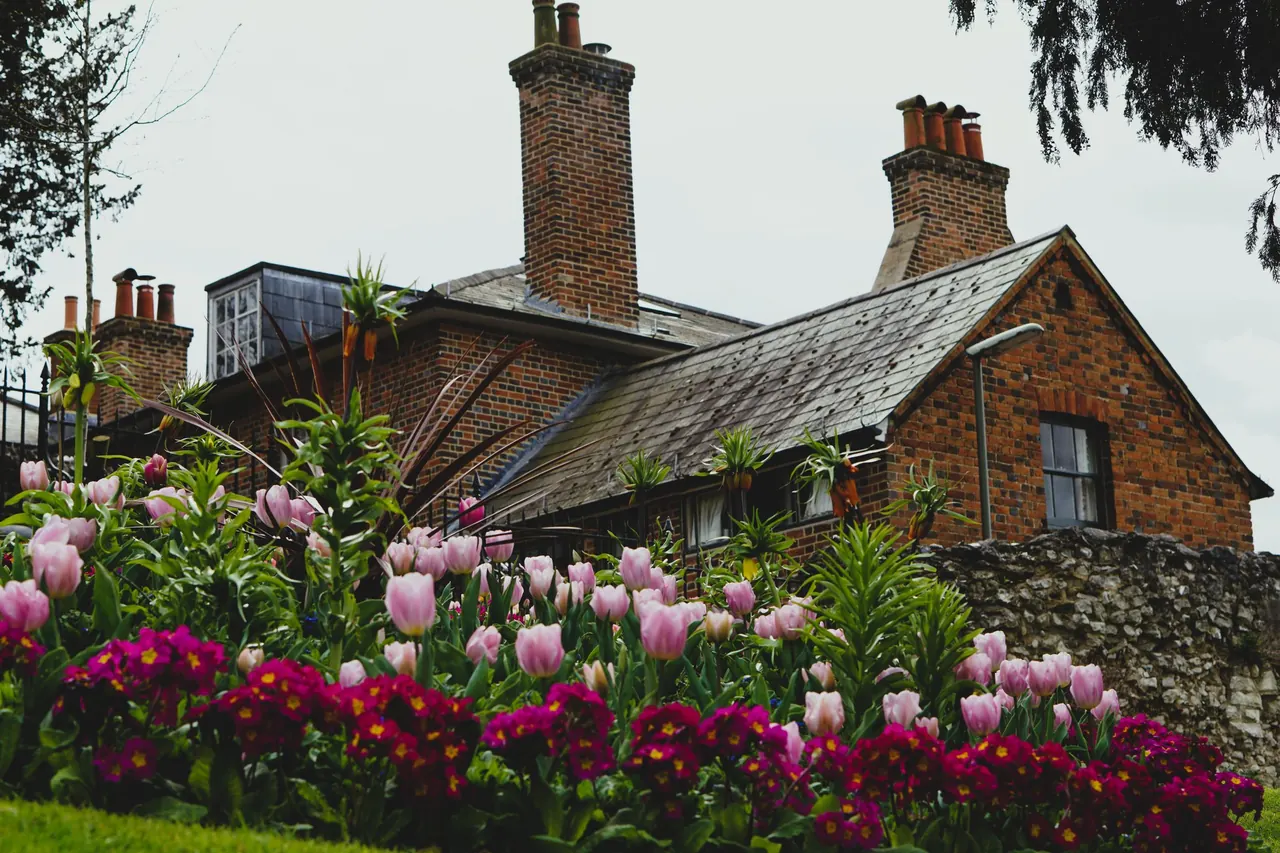
North of the Fair Green, towards Figges Marsh, Eagle House is a Grade I listed house dated 1705. Historic England's list entry describes its contemporary corniced tall end stacks, rising above a hipped slate roof. Stacks of that kind carry moulded brickwork that a standard repoint can spoil, and the mortar, brick and lead all need to match what is there.
On a listed building, any work to a stack beyond a like-for-like repair needs listed building consent from Merton Council first, and even like-for-like work is worth raising with the council before it starts. Taking down or shortening a listed stack is not a decision an owner can make alone.
Where the tiles, ridge or valley around a stack are part of the leak, our roof repair team for the town centre deals with them on the same visit. For more on how we approach chimneys in general, see our main chimney repairs page.
Frequently asked questions
A piece of chimney pot landed in the yard behind our parade. Is the rest of it safe?
Treat it as unsafe until someone has looked. Keep people out of the area underneath and ring us. We can check the pots and flaunching, remove or reset anything loose, and tell you what the stack needs.
Do you need scaffolding on London Road to repoint a stack above a shop?
For a full repoint or re-lead, usually yes, and on the footway that needs a council licence. Smaller jobs such as resetting a pot or fitting a cowl can often be done from roof ladders and the rear of the building.
Can you check the stacks on our London Road parade before we pay for scaffold?
Yes. A drone gets close-up photos of the pots, flaunching, pointing and flashings from the rear of the parade, so you can see whether a ladder repair will do or the stack needs scaffold.
Our building on Upper Green East is in the Cricket Green Conservation Area. Does that change a chimney repair?
Repairs that match the existing brick, mortar, pots and lead are normally straightforward. Removing a stack, changing its height or swapping the pots for something different is where Merton Council should be asked first, and if the building is also listed, consent is needed.





