



 Google reviews

Ridges and slipped tiles on the 1920s council houses
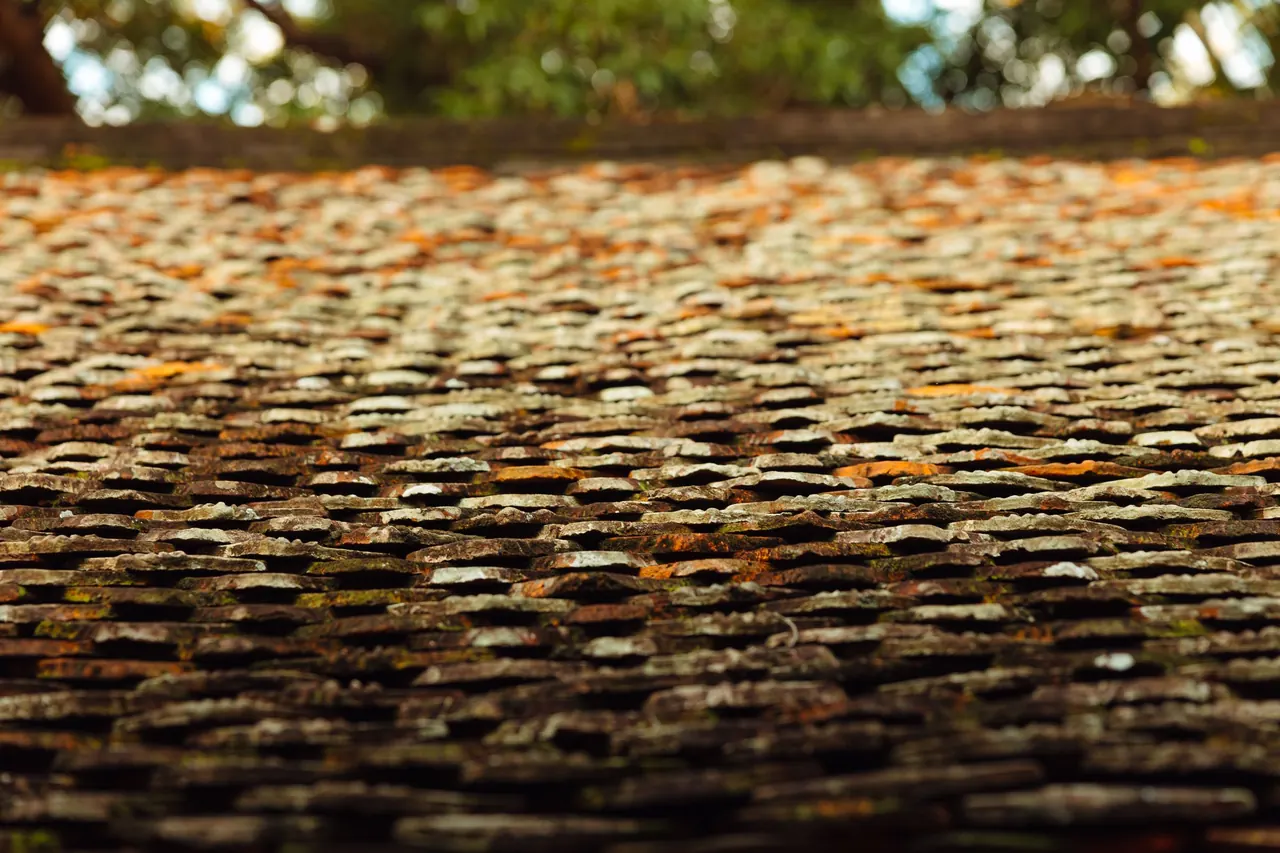
The parlour houses, cottage-type houses and maisonettes Wandsworth built here in the late 1920s have straightforward roofs: simple slopes, few valleys, not much lead. That is the good news. The catch is that a roof built in 1927 and never fully stripped is still running on its original nails, battens and ridge bedding, and any concrete re-cover put on since may be decades old itself. The faults that follow are predictable:
- Ridge and hip tiles working loose. The mortar beneath them crumbles and washes into the gutter. Once enough has gone, wind can lift the ridge.
- Tiles slipping as the nails rust. Once one goes, its neighbours are often not far behind, because they were all fixed at the same time.
- Chimney leadwork. Old lead splits at the folds, or was replaced years ago with a mortar fillet that has since cracked.
- Porous concrete tiles. Old concrete loses its surface, holds moss and lets more water through.
Mortar on the path or in the gutter is usually the first sign, and it is worth dealing with before a winter of gales rather than after.
Maisonettes: who calls, who pays
Welham Road had maisonettes from its early years, and the council built more of them in the 1920s. A maisonette pair puts one flat above another under a single roof. The lease or the freehold decides who repairs that roof. The flat where the stain appears does not. Sometimes it is the freeholder, sometimes the cost is shared between the two owners, and sometimes the upper flat owns the roof outright.
Either owner can ask us to find the cause, but before a repair goes ahead the person responsible needs to agree to it. Our findings, photos and price come in writing, so they can be passed to the other owner or the freeholder without anything getting lost in the retelling. If water is coming in now, the first step is to stop it, and the paperwork can follow. For that situation, see our emergency roof repair in Furzedown page.
This is also why a lower-flat owner sometimes struggles to get anything done. The leak is theirs, but the roof is not. Having the cause on paper, with photos, usually moves the conversation along faster than a description of the stain.
Valleys behind the Edwardian back additions
The Edwardian streets are more complicated than the council-built ones. Behind each main roof is a narrower back addition with its own small roof, and where the two meet there is a valley, often lined in lead, sometimes in mortar or tile. That valley takes the water from two slopes and is one of the commonest places for a leak on these houses to start. A ceiling stain at the top of the stairs or in a back bedroom often points there.
A century of patching also means several generations of repair on one slope: a few replacement slates from one decade, a strip of mismatched tiles from another, a bitumen smear over a joint. Each patch can hold, but where a roof needs something every winter it is worth pricing a full re-roof in Furzedown beside the repair, so you can compare the two honestly. Leaking stacks on these houses are covered on our Furzedown chimney repairs page.
Clay tiles in the Streatham Park conservation area
On Clairview Road, North Drive, Abbotsleigh Road and the other streets of the Streatham Park conservation area, roofs are mostly plain clay tile, with some replaced in concrete. Some houses also have tiles hung on bays, gables and dormers. Plain clay tiles are thin and crack easily underfoot, so the work should be done from roof ladders rather than by walking the slope. Wandsworth's guidance asks owners to keep good old tiles for re-use, so sound tiles should be saved where possible and matching ones found for the rest.
A slipped tile in vertical tile hanging lets rain into the wall rather than the loft, so it is worth fixing sooner than a missing roof tile of the same size. Where the battens under a slipped tile have rotted, that section needs new battens, not just the tile put back. Our main roof repair page covers the wider process.
Frequently asked questions
Mortar keeps landing on the path from my house on the Furzedown council estate. Is that serious?
It usually means the ridge or hip bedding is breaking up. It is not an emergency on its own, but once the bedding has gone the ridge tiles can lift in a gale, so it is worth having it re-bedded or dry-fixed before winter.
The leak is in the lower maisonette on Welham Road, but the roof is over the upper one. Who should call you?
Either owner can call us to find the cause. Who pays for the repair depends on the lease, so check that, or ask the freeholder. The same written findings can go to everyone involved.
A tile has slipped on my Clairview Road gable. Can it be fixed from a ladder?
Often, yes. A single slipped tile on a two-storey gable can usually be refixed from a ladder or roof ladder. If several are moving, the whole slope needs a look.





