



 Google reviews

One builder from Abercairn Road to Eardley Road
The residents' association history names R H Miller as the builder of the Vale from Abercairn Road to Eardley Road, part of the same 1920s rush of building as the rest of the estate. It does not say how the roofs were done, but houses from one builder put up in a few years were usually roofed to the same pattern.
That has a practical upside for repairs. A fault that shows on one roof in a row is often a sign of what is coming on the others, and the way a roof was put together on one house is usually how it was done next door. Once one roof on these roads has been opened up, it is a fair guide to where to look on the next.
The other side of that is age. On roofs that have never been stripped, nails rust through, ridge mortar softens and washes out, and valley linings split. These faults tend to turn up one at a time, in different places on different houses, which is why targeted repairs still make sense on many of these roofs.
Weak points on an Abercairn-to-Eardley roof
- Slipped tiles in a line. One tile is a nuisance. Several on the same slope usually mean the nails have gone across that slope, and refixing a single tile will not hold for long. We check the fixings around any slipped tile before deciding what to do.
- Ridge and hip mortar. Crumbs of old mortar in the gutter, or a ridge tile you can see rocking from the pavement, are early signs. We rebed and repoint before the ridge tile comes off in a gale.
- Valleys at the back. Where a back addition's roof or a bay roof meets the main slope, the internal angle forms a valley. It collects leaves and grit from the tiles above, and an old lining eventually splits, often over a back bedroom.
- Lead at the stack and walls. Flashing pulled out of soft mortar, or patched years ago with sealant, lets water in during driving rain. Stack work is covered on our Vale chimney page.
- Battens and rafter ends. Often found soft once a few tiles are lifted, and best replaced while the area is open.
- The line over the party wall. On a terrace, this junction is a common leak point and may need work on both sides.
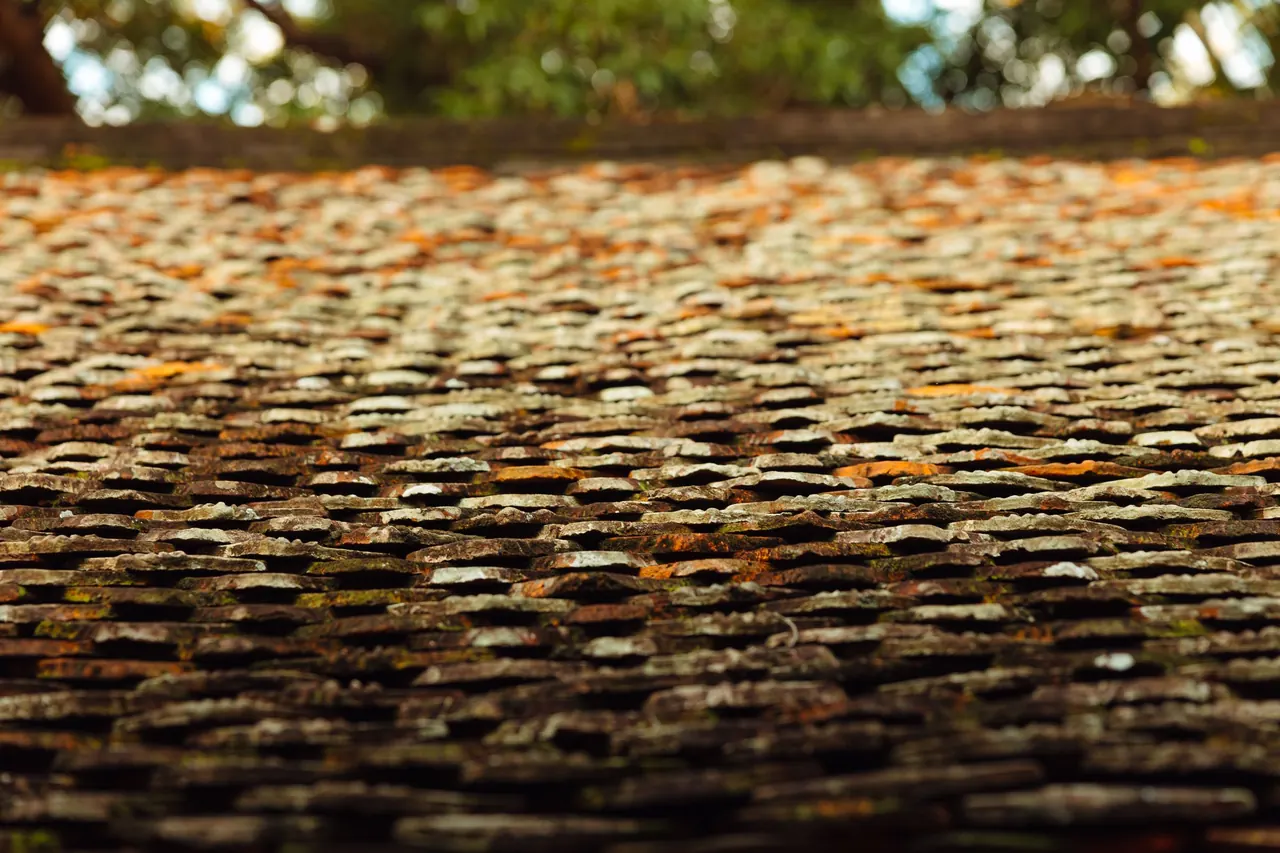
Ceiling stains and what they point to
A stain on a top-floor ceiling is rarely directly under the leak. Water runs along battens and rafters before it drips, so a mark in the middle of a front bedroom can come from a slipped tile a metre or two up the slope. Damp in the loft after rain, daylight between tiles and pieces of tile on the path are all worth a call.
On a visit we look at the fault and the roof around it, and on the back slopes we fly the drone instead of guessing from the garden. You see the photos and get a free quote, often on the day you ring, and the repair is booked at a time that suits you. If a gutter or fascia below the fault needs attention, we can usually deal with it in the same visit.
For a sense of scale, Which?'s roofer cost survey puts replacing up to six standard tiles at £75 to £400 before VAT, with London jobs nearer the top.
Not every old roof is worth patching. If the whole covering is failing, we will say so, and our guide on repair or full replacement explains how we weigh it. If water is pouring in now, see our emergency roof repair page for the Vale.
Frequently asked questions
Tiles keep slipping on our Eardley Road roof even after repairs. Why?
On a roof of that age, the usual reason is that the nails are failing across the slope, not just under the tiles that moved. Refixing a few treats the symptom. We check a wider area and, if the fixings are gone throughout, tell you whether a larger repair or a re-roof is the better spend.
Mortar keeps turning up in the gutter of our Abercairn Road house. Is the ridge going?
Probably the ridge or a hip. Old bedding mortar dries out and washes down the slope a little at a time. Rebedding the ridge before tiles come loose is a much smaller job than replacing broken ones after a storm.
Our Vale terrace has a leak right on the line of the party wall. Is it ours or next door's?
It can be either, or both. Water can track along the top of the party wall before it shows. We look at both sides of the junction, photograph what we find, and if the fault crosses the line we tell you both so the repair is done once.





