



 Google reviews

The street tree vote of 1927
Streatham Vale's leafy roads were the residents' own choice. According to the Streatham Vale Property Occupiers Association, a survey in 1927 found 1,495 residents in favour of tree-lined roads. Wandsworth Council, which ran the area until 1965, planted 1,137 street trees, with residents paying towards them, and agreed to maintain them. The last went in on 8 February 1930 at the corner of Churchmore Road and Streatham Vale, with the Mayor at the ceremony.
Nearly a century on, not all of them survive, but those that do are big. Many stand right outside the front of the house, close enough for leaves, seeds and twigs to land straight in the front gutter. Add the garden trees at the back, and gutters here can fill faster than owners expect.
What leaves do to a 1920s gutter
A gutter half full of wet leaves is heavy. On older runs with brackets spaced wide, that weight makes the gutter dip, and the dip collects more debris. Leaves also break down into a dark silt that settles at low points and outlets, where moss from old roofs joins it. By spring a gutter that looked fine in October can be holding a solid layer of sludge.
Spring brings its own load. Seeds, catkins and blossom from the street trees come down in April and May, and moss that has grown on old tiles over the winter starts to loosen and wash down the slope. On a roof that has been up since the 1920s, there is usually plenty of it. Left alone, it all ends up at the outlets.
The signs are easy to spot from the pavement or the garden:
- water spilling over the front edge in rain
- grass, weeds or seedlings growing out of the gutter
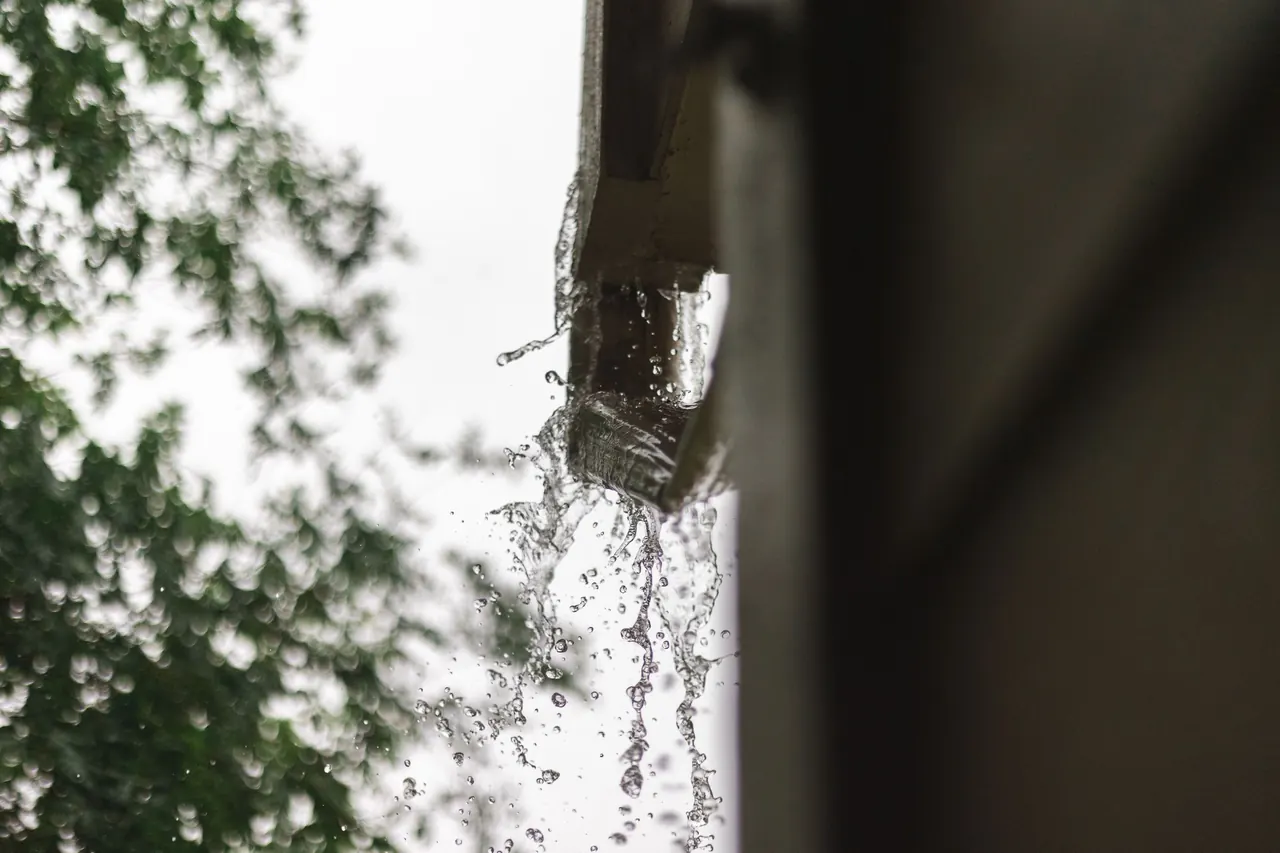
- a downpipe that stays dry while the gutter above it overflows
- green streaks spreading down the wall below
- the gutter dipping between brackets
Our guide to gutter cleaning timing covers how often to book. For a house with a street tree outside, a clean in late autumn once the leaves are down, and another in spring for seeds and moss, is sensible.
Front, back and the back addition
We clear the full length of the front and back gutters, check each downpipe runs freely, and flush the system with water to check the flow. The rear gutters on a Vale terrace are often harder to reach than the front, and so are the gutters and outlets on back additions, which catch leaves from garden trees and are easy to forget. Mention them when you book.
On a terrace, your front gutter usually runs straight into next door's. If their section is blocked, water can back up into yours, so it can be worth asking the neighbours whether they want theirs done the same day. If we find a cracked joint or loose bracket, we tell you, and it can be fixed through our gutter repair service. A gutter that is already overflowing and causing damage is a job for blocked gutter repair. The main gutter cleaning page explains what a clean includes.
Frequently asked questions
The street tree outside our house belongs to the council. Will they clear our gutters?
No. Lambeth looks after its street trees, but the gutters are the householder's job. If a street tree is hanging badly over your roof, report it to the council for pruning.
What does a clean cost on a Vale terrace, front and back?
As a published guide, MyJobQuote's October 2026 figures give about £75 for a terraced house and £100 for a semi nationally, with a London average of £120 to £180, and most jobs taking 2 to 5 hours. A back addition or a hard-to-reach rear can add to that. Your price is set in a free quote before we start.
Do we need to be home when you clean the gutters on our Vale house?
For the front, not always. For the back of a mid-terrace with no side access, someone has to let us through the house, so we agree a time with you when you book.
Is it worth clearing the gutters before we sell our Vale house?
Yes. Overflowing gutters and stained walls are among the first things a surveyor notes, and a clean costs little compared with a buyer asking for money off over damp.





