



 Google reviews

Old bodges on the 1880s row
The terrace south of Arneys Lane went up in the 1880s, and a roof that age has seen a long line of repairs, some good and some done with whatever was to hand. Sealant smeared over a crack, a concrete tile pushed in among older ones, a cement fillet where there should be lead: each of these can look fine from the road and still let water in during the next long spell of rain. The lasting fix takes the bodge out and puts back what should have been there.
The end houses of a terrace have their own weak point. The verge, where the tiles finish over the gable wall, is bedded in mortar that cracks and drops out, and rain driven against the wall gets in under the edge tiles. On a mid-terrace house the trouble is more often at the party walls, where one roof meets the next and two owners' repairs meet in the same joint.
Rear additions off Tramway Path
On a terrace of this age, the back is usually a jumble of roofs: the main rear slope, the narrower roof over the rear addition, the valley or flashing where the two meet, and often a flat roof over a later kitchen. Water that comes in at the back of the house almost always starts in one of those junctions rather than in the middle of a slope.
The drone gives us the back of the house from above without anyone climbing through a neighbour's garden, and where we can we check the loft for staining and wet timber. You see the photos and the cause before you agree a price. If the job turns out bigger once the tiles are lifted, we stop and talk to you before going further.
Flat roofs over back kitchens have their own page on flat roofing behind the terrace, and leaking stacks are covered under chimney repairs on Carshalton Road.
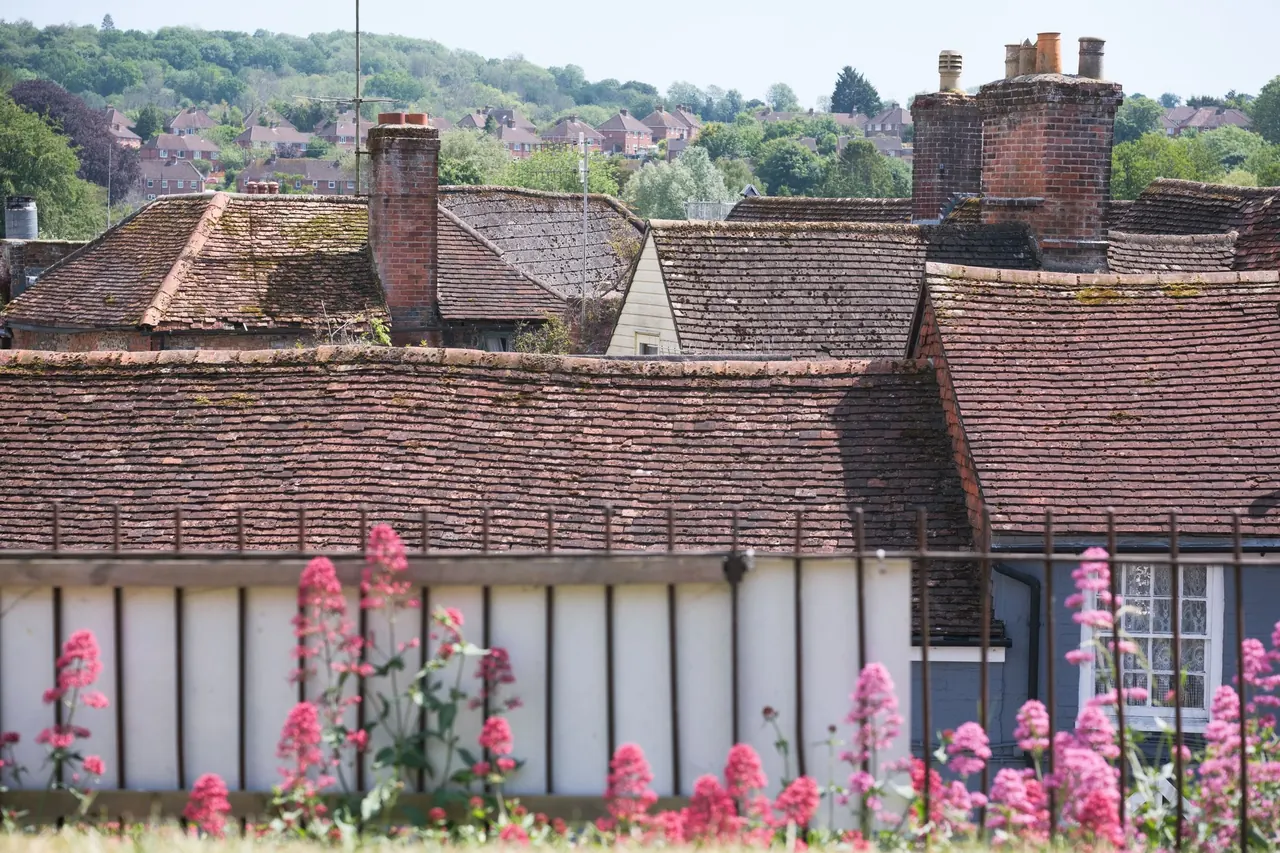
Weather off the open common
Every house on this side of Carshalton Road looks across the road at open ground, and Merton's character study speaks of panoramic views over the common. From a roof's point of view that means little to slow the wind before it reaches the front slopes.
After a gale the faults on these fronts tend to repeat: ridge tiles with the mortar washed out from under them, verges that have lost their bedding, and single tiles that have lifted on corroded nails and dropped out of line. On the Aspen Gardens semis, the ridge and the exposed end of the roof take the same weather. If one ridge tile has come loose, the rest of the run was bedded at the same time and is often close behind it, so we check the whole line rather than the one gap.
As a benchmark, the Which? guide to roofers' costs gives a national figure of £75 to £400 before VAT for swapping one to six ordinary tiles. If faults are turning up on every slope, our guide on repair versus full replacement explains where the line falls. Water coming in right now is a job for our emergency service in Mitcham Junction, and the main roof repair page covers our approach in general.
Frequently asked questions
We live at the end of the row on Carshalton Road and the gable bedroom gets damp after windy rain. Is that the roof?
Often it is the verge. When the mortar under the edge tiles has gone, rain driven at the gable gets under them and runs into the top of the wall. We rebed the verge and check the brickwork just below it.
The back addition on our terraced house leaks only in heavy rain. Where do you start?
At the junction with the main roof. A worn valley lining or a lead flashing that has lifted at the top of the addition is the usual cause. Light rain runs past it, heavy rain overtops it.
Why does the ridge on our Aspen Gardens semi keep losing mortar?
Ridges on houses of that age were usually bedded in lime or weak cement mortar that crumbles after decades of frost and wind. Patching one tile at a time rarely lasts, so we rebed the ridge along its length and fix the tiles properly.
Next door on the terrace has a different tile from ours. Can you still repair our side to match?
Usually. We match your covering, not theirs, and where the two roofs meet at the party wall we make the joint watertight on your side. If we can only find a close match for an old tile, we show you a sample before fitting it.





