



 Google reviews

Three owners, three eras of gutter
When the large Victorian houses on Gipsy Hill were divided into flats, the floors were split neatly. The gutters were not.
A single run across the back of a converted house can serve two or three flats, and over the decades each owner has fixed the part outside their own window. The result is often a run made of several eras: a length of original cast iron, a black plastic section, a grey plastic section, and an adaptor between each one. Those changeovers are where most leaks start.
Because the run is usually part of the shared structure, the freeholder or managing agent normally arranges the repair, though leases vary. A clear note of where the fault sits, and whose window it drips over, saves an argument between neighbours. The repair types themselves are set out on our gutter repairs page.
Where the drip shows, and where the fault is
Water in a gutter runs to the low point. If a bracket has worked loose two metres along, the run dips there, water stands against the nearest joint, and the drip appears at that joint, perhaps over another flat's window. On a house where the back wall is three storeys because the garden falls away, the drip may also land a long way from where it started.
- Mixed joints. Plastic sections forced into cast iron, or two plastic profiles that never quite matched.
- Sagging runs. Brackets loose in soft timber, or fixed into brick that has crumbled around the plug.
- Cast iron. Bolted joints whose sealant has perished, and rust opening seams from inside.
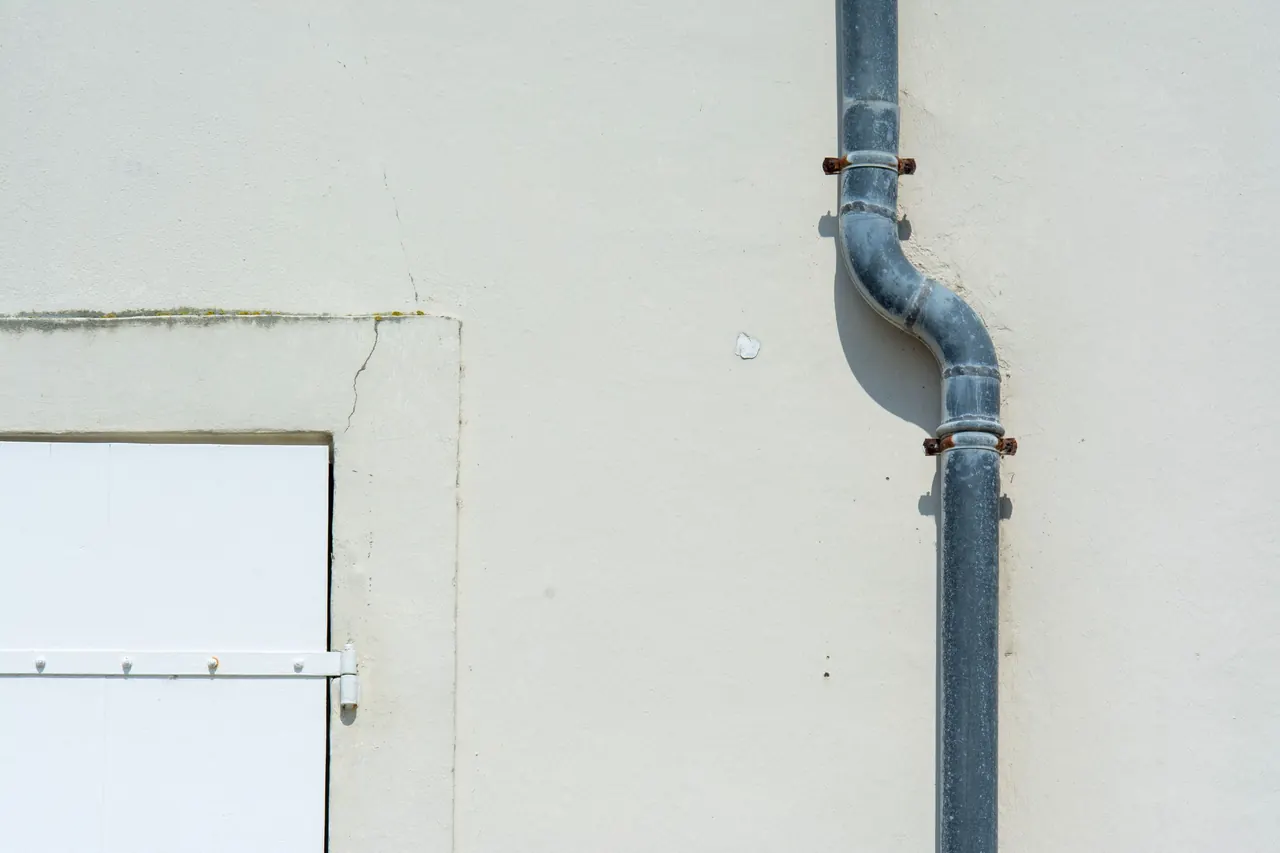
- Downpipes. Cracked offsets, pipes pulled off the wall, and shoes that have come loose from the gully.
Remaking the changeovers
We follow the run from end to end before touching it, because sealing the joint that drips is pointless if the bracket that caused it is still loose. Then we fix what has actually failed: remaking joints, refixing or adding brackets to restore the fall, swapping a cracked or rusted length on its own where the rest is sound, and reconnecting downpipes so the water reaches the drain.
Where a mixed run keeps failing at the changeovers, the better answer may be to replace that elevation in one material. If so, we will say so and price it through our gutter installation in Gipsy Hill. If the fascia behind the gutter has gone soft, brackets will not hold for long, and our fascias and soffits work on the hill deals with that.
MyJobQuote's gutter repair guide puts the average UK gutter repair at about £215, with resealing a single joint at £60 to £150. Height and access on a sloping plot will move the figure. If water from a broken downpipe is running downhill onto the next property, our blocked gutter repair page covers overflow on the slope.
Frequently asked questions
Our gutter across the back of a converted Gipsy Hill house is half cast iron, half plastic. Why does it leak at the join?
The two were never made to fit each other. Adaptors between cast iron and plastic rely on a seal that perishes, and the materials move differently with temperature. Remaking that joint properly, or replacing the short length so one material meets the next outlet, usually stops it.
The drip is over the ground-floor window, but the gutter above the top flat looks fine. How do you find the fault?
We follow the run from end to end and look for the low point. A loose bracket or a dipped section further along often sends water back to a joint some distance away, and that is where we start.
Can the original cast iron outside our Gipsy Hill flat be kept when the rest of the run is plastic?
Often, yes, if it is sound. We clean and reseal its joints, check for rust inside, and refix the brackets. If a section has rusted through, a matching cast iron length can usually be fitted rather than another plastic one.





