



 Google reviews

Overflow down the St John's Road shop buildings
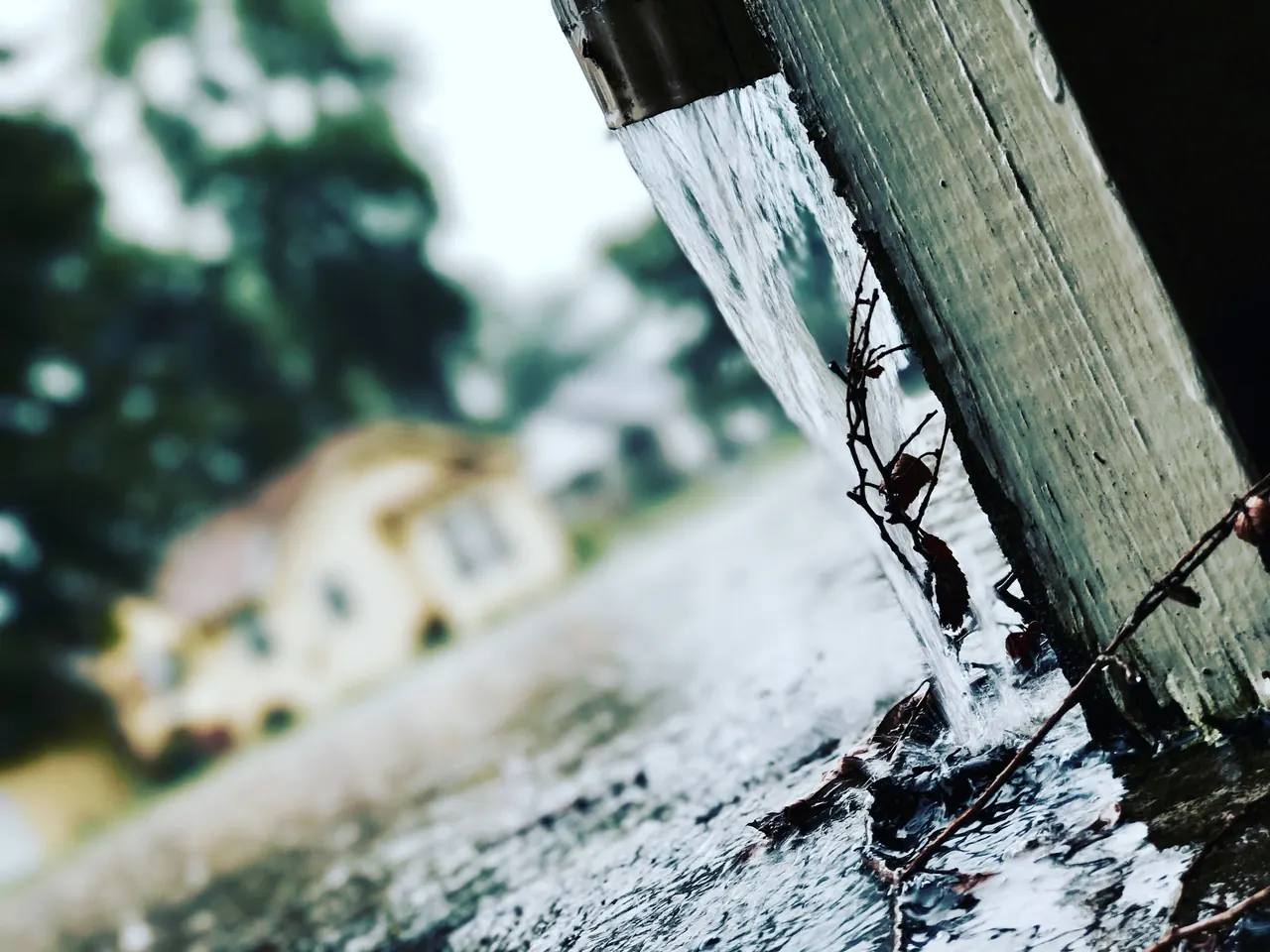
A gutter that overflows during heavy rain is telling you something has stopped the water leaving. On the tall buildings round the station, the consequences go a long way down. Several St John's Road terraces were built as three storeys plus a roof storey, and their rainwater has four floors of pipe to get through before it reaches a drain. A blockage near the top can spill down the face of the building, over shopfronts and onto the pavement, or back up into the roof.
The worst case is a London roof. On the St John's Hill shop terraces, the valley behind the parapet drains through one outlet in the back wall (the Clapham Junction area page says where these roofs are). If that outlet or the hopper below it blocks, the valley fills and water comes over the lead and into the top-floor flat, sometimes within a single storm.
From St John's Hill outlets to Northcote Road back wings
- Outlets choked with silt and moss. The parapet outlet is the narrowest point on a London roof, so grit from both slopes settles there first. We clear it by hand and flush it through. If it still overflows in every storm once clear, the hopper may be too small, which our gutter installation page deals with.
- Downpipes packed at a bend. Sometimes the gutter is clear but the pipe is blocked at an offset or where it enters an old drain. We rod or flush it until the water runs.
- Sagging runs. A section that has lost its fall holds a puddle, debris settles in it and the gutter overflows at the same spot every time. We reset the brackets and the fall.
- Cracked or loose pipes. A downpipe that has come away from the wall, or split behind a bracket, leaks on the way down and looks like a blockage from the ground.
- Back-wing gutters over a side return. Where a back addition faces next door's across a narrow side return, the gutter along it sits in shade, silts up and can overflow down the wall into the passage.
Water running down the wall behind the gutter rather than over the front can be a different fault, explained in our guide to water leaking behind a gutter.
Clearing it and fixing the cause
We clear the gutters, valley and outlets by hand, then check the hoppers and downpipes, rodding or flushing a pipe where the blockage is beyond reach. The system is flushed with water to prove it runs, and then we deal with whatever caused the blockage: a sag, a failed joint or bracket, an undersized outlet or a cracked pipe. If the repair is bigger than one visit allows, you get a quote for it through our gutter repair team. If the real cause is that the gutters are not cleared often enough, regular gutter cleaning in Clapham Junction keeps it from building up.
For a guide to cost, Which? puts clearing all gutters, front and back, at £75 to £350 excluding VAT. Height and how far down the blockage sits make the difference. The blocked gutter service page covers the method.
Frequently asked questions
Water is spilling out of the hopper behind our shop on St John's Road. Does that mean the drain underground is blocked?
Not necessarily. Most often the hopper itself or the downpipe just below it is packed. We clear and flush those first. If the pipe runs clear but water still backs up at ground level, the blockage is in the underground drain, which needs a drainage contractor, and we will tell you so.
The gutter on our back wing off Northcote Road, facing next door's across the side return, keeps overflowing. Why always there?
That narrow gap is shaded by two walls, so leaves and silt settle and stay damp. Once it is cleared and flushed we check the fall, because a slight sag there holds debris every time. If next door's gutter faces the same gap, it is worth agreeing a clean with your neighbour.
Rain only gets into the top of our roof storey on St John's Road in a downpour. Could that be a blockage?
It could. If the leak appears only in heavy rain, a gutter or outlet that is partly blocked or too small to cope is a likely cause. We check the outlets and pipes at that level before looking for a fault in the roof covering.





