



 Google reviews

Back wings and bays off Northcote Road
On the streets either side of Northcote Road, the Survey of London describes a villa style of gault brick banded with stock or red brick that became the hallmark of the estate. At the front, most of the roofline work is on the canted bays, which have their own small fascias and soffits under the bay roof. At the back, the long rear wings usually have open or boxed eaves with a timber fascia carrying the gutter. Those boards are often original or decades old, painted rarely and rotting from behind where water has crept in.
On a rear wing the first sign is often a gutter repair that will not stay fixed. The screws pull out of soft timber, the gutter sags again and the wall below stains. If your gutter keeps coming loose, have the board checked before paying for another repair. Our gutter repairs in Clapham Junction start by looking at what the gutter is fixed to.
The shop parades on Northcote Road finish their corners with tall canted bays under small gables, according to the Survey of London. Whether a given gable has timber boards or is finished in brick or stone varies, so we look at each building before saying what it needs.
Gables in St John's Hill Grove
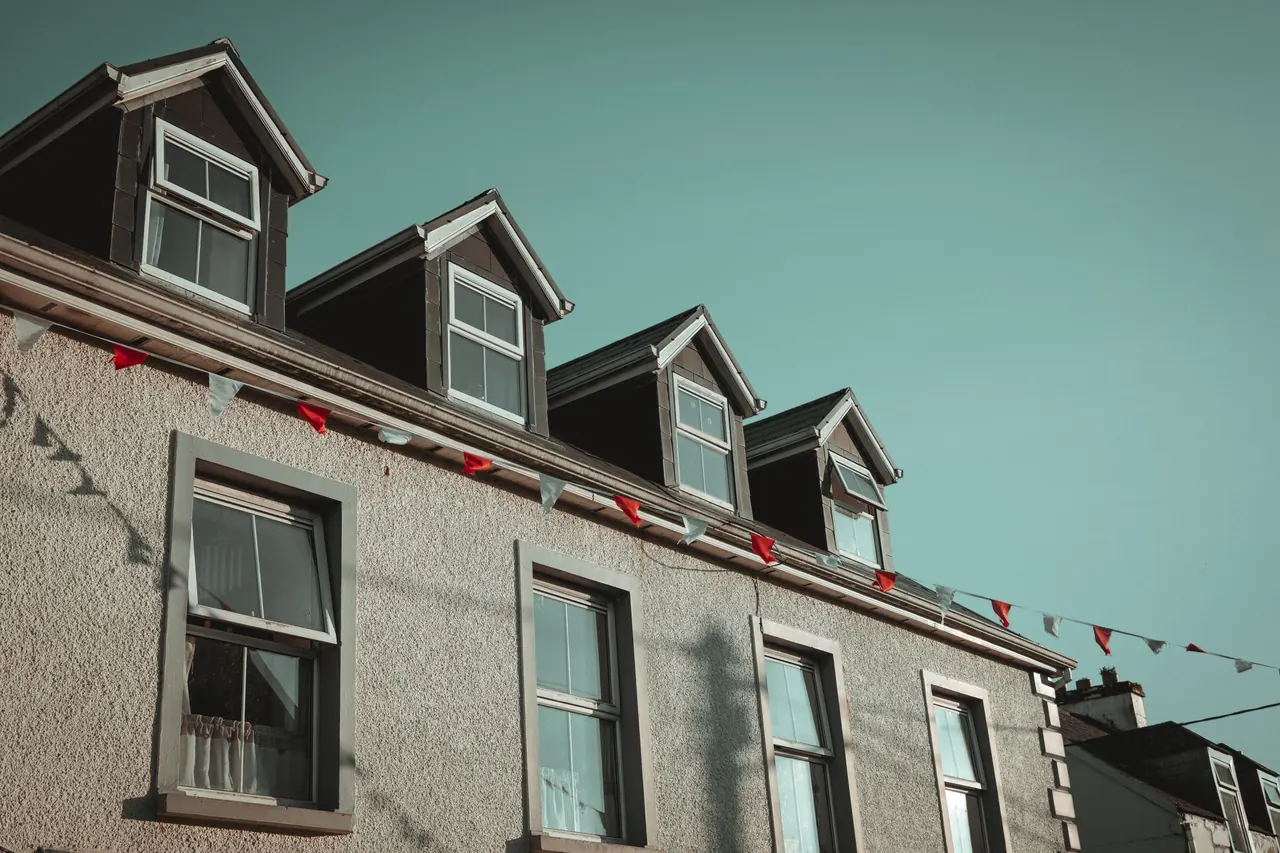
West of the station, several of the villas in St John's Hill Grove have gabled roofs, including a late Victorian group with an attic storey in the gable and a small balcony. Bargeboards on gables like these take the weather on their outer face and are hard to reach, so they often split or drop at the foot before anyone notices. From the street, a gap opening between the board and the slate, or paint that keeps lifting at the same point, is usually the first clue.
On a visible front or a decorative gable in the St John's Hill Grove or Clapham Junction conservation areas, repaired or new painted timber may suit the house better than plastic. Wandsworth Council's appraisals put a lot of weight on keeping the original look of these Victorian streets. On the back of a house, uPVC in white, black, grey or woodgrain is usually the practical choice, and ventilated soffits help air move through the roof space.
Repair, renew or overboard
A short rotten section can sometimes be cut out and replaced on its own. Where the board is soft along most of its length, or the gutter is being renewed anyway, replacing the whole run makes more sense. Overboarding, also called capping, covers old timber with a thin uPVC board. It is cheaper but only works over completely sound timber. Over rot, it hides the problem and lets it spread into the rafter ends, so we check before recommending it.
Because the fascia carries the gutter, the two are often replaced together, and our gutter installation page covers that side. Checkatrade's fascia and soffit cost guide gives £80 to £150 per metre to replace bargeboards. Materials and colours are set out on our main fascias and soffits page.
Frequently asked questions
The gable on our St John's Hill Grove villa has a split bargeboard. Should the new one be timber or uPVC?
On a front gable in the conservation area, painted timber usually keeps the look of the house, and we can match the profile. If you are unsure, or the building is flats, check with Wandsworth Council before work starts.
Our back wing on Salcott Road has open eaves with the rafter ends showing. Can those be boxed in?
Yes, with a new soffit and fascia, once we have checked the rafter ends are sound. Any soft ends are repaired first, as boxing in rot only hides it.
The soffit under our bay on Ilminster Gardens is cracked and stained. Where is the water coming from?
Usually from the bay gutter or the flashing where the bay roof meets the wall. We trace that first, then replace the soffit, so the new board does not stain the same way.





