



 Google reviews

Acre Lane houses older than Waterloo
Acre Lane has some of Brixton's oldest houses, and several are listed Grade II today. The Survey of London, published in 1956, recorded stock brick houses on Acre Lane dating from about 1808 (No. 46), before 1819 (Nos. 48 to 50), about 1822 (Nos. 24 to 26) and 1831 to 1839 (Nos. 86 to 92), along with the Trinity Homes almshouses of 1822. Historic England's listing for Nos. 24 and 26 describes stock brick with a stuccoed cornice and parapet, so the roof behind is hidden from the street. Building leases on the Lambeth Wick estate, either side of Brixton Road towards Loughborough Park, were granted from 1820, and Angell Town followed in the 1850s.
So the older houses here run from late Georgian to early Victorian. That matters for a repair because the roofs were built in ways a modern roofer does not always expect: shallow hipped roofs, London roofs with a central valley behind a parapet, slate laid on thin battens, lead soakers at the walls, and lime mortar on the ridges and stacks.
Nails, lead and lime on a two-hundred-year-old roof
- Nails, not slates. Slate itself lasts for generations. The iron nails holding it rust through, and slates start to slip. One slipped slate after a gale is a small job. Several across a slope point to the nails going everywhere.
- Parapet and valley gutters. On a London roof the whole slope drains to a lead or felt gutter behind the parapet. A split in that lead puts water straight into the top-floor ceiling.
- Hips and ridges. Shallow hipped villa roofs have long runs of hip and ridge bedded in mortar. When the mortar shrinks and cracks, crumbs in the gutter are often the first sign.
- Abutments with neighbours. Where a lower house meets a taller one, the lead against the wall works loose over the decades.
- Back additions. Small slopes and flat roofs over rear rooms take water off the main roof and get little attention.
Matching slate on a house of 1820
Lambeth's Brixton conservation area statement says small roof repairs can often be done with reclaimed materials, that the original covering should be reused where possible, and that artificial tiles or concrete slates should be avoided because they lose their colour and finish quickly. That is also how we prefer to work on a slate roof of this age.
In practice, matching means size, thickness and colour. Old Welsh slates were cut to many sizes, so we measure the slate and the gauge on your roof first. For a few slates, the best match is often reclaimed slate of the same size and tone, sometimes taken from a less visible part of your own roof, such as a rear addition, with new slate going there instead. For a larger patch on a back slope, new natural slate of the right size is usually fine.
Ridges and hips are rebedded in a mortar that suits the house, and failed lead is replaced with lead rather than covered in tape or mastic. If we lift slates and find soft battens, we tell you and show you the photos before going further.
What drives the cost on Acre Lane
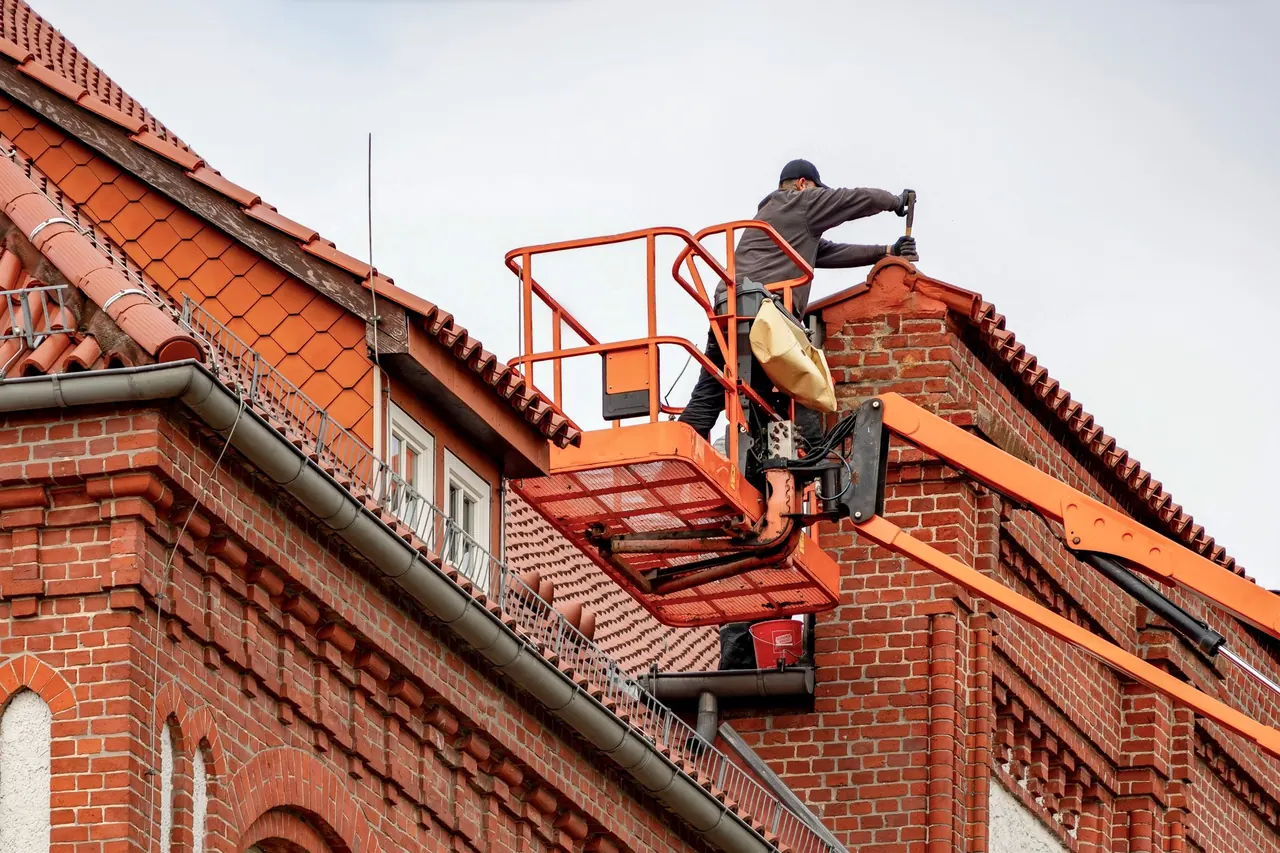
On a parapet-fronted house the repair itself is often small: a few slates, a length of lead, an outlet. Getting to it is what costs. A parapet means the front slope cannot be reached from a ladder against the gutter, because there is no gutter at the eaves to lean on, only a wall. Work is done from the roof itself, from a rear slope or from a tower, and on a main road any scaffold on the pavement needs a highway licence first.
Slate adds to it as well. Natural slate costs more than concrete tile, each one is fixed by hand, and an odd size may have to be found reclaimed. A short visit on a listed house is still a careful one.
If the same roof needs patching every winter, it is worth comparing the repair bills with a re-roof, which our page on roof replacement in Brixton covers. Leaks at the stack are dealt with under Brixton chimney repairs, and the main roof repair page has more on each type of fault.
Frequently asked questions
A slate has slipped on the back slope of our Acre Lane house. Does that mean scaffolding?
Not always. A single slate on a rear slope can often be reached from a tower in the garden or from the roof of a back addition. A high slope over a narrow yard may need more. We look at the access before pricing it.
The hips on our Loughborough Park villa keep dropping mortar into the gutter. What does that mean?
Hip and ridge pieces on these roofs are bedded in mortar. Once it shrinks and cracks, crumbs wash into the gutter and the pieces start to loosen. We rebed them in a mortar that suits the house rather than covering the joints with sealant.
Our listed Acre Lane house has a parapet at the front. Where does a leak behind it usually start?
Most often in the gutter behind the parapet: a split in its lead, a joint that has opened, or an outlet through the wall that has silted up. The stain tends to show at the top of the front wall inside. Like-for-like repairs to lead and slate are normal maintenance, but on a listed house check with Lambeth before changing any material.





