



 Google reviews

Shops, flats above and small units
The roofs we repair in Nine Elms are the ones in private hands: shops with flats above along Wandsworth Road, small commercial units on the trading streets, blocks run by a freeholder or resident management company, and the few older buildings that survived the post-war clearances. Many of them are flat or shallow, often behind a low parapet, so the usual suspects on a Victorian terrace, slates and valleys, barely come into it.
On roofs like these, water gets in at the edges far more often than in the middle. The typical one-off faults are:
- an upstand split where the covering turns up a wall or parapet
- a metal or GRP edge trim lifted, with the felt or membrane peeled back behind it
- open joints in parapet copings, letting rain into the top of the wall
- a blocked outlet that has held water on the roof until it found a seam
- old patches that have lost their bond and started to curl
On a mixed building, the rear roof over the shop often causes the most trouble. It is often a later addition, it meets the back wall of the flat above at a flashing, and that junction is where the stain in the shop's back room usually begins.
Why the stain is rarely under the hole
Water on a flat roof travels. It can get in at an upstand, run along the deck and drop through a ceiling several metres away, so a patch put on directly above the stain often fails. We start at the walls and outlets, work across the roof and check any rooflight or vent that breaks through it. Where there is a void below, we look at the deck and insulation from underneath, because a wet patch of insulation shows how long water has been getting in and how far it has spread.
A sound repair mends the detail properly. A split upstand gets cut back and re-formed, not smeared with mastic. A lifted trim gets refixed into the covering on new fixings, so it does not let go again in the next blow. If the gutters or hoppers are part of the problem, our Nine Elms gutter repair page covers those. If the covering has failed across the whole roof rather than at one spot, a re-cover is the better spend, and that is covered under flat roofing in Nine Elms.
The vicarage and other pitched survivors
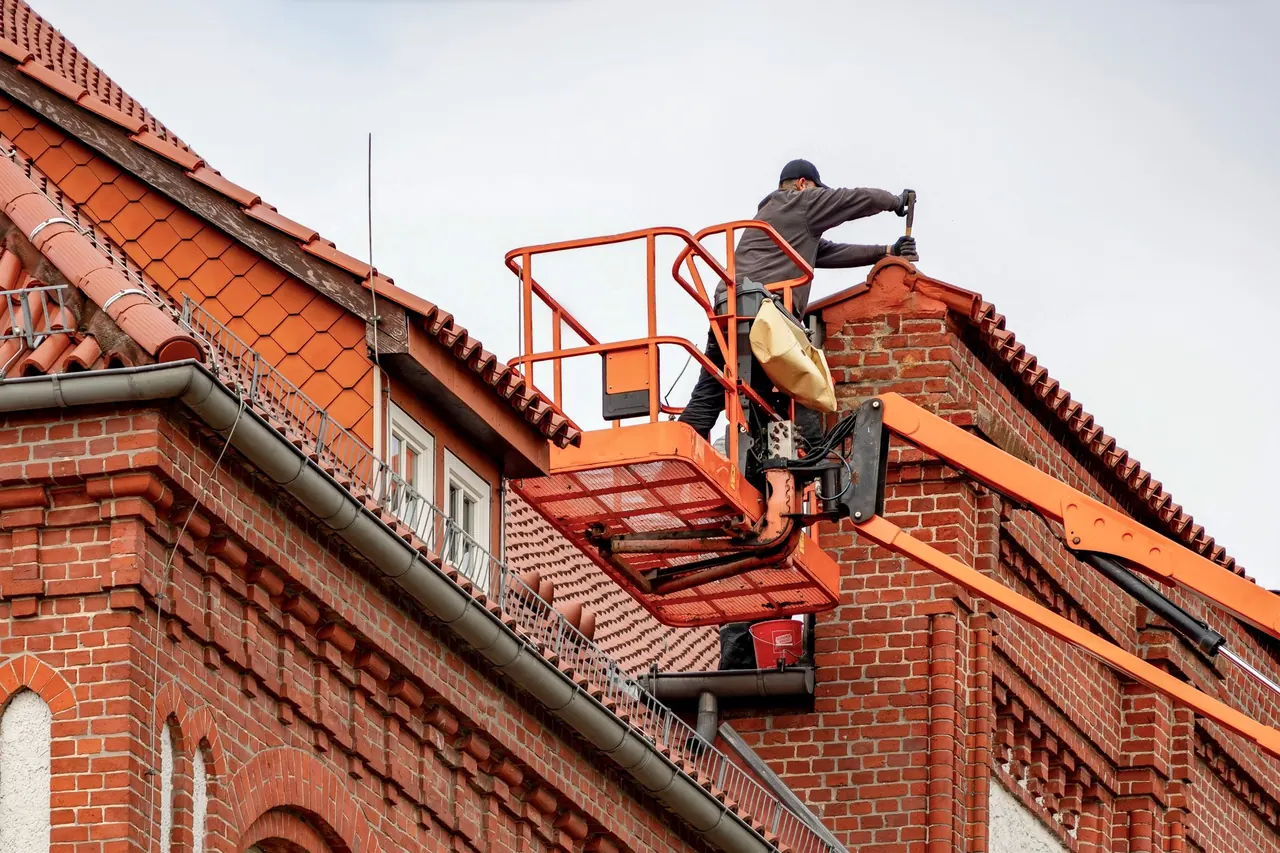
A few older buildings have pitched roofs, the best known being the 1860s vicarage at 33 Battersea Park Road, now flats. We have not assumed what is on any particular roof, but buildings of that age and type were usually covered in slate, and on an old slate roof the common faults are slipped slates where the nails have rusted through, cracked ridge mortar and lead lifting around the stacks. Access on a tall pitched roof often costs more than the repair itself. For scale, the Which? roofer cost survey put replacing one to six standard tiles at £75 to £400 before VAT, and scaffolding, where it is needed, can add a lot to that.
Council estate roofs: who to call
The Patmore, Savona and Carey Gardens roofs belong to Wandsworth Council, and repairs are arranged through the council or the co-op that manages the estate for it. If you live on one of those estates, report a leak to the council first. If a repair keeps failing, our Nine Elms page explains how an independent inspection can help you put the case.
Frequently asked questions
The shop below my flat on Wandsworth Road has a flat roof that leaks into the back room. Can you fix it?
Yes, with the agreement of whoever owns that part of the building. These rear roofs often fail where they meet the wall of the flat above, so we check that junction and its flashing first. Our main roof repair page explains the range of repairs we carry out.
Do you repair roofs on small commercial units near New Covent Garden Market?
Yes, on smaller flat and low-pitched roofs owned or leased by the business. The large market buildings are run by the market authority and maintained under their own contracts, so those are not jobs we take on.
Water comes into my top-floor flat on the Savona Estate in heavy rain. Who repairs the roof?
The council, because the roof is theirs. Report it as a repair, and if it keeps coming back, see the note on our Nine Elms page about getting the fault written up independently.





