


 Google reviews

What ends up behind a parapet
Nine Elms Lane was named around 1645 after a row of elm trees along the road. The elms are long gone, but the area is not treeless: there are street trees, the Linear Park and Battersea Park next door, and their leaves reach the lower roofs nearby. As well as leaves, gutters near the big building sites collect a fine grit, and once wet it packs down into firm silt at the bottom of a gutter or around a parapet outlet. Pigeon nests in hoppers and litter blown up off the streets add to it. A gutter can look clear from the street and still be a third full.
The difference on a block is where all this collects. Much of the housing here drains through a gutter behind a parapet wall at roof level, then into a hopper and a long downpipe on the outside of the building. You cannot see into either from the ground, so the first sign of a full one is usually water running down the face of the building, or a stain in a top-floor flat.
A clean before the winter rain
The point of regular cleaning is to clear the silt before it sets and before it causes damage, rather than waiting for water to come through a ceiling. For most buildings in Nine Elms once a year is the minimum, ideally in late autumn before the winter rain. Buildings next to an active site, or below a roof terrace with planting, may need a second visit in spring. If you are not sure what interval suits your building, our gutter-cleaning timing guide sets out the factors.
For a managing agent or a resident group looking after several buildings, booking the same visit each year is often the simplest way to handle it, and it means a slow change, such as a hopper that pigeons have started to use, gets noticed before it becomes a leak.
Parapet gutters and hoppers on the estate blocks
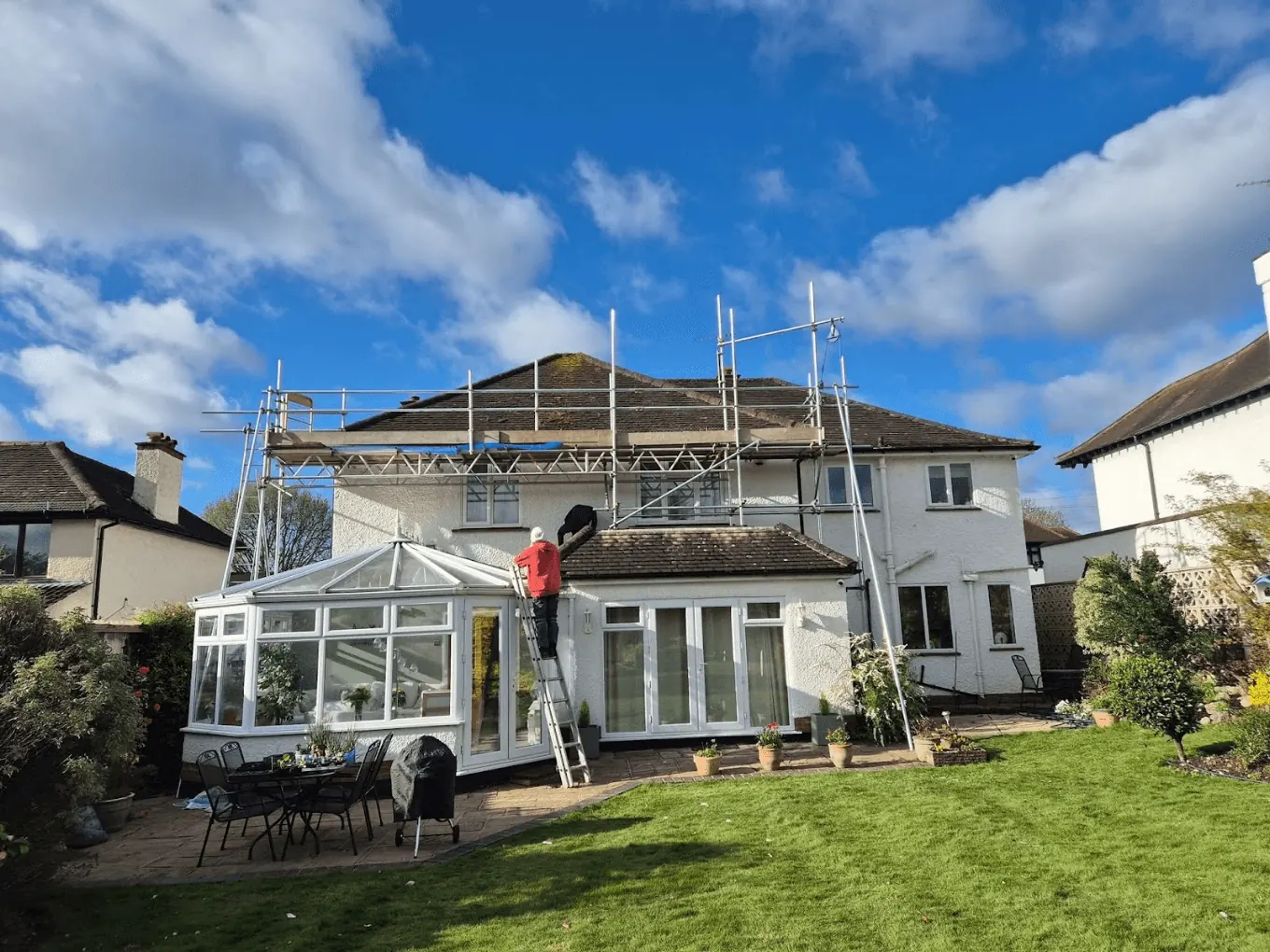
On a parapet roof we clear the gutter behind the wall, lift out what has settled around each outlet, and check the outlet runs freely into the pipe. At each hopper we take out nest material and silt. Then the downpipes are flushed through so water leaves the bottom of every one, and the debris is taken away rather than left in a bin store.
On low-rise buildings with ordinary eaves gutters, such as two-storey flats, shops and workshops on the trading streets, we clear the full length of each run and check the downpipes the same way. If we spot a cracked joint, a sagging bracket or a soft fascia while we are up there, we tell you, and our Nine Elms gutter repair page covers putting it right. If an outlet turns out to be blocked solid lower down, that becomes a blocked gutter repair rather than a routine clean.
A clean is quick to book compared with bigger roof work, and the quote is free. The main thing that changes the price on a block is how the roof is reached: through a hatch, from a lower roof, or with access equipment for the higher runs.
Frequently asked questions
Our block is next to a building site by the power station. Do we need more frequent cleaning?
Possibly, while the site is active. Grit and dust can settle and pack into the outlets. A clean in spring as well as autumn usually keeps on top of it until the work nearby finishes.
Can you get to the parapet gutters on our Patmore Estate block without a roof hatch?
That depends on the block. Some parapet roofs can be reached from a lower roof or a stair tower, and some cannot be reached safely without access equipment. On a council block the council arranges the cleaning, so a private building or a managing agent is usually who books us.
Can you clean the gutters on several blocks along Wandsworth Road for one managing agent?
Yes. We agree when each building is done, quote per building, and report anything we find to the agent so they have a record of what was found and when.





