



 Google reviews

St John's Crescent and the end of Wiltshire Road
Angell Town was laid out in the 1850s around Wiltshire Road, and the Survey of London describes its houses as mostly built in pairs, commonly three storeys over semi-basements, with linked porches and bay windows. Most of that suburb was cleared in the 1970s. Lambeth's 2012 statement for the town centre conservation area describes the survivors, on the south side of St John's Crescent and the southern end of Wiltshire Road, as three storeys over a semi-basement and still keeping their stucco detailing.
That height changes what an inspection has to do. From the gate you are looking up past the basement area, three rows of windows and a projecting cornice to the underside of the eaves. The front slope is foreshortened to a thin grey line. The rear slope, the valley where your roof meets next door's, the top of the stack and the flat roof over any back addition are all out of sight.
Where a house this tall has been split into flats, the person who needs the inspection is often the top-floor owner, who has a stain on the ceiling and no way of seeing the roof above it.
Mansards, London roofs and stacks on the Loughborough Park side
South-east of Angell Town, around Coldharbour Lane, Barrington Road and Millbrook Road, the roofs take other shapes. Lambeth's 2025 Loughborough Park appraisal describes hipped roofs on the mid 19th-century villas, London roofs hidden behind front parapets on Coldharbour Lane and Millbrook Road, and a few traditional mansards with steep lower pitches of about 70 degrees.
A London roof drains inwards to a valley you cannot see from the street. A mansard's steep face shows from below, but its shallow top does not. A hipped villa roof is the easiest to read from the ground, yet its hips and stack lead still need a close look.
Many of these houses were refurbished by Lambeth in 1969 and the 1970s, and our page on roof replacement in Brixton covers what that history may mean for the roof.
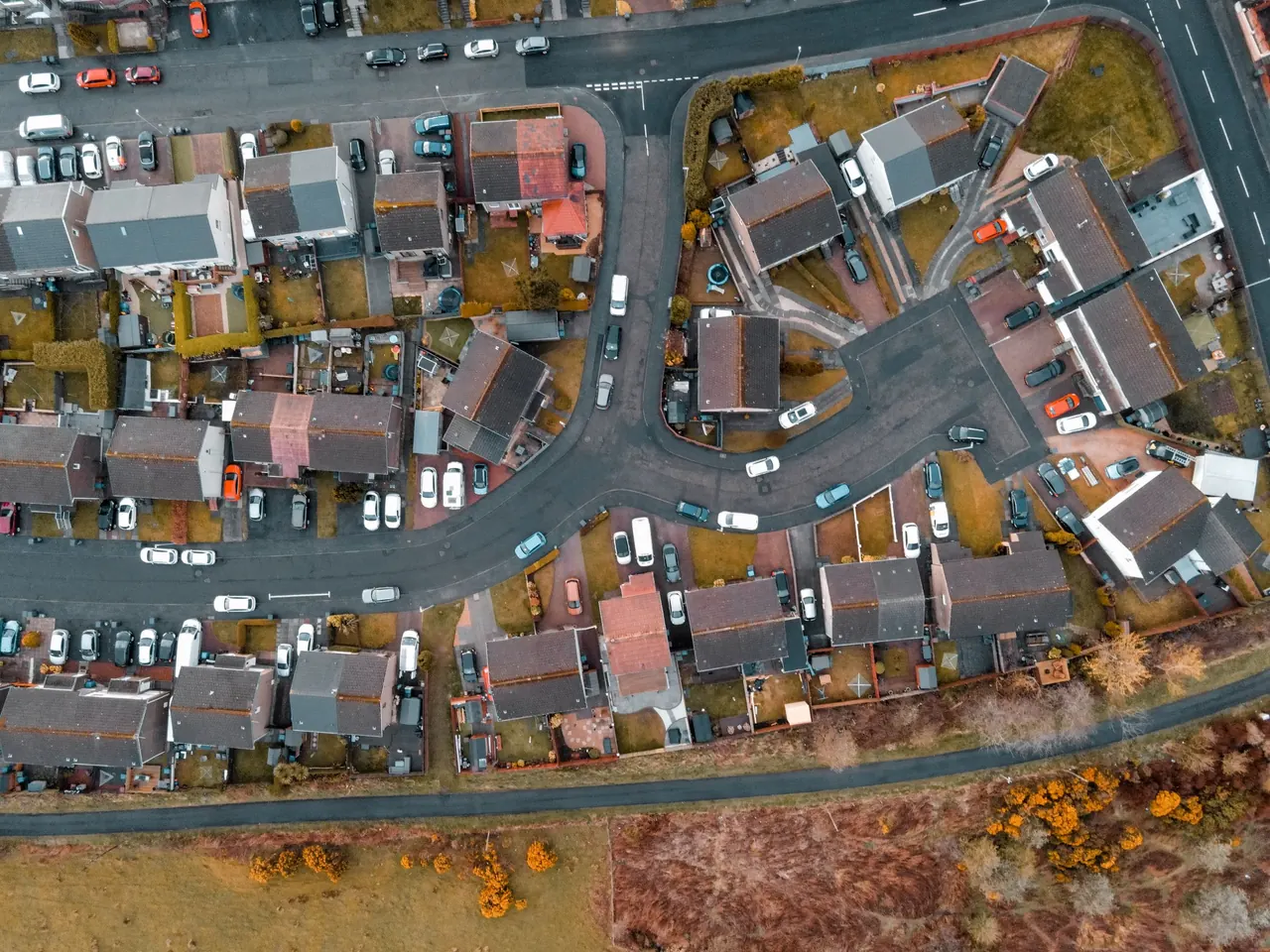
Flying over three storeys and a basement area
On a house this tall, a ladder only reaches the lowest gutter, and scaffold just to look can cost more than a small repair. Josh flies the drone from the front path or the garden, round the slopes, the shared valley and the stack, and if there is loft access we look at the underside of the slates for damp staining, daylight and soft battens. Where the top floor is a separate flat, that loft is usually theirs, so it helps to arrange access with them before the visit.
A drone cannot see under the slates. Where the photos and the loft check do not agree, or a stack needs a hand on it, we say so and suggest a closer look by ladder. Stacks are a common reason for that, and our Brixton chimney repairs page covers what we look for on them. The method in general is on our main roof inspection page.
Top flats on Wiltshire Road and over Electric Avenue
If you are buying the top flat in a converted Wiltshire Road villa or a maisonette above a shop near Electric Avenue, the roof is usually shared under the lease and paid for through the service charge. A building survey often notes only what can be seen from the ground. Dated photos of the slopes give you and your solicitor something concrete to raise with the seller or the freeholder before you commit. Our article on checking a roof before buying a house lists the questions worth asking.
If the inspection shows work is needed, we quote for it separately and you are under no obligation to use us.
Frequently asked questions
Can you inspect the roof of a flat above a shop on Atlantic Road without going through the shop?
Often, yes. The drone can be flown from a safe spot nearby, so most of the roof can be photographed without going through the shop. If we also need the loft or a rear flat roof, we arrange it with you and any other occupiers.
Will the photos show the valley between our St John's Crescent house and next door's?
Yes. The valley and the back gutter where the two roofs meet are among the first things we photograph, because water there can come into either house. You get pictures of both sides so you can talk to your neighbour from the same facts.
Our Millbrook Road house was refurbished by the council in the 1970s. Is a check worth it now?
Yes. The appraisal says the refurbishment was done to high conservation standards, but it does not say which roofs were renewed. If yours was renewed then, its nails and battens are now over 45 years old. An inspection shows whether the roof still has life in it or whether a re-roof needs planning.
Can you inspect a London roof hidden behind a parapet on Millbrook Road?
Yes. From the air we can see straight into the central valley and the parapet gutter, which are impossible to judge from the pavement and are where these roofs usually leak.





