



 Google reviews

Slates over the Old York Road footpath
After a gale, the street side of a cottage here can look perfect while one slate hangs by a single nail above the front door. The council's appraisal of the area notes that some houses have small front gardens and others have no setback from the footpath at all. On those, the front slope ends a few metres above the pavement, and anything that slides off lands where people walk to the station and the shops.
If you can see loose material at the front, make that the first thing you say when you ring 0330 133 4111. Keep people back from the front of the house, and if you can do it without risk, put something in the way, such as a wheelie bin pulled out from the wall, so nobody walks underneath. Anything that could fall is dealt with before the leak.
What happens when you call at night
The phone is answered at any hour. You are asked what you can see and hear: where the water is coming in, whether anything is loose over the street, and whether the ceiling is bulging. Those answers help decide whether it needs making safe straight away or can wait for a booked repair in daylight. One slipped slate on an otherwise sound roof with no water coming in can usually wait. Water through a ceiling, or slates or bricks loose above the pavement, cannot.
Inside, move what you can away from the drip and catch the water. Do not climb onto the roof or the back addition. Photos from inside and from the street help later, including with an insurance claim.
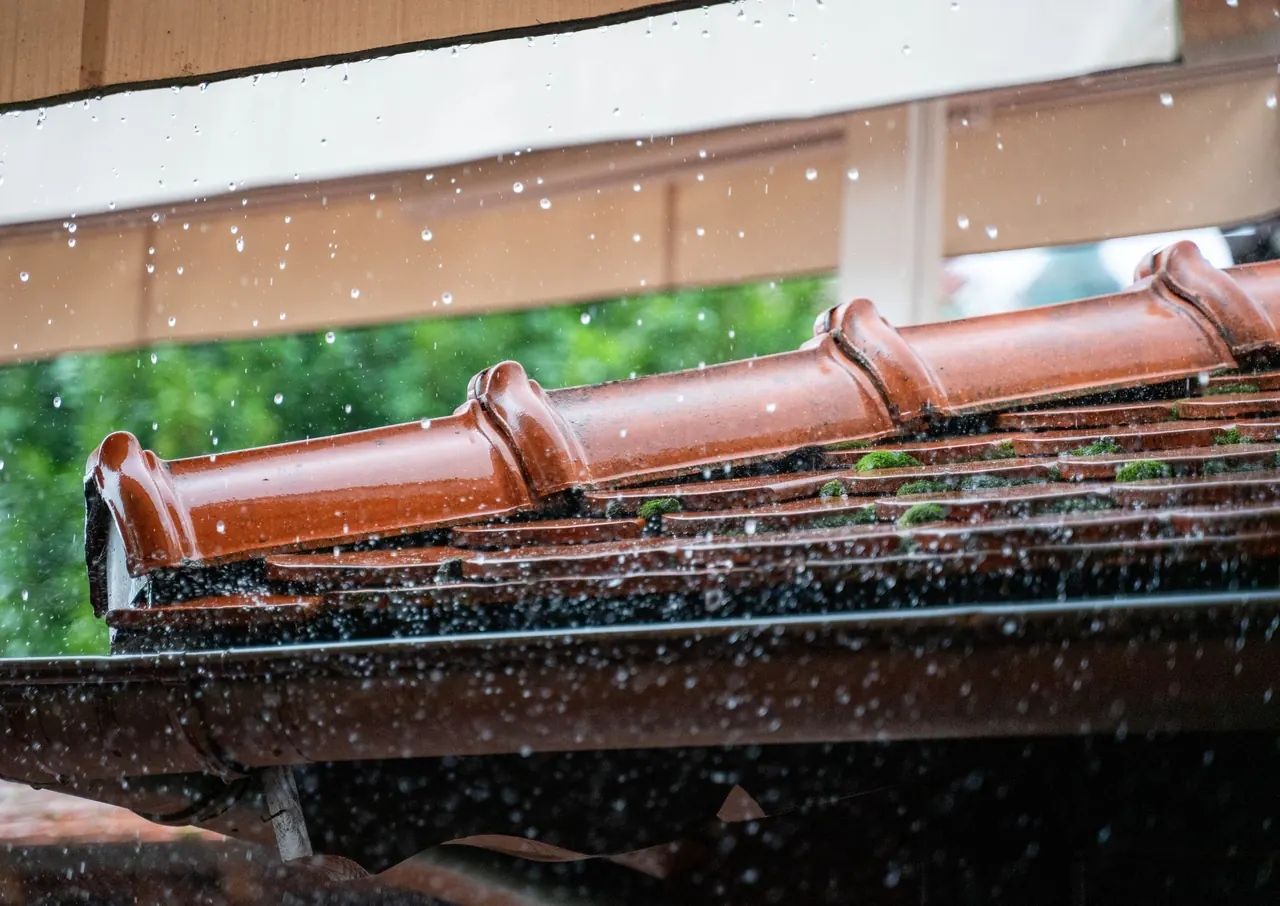
Where storm water gets into these cottages
- The step at a raised mansard. Wind-driven rain gets behind failed flashing where a loft rose above the neighbour's ridge. Our roof repair page for Wandsworth Town covers the permanent fix.
- Dormer and mansard tops. Small flat roofs with three exposed edges. A lifted edge trim lets water straight into a top-floor bedroom.
- Back addition valleys. In a cloudburst, a valley between two outriggers that is half full of leaves overflows down the inside face of the wall. The blocked gutter page deals with the follow-up.
- Hipped ends. The end houses on rows such as Podmore Road catch wind on two faces, and loose hip tiles move first.
- Stacks. Cracked flaunching and old aerial brackets loosen pots and bricks at the top of the chimney.
Depending on what is found, making safe means refixing or taking down loose slates and hip tiles, sealing a lifted dormer edge, clearing a choked valley, or sheeting an open section of roof. In very high wind some of that has to wait until it is safe to work at height, and you are told plainly when that is the case. A drone is not used for an urgent look here, because flights inside London Heliport's restriction zone normally need 48 hours' notice.
What an emergency visit costs
As national guide figures, MyJobQuote's emergency roofer cost guide, updated in October 2026, gives £150 to £300 for a call-out and £150 to £500 for a temporary roof repair across the UK, with the permanent repair priced separately. On a two-storey cottage the main variable is what has to be reached and how, which is why describing the damage on the phone matters.
Our article on spotting roof damage after a storm helps you check the rest of the house from the ground once it is light.
Frequently asked questions
A slate from my roof has landed on the Old York Road pavement. What should I do first?
Check that nobody is hurt, move the slate off the footpath, and keep people away from the front of the house. Then call and say whether you can see other slates out of line. Several slates, or any movement at the ridge or the stack, need dealing with straight away.
I rent a flat in a block on Podmore Road and water is coming through the top-floor ceiling. Who should call?
Tell your landlord and the block's managing agent at once, because the roof of a block is usually the freeholder's responsibility under the lease. Once someone with authority for the roof agrees, it can be made safe.
Rain is coming in under the flat top of my loft conversion. Can it be covered while it is still raining?
Usually the worst of it can be stopped with a temporary seal or a sheet over the dormer top, as long as the wind allows safe work. A proper re-cover needs dry weather, because GRP and most adhesives will not take on a wet deck.





