



 Google reviews

Aerials, dishes and the damage they leave
A chimney on a Victorian terrace often still carries an aerial bracket, whether or not anything is plugged into it. The council's appraisal of the Old York Road area lists antennas and satellite dishes among the features that detract from it. For a roofer they are also a cause of damage. Aerial brackets are usually strapped round the stack or bolted into its mortar joints. As the straps rust and the mast moves in the wind, they open the joints and crack the corner bricks. Dishes fixed to the stack do the same, more slowly.
When a stack that carries a redundant aerial is repaired, taking the bracket off and making good the joints is part of the job. Where the aerial is still in use, it needs refitting by whoever looks after your TV signal once the brickwork is sound again, ideally somewhere other than the top of the stack.
Alma Road and the earliest houses
The appraisal says Alma Road contains some of the earliest development in the area, including a Georgian group of the early to mid 19th century, and that the houses on its east side are the most simply designed. Behind it, Ballantine Street and Dalby and Bramford Roads were built as two-storey workers' cottages between the late 1870s and the 1890s, mostly in London stock brick.
Whatever its age, a stack is the most exposed brickwork on the house, wet on all four faces. On older houses the soft lime pointing on the stack usually weathers out long before the walls below. The flaunching, the mortar bed that holds the pots, cracks and lets water run straight down inside the brickwork, which is where damp in the top corner of a bedroom often comes from.
Soft stock brick needs a mortar softer than itself. A hard cement repoint traps water in the brick, and frost then spalls the faces instead of the joints. The existing mortar and brick are looked at before a mix is chosen, and on these houses that usually means a lime-based mortar.
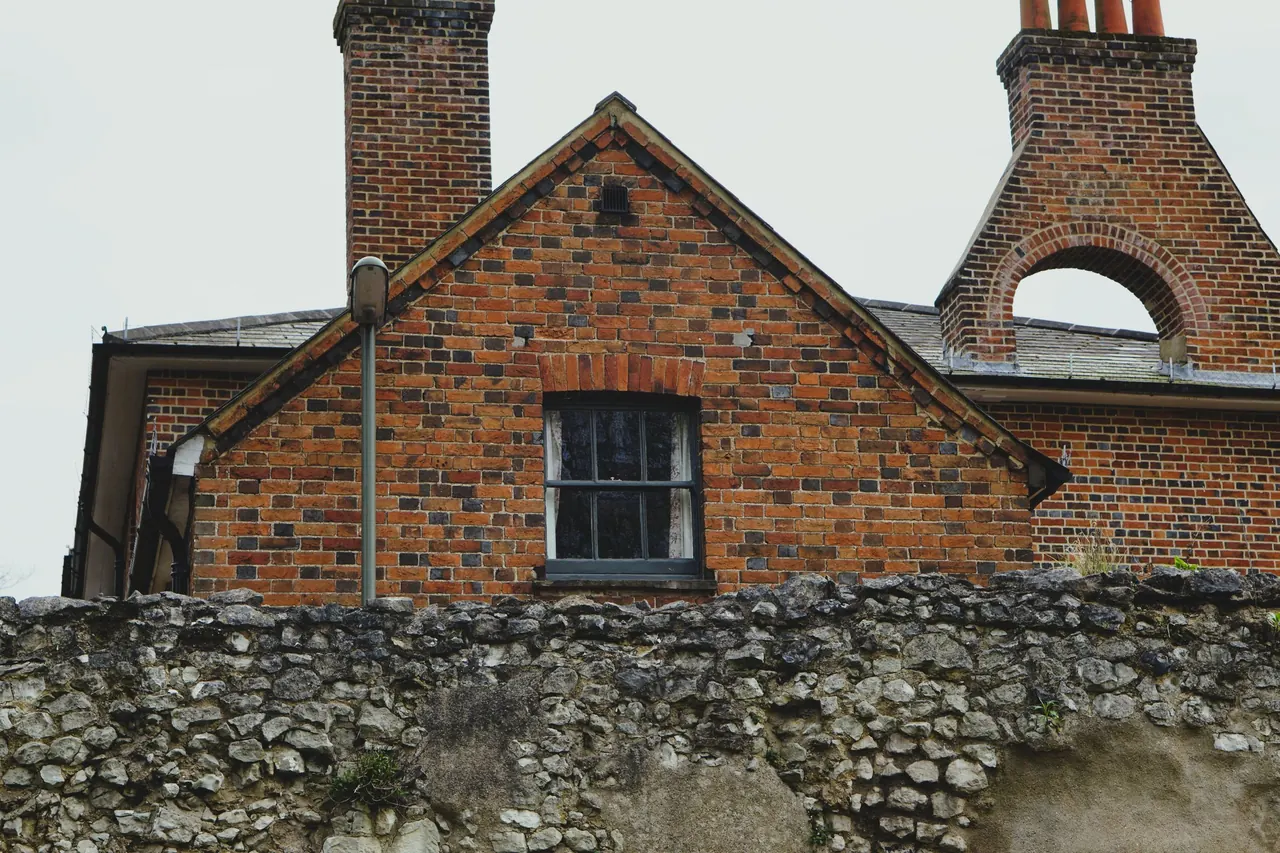
Stacks beside a raised roof
The appraisal also notes that roof extensions here have often raised the ridge. On some houses the chimney now rises out of the slate face of a mansard, or a new flat top butts up against it. That junction needs lead stepped into the brickwork on the sides and a back gutter on the uphill face, the same principle explained on our Wandsworth Town roof repair page for party wall steps. If a loft room leaks beside the chimney breast, this junction is the first place to look.
Roof ladders or scaffold
Small jobs, such as resetting a pot, refixing flashing or redoing flaunching, can often be done from roof ladders with proper safety equipment. Repointing a whole stack or re-leading it usually needs scaffold, and on a cottage that sits on the footpath the scaffold stands on the pavement. As national guide figures, MyJobQuote's chimney leadwork guide, updated in September 2026, shows what that access does to a bill: £150 to £250 for a patch repair to the flashing without scaffolding, and £450 to £600 with it.
Our chimney maintenance guide sets out what to check from the ground each year, and the main chimney repairs page explains how disused flues are dealt with.
Frequently asked questions
There is an old TV aerial on my Alma Road chimney. Should it come off?
If it no longer serves anything, yes. Its brackets are probably loosening the brickwork, and removing them while the stack is being repointed costs little extra. If you still use it, have it moved elsewhere once the stack is repaired.
Does repointing a stack in the Old York Road Conservation Area need consent?
Like-for-like repair, with a matching mortar and the pots put back, is maintenance. Taking a stack down, lowering it or removing its pots changes how the roofline looks, and that is worth checking with Wandsworth Council before any work is booked.
My loft room leaks next to the chimney. Is it the stack or the mansard?
Often it is the junction between the two. If the stain follows the chimney breast down from the ceiling, the stack or its flashing is the likely source. If it sits along the line of the mansard face, the mansard is. The flashing, the back gutter and the pointing are checked in that order.





