



 Google reviews

Sagging soffits on Clarendon Drive and Charlwood Road
The soffit on a deep Victorian eave usually fails from water it was never meant to take. A gutter in front of it overflows, or the fascia behind lets rain into the end grain, and the board softens and starts to drop between the brackets that hold the overhang. The gaps it opens are exactly the size birds and wasps look for.
Putney has plenty of eaves like that. In the Charlwood Road and Lifford Street area, the council's appraisal describes 3 to 5 Clarendon Drive as three-storey houses whose deep eaves cornice reveals eaves brackets, and the villa pairs at 44 to 46 Charlwood Road with projecting eaves brackets under natural slate. Replacing a soffit on a bracketed eave means cutting each board round each bracket, and on a three-storey villa that is a scaffold job rather than a ladder job.
Repair, replace or cap
A short damaged length of fascia or soffit can often be repaired or replaced on its own, which keeps the original detail where it matters. Where boards are rotten along most of their length, or the gutters are being renewed anyway, replacing the full run makes more sense. Capping, or overboarding, covers sound timber with a thin uPVC board. It is cheaper, but it only works where the wood underneath is completely sound, and capping over rot just hides it.
On a conservation-area front, repairing the existing timber keeps the house looking as the appraisals expect, and the council's guidance across Putney favours keeping original details. Full replacement in uPVC is the long-term, low-maintenance option for rear elevations, later extensions and houses without decorative eaves, and it comes in white, black, grey and woodgrain finishes. Ventilated soffits help keep air moving through the roof space. For a guide to cost, Checkatrade's fascia and soffit guide puts replacement at £90 to £170 per linear metre, and on a three-storey Putney house scaffold and the state of the rafter ends behind the boards make a real difference.
Bargeboards on Deodar Road
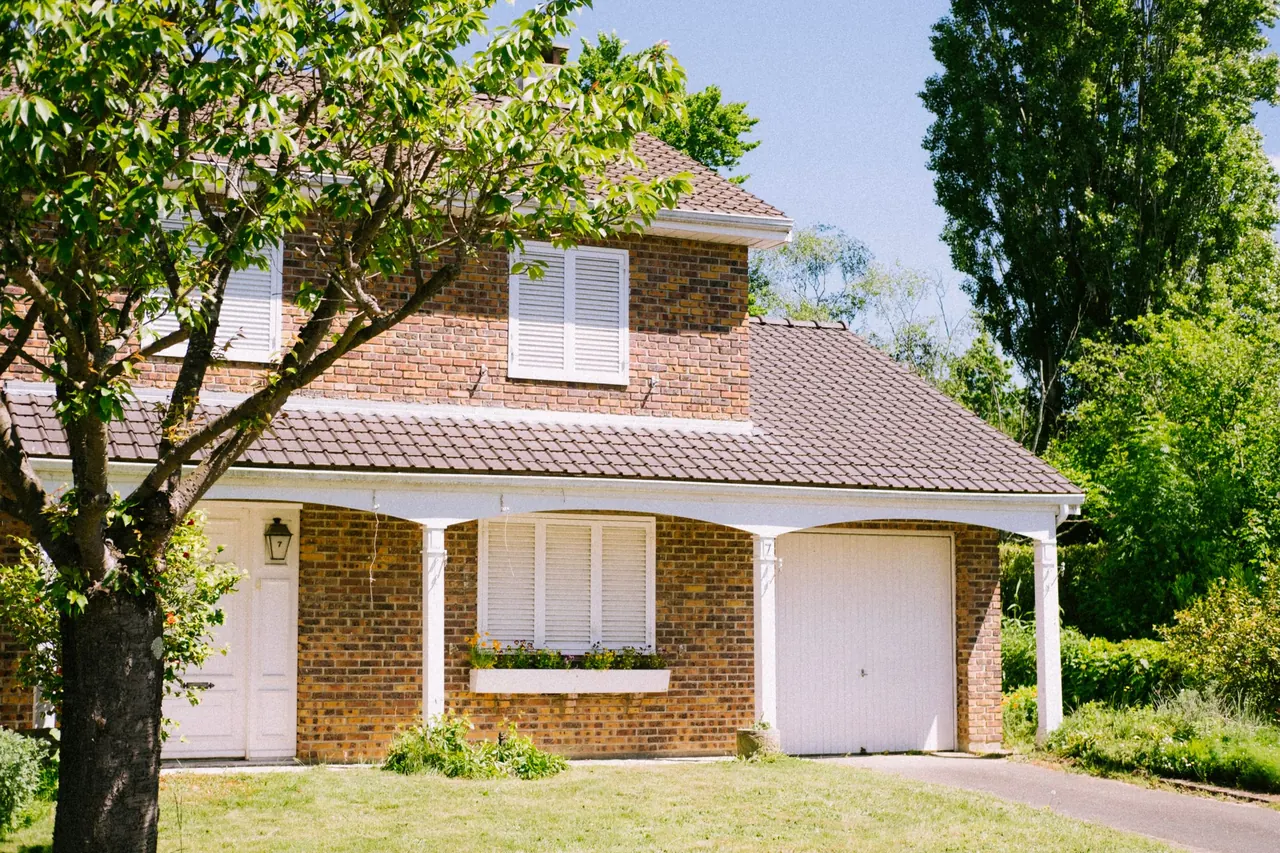
Deodar Road's large houses went up just after 1896, most of them by Morrison and Hulbert, developers based on Fulham High Street. Wandsworth's Deodar Road appraisal describes them as mostly three storeys, gabled with decorative bargeboards and finials. A bargeboard on a gable like that is exposed on both faces and along its top edge. Rot usually starts at the foot of the board, where water runs down and sits, or at a joint between two lengths, and paint failing on the decorative cut-outs lets water into the end grain. Where only a section has rotted, it can often be cut out and replaced on its own, which keeps the decoration a plain board would lose.
The gutter hangs on the fascia, so if it is due for renewal too, our gutter installation in Putney can go up from the same scaffold, and keeping it clear afterwards, through our gutter cleaning in Putney, is what stops new boards getting soaked. The main fascias and soffits page has more detail on materials.
Frequently asked questions
Can the soffits on my Clarendon Drive house be replaced without losing the eaves brackets?
Yes. The brackets are part of the cornice and stay in place. The soffit boards between and behind them are cut to fit round each one, which takes longer than a plain eave but keeps the front as it was.
Part of the bargeboard on my Deodar Road gable has rotted. Does the whole board have to go?
Not always. If the rot is confined to the foot or one joint and the rest of the board is sound, that section can be cut out and replaced, keeping the decoration. If it has spread along the board, we talk through the options with you before anything is taken down.
Birds are nesting behind a loose soffit on our Charlwood Road villa. Can you replace it now?
Not while the nest is active. Wild birds' nests in use are protected by law, so the board is usually left until the young have gone, then the gap is closed properly. In the meantime we can look at it and plan the repair.





