



 Google reviews

Hidden gutters behind Commondale's raised parapets
Numbers 2 to 5 Commondale are two pairs of early 19th century cottages, locally listed. Wandsworth's Putney Lower Common appraisal describes them as pavilions under distinctive pyramidal slate roofs, shallow pitched behind prominent white rendered cornices and raised parapets. On number 2 the parapet also runs along the side facing the Lower Richmond Road.
A raised parapet in front of a shallow roof means the rain does not leave by an open eave. It runs into a gutter behind the parapet and out through an outlet to a downpipe. When that outlet blocks, the water rises behind the parapet until it finds a way over the flashing or through the brickwork, so it shows indoors before anything shows outside.
A concealed roof on Felsham Road
The same arrangement turns up elsewhere in central Putney. The Charlwood Road and Lifford Street appraisal describes 82 to 86 Felsham Road as a short three-storey classical terrace, with attics, whose roof is concealed behind a parapet with an eaves cornice. Three storeys up, a hidden gutter like that is invisible from the street and from the windows, so a blockage there can run for months.
On roofs like these we look for three things. First, whether the outlet itself has narrowed with silt, moss or a bird's nest. Second, whether the gutter lining behind the parapet has sagged so water sits in a low spot. Third, whether the downpipe below is packed further down, so the outlet is clear but the water has nowhere to go.
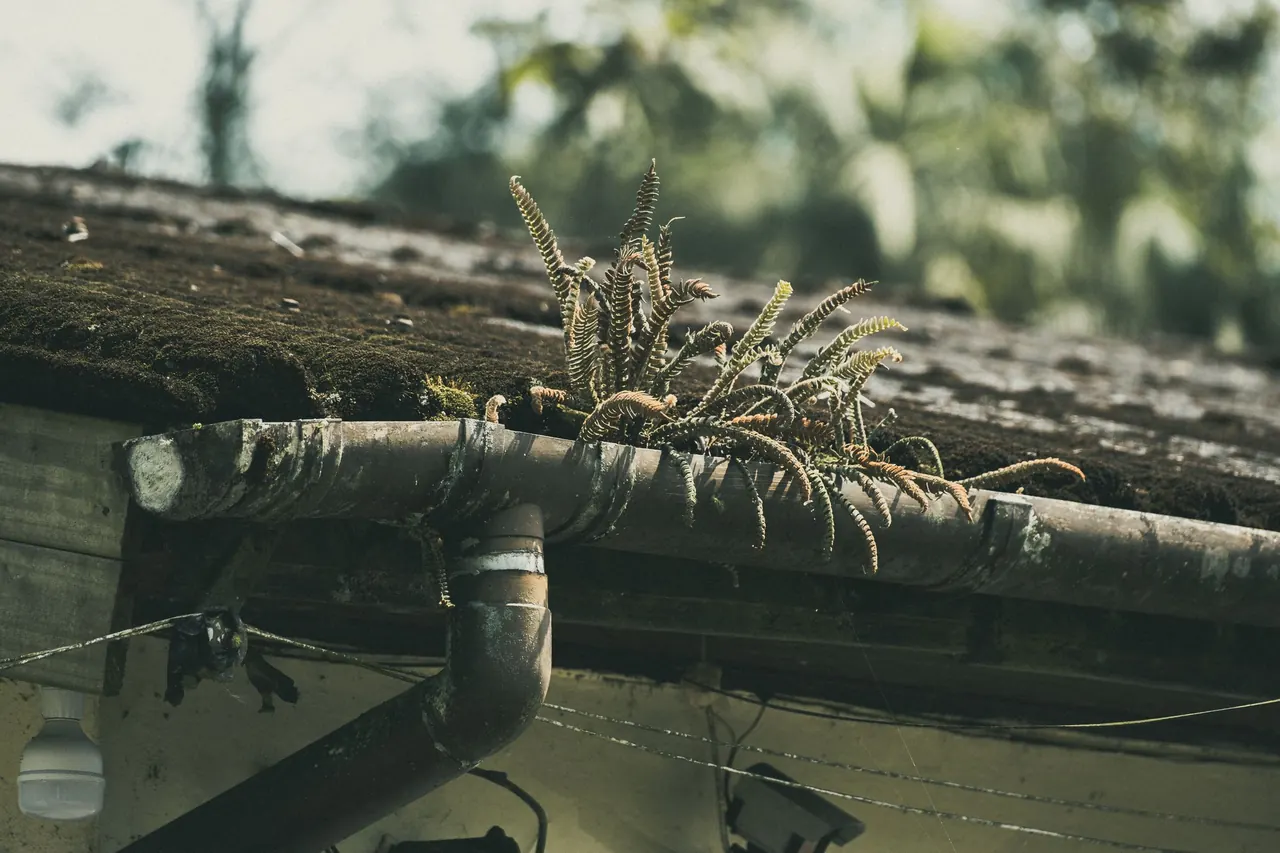
Rodding downpipes under the Lower Common trees
The houses facing Putney Lower Common sit under the mature trees that line every edge of it, and wet leaves washed off the roof do not always stop in the gutter. They pack into the swan neck or partway down the downpipe, where the outlet looks clear from above but the water still has nowhere to go. Clearing the visible clump only treats the symptom.
- Clear the outlet and any hopper, where they can be reached safely.
- Rod or flush the downpipe if the blockage sits lower than can be reached by hand.
- Run water through the whole system to check it drains.
- Correct the cause: a section that has lost its fall, a failed bracket, a narrowed outlet or a damaged joint.
- Check for damage the blockage has done, such as a soaked fascia or a lifted flashing.
Where a board behind an ordinary gutter has stayed wet for months, it may need replacing, and our fascias and soffits in Putney page covers that. A parapet three storeys up on Felsham Road costs more to reach than the eave of a two-storey Nelson Cottage on Commondale, and that, more than the blockage itself, usually sets the price.
When water is already inside
If water is coming through a ceiling or running down an inside wall, ring us straight away. Behind a parapet the water can keep coming for as long as it rains. If the overflow is outside only, book it in before the next wet spell. Routine clearing to stop the build-up is covered by our gutter cleaning in Putney, and the main blocked gutter repair page lists the signs to look for.
Frequently asked questions
Our Commondale cottage is locally listed. Does clearing the parapet gutter need any permission?
No. Clearing an outlet or rodding a downpipe is maintenance. If the lining or flashing behind the parapet needs replacing, doing it like for like keeps it that way, but ask the council before changing anything that can be seen from the street.
The roof of our Felsham Road house is hidden behind a parapet. How do you find the blockage?
A drone photograph shows the gutter behind the parapet and any standing water before anyone climbs. From there we check the outlet and rod the downpipe, which together usually locate it.
Does a blocked gutter need a repair, or just a clean?
If it overflows once after autumn and runs freely after clearing, a clean is enough. If it blocks again quickly, overflows in the same spot, or the downpipe stays dry, something is wrong with the fall, the outlet or the pipe, and that needs repairing.





